


Archer Aviation will acquire three Boeing subsidiaries in exchange for a 19.75% equity stake, adding over $200 million in annual revenue and reshaping its eVTOL strategy.
Archer Aviation will acquire three Boeing subsidiaries in exchange for a 19.75% equity stake, adding over $200 million in annual revenue and reshaping its eVTOL strategy.
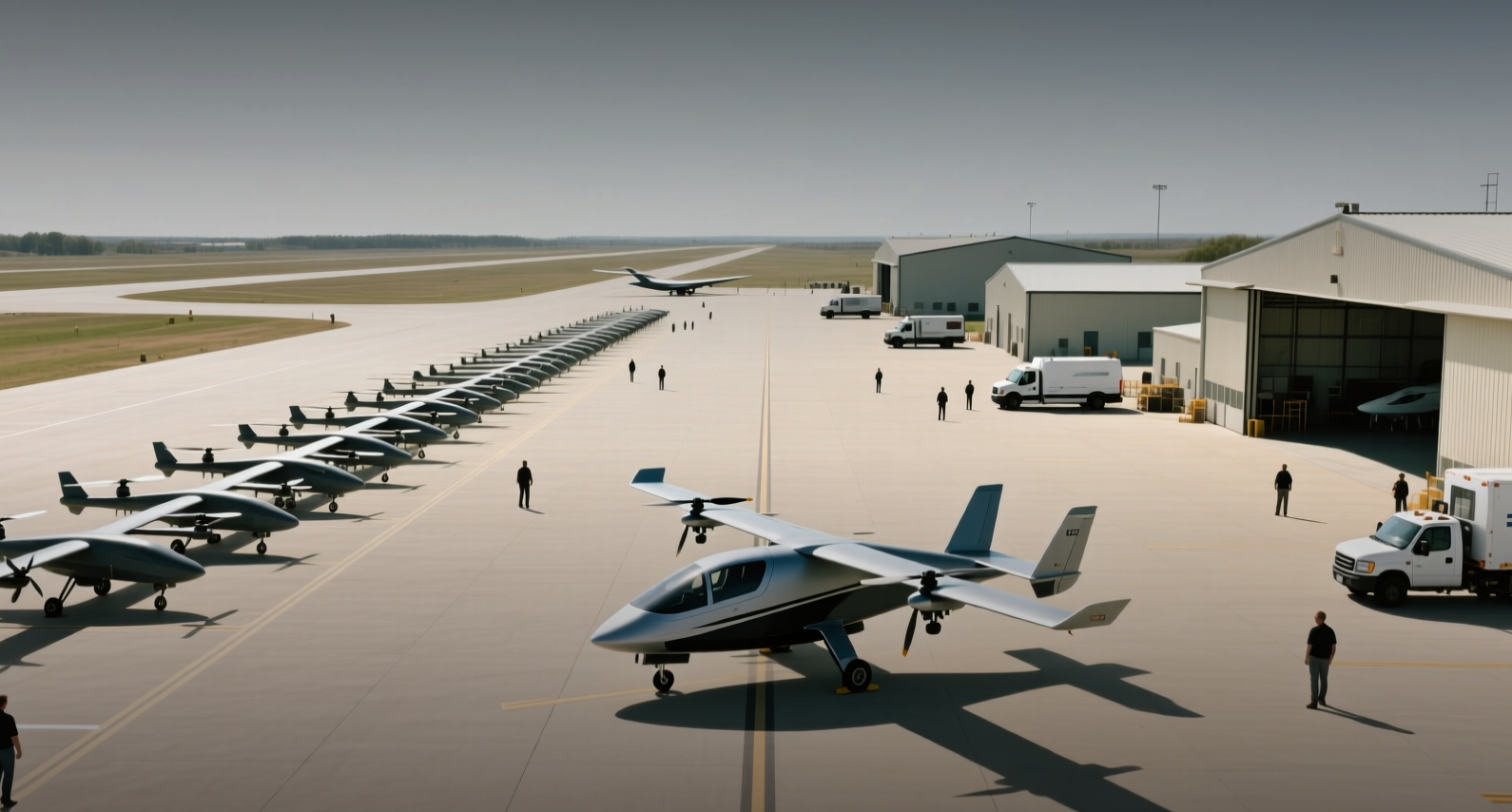
Archer Aviation will acquire three Boeing subsidiaries — Wisk, SkyGrid, and Insitu — for a 19.75% stake worth $930 million, adding over $200 million in annual revenue to a company that posted $5 million in Q2 sales.
"The transaction provides Boeing access to the Wisk core autonomous flight technology for its current and next-generation commercial and defense aircraft," the companies said in a joint statement announcing the definitive agreement.
Archer's Q2 revenue of $5 million beat consensus near $1.9 million, though the company posted a net loss of $263.2 million, or 34 cents a share. It ended the quarter with about $1.56 billion in cash and short-term investments against operating cash burn of $156.4 million. Insitu, a designer and manufacturer of uncrewed aircraft systems, already generates more than $200 million in annual revenue — roughly 40 times Archer's quarterly sales run rate.
The deal derisks both companies: Archer gains early revenue, autonomous eVTOL technology, and an air-traffic management platform, while Boeing keeps eVTOL exposure through its stake without funding a costly build-out. Boeing's next narrow-body aircraft could cost $50 billion to develop, former CEO Dave Calhoun said, a figure that shows why the company needs to focus capital on core programs.
Insitu Brings $200 Million in Revenue to a $5 Million Base
The acquisition transforms Archer's revenue profile. Insitu's defense-focused uncrewed aircraft business adds a cash-generating operation to a company that burned through $156.4 million in operating cash in Q2, plus $37.1 million in capital expenditure and $25 million for a Hawthorne Airport fixed-base operator. Wisk, Boeing's autonomous eVTOL developer, gives Archer a transportation-as-a-service option alongside its piloted Midnight aircraft, while SkyGrid provides an aircraft-agnostic air-traffic management platform supporting both autonomous and piloted operations.
The deal also removes a potential rival. Wisk's autonomous eVTOL and SkyGrid could have challenged Archer's piloted approach; folding them in eliminates that competitive threat and gives Archer optionality across business models. The move sets Archer against Joby Aviation, its main rival in the piloted eVTOL market, with a broader portfolio spanning passenger aircraft, drones, and airspace software. Archer's stock had fallen 53 percent from its 52-week high of $14.62 before the deal, and the acquisition gives investors a clearer path to revenue than the certification timeline alone.
Boeing's $930 Million Stake Buys eVTOL Exposure Without the Build
For Boeing, the transaction refocuses management and resources on core commercial and defense programs. The 737 MAX has constrained free cash flow for years, and the company's next narrow-body aircraft could cost $50 billion to develop, according to former CEO Dave Calhoun. The Archer stake, worth about $930 million at current prices, lets Boeing participate in eVTOL growth while retaining access to Wisk's autonomous flight technology.
Archer shares rose more than 20 percent on the announcement before consolidating between $6.10 and $6.70. The stock traded at $6.30 on Aug. 24, up 3.45 percent, with a market cap of $4.9 billion. Boeing shares slipped 0.42 percent to $214.20. The deal is expected to close pending regulatory approvals, with the companies targeting completion in the coming quarters.
The deal's success hinges on integration. Archer must fold three complex businesses into its operations while continuing to certify the Midnight aircraft and manage a steep cash burn. If the acquired units deliver their projected revenue, Archer's scale changes materially; if integration stumbles, the dilution from Boeing's near-20 percent stake compounds the risk. For Boeing, the transaction trades a set of non-core assets for a strategic stake in a sector it expects to grow — a bet that carries little upfront cost but ties its returns to Archer's execution. The deal also ties Boeing's fortunes to the broader eVTOL sector, which has drawn billions in investment from airlines and defense contractors betting on urban air mobility.
This article is for informational purposes only and does not constitute investment advice.
