

ASML's 4% pre-market slide on Aug. 18 puts the world's largest lithography supplier at the center of a market debate over AI infrastructure spending.
ASML's 4% pre-market slide on Aug. 18 puts the world's largest lithography supplier at the center of a market debate over AI infrastructure spending.
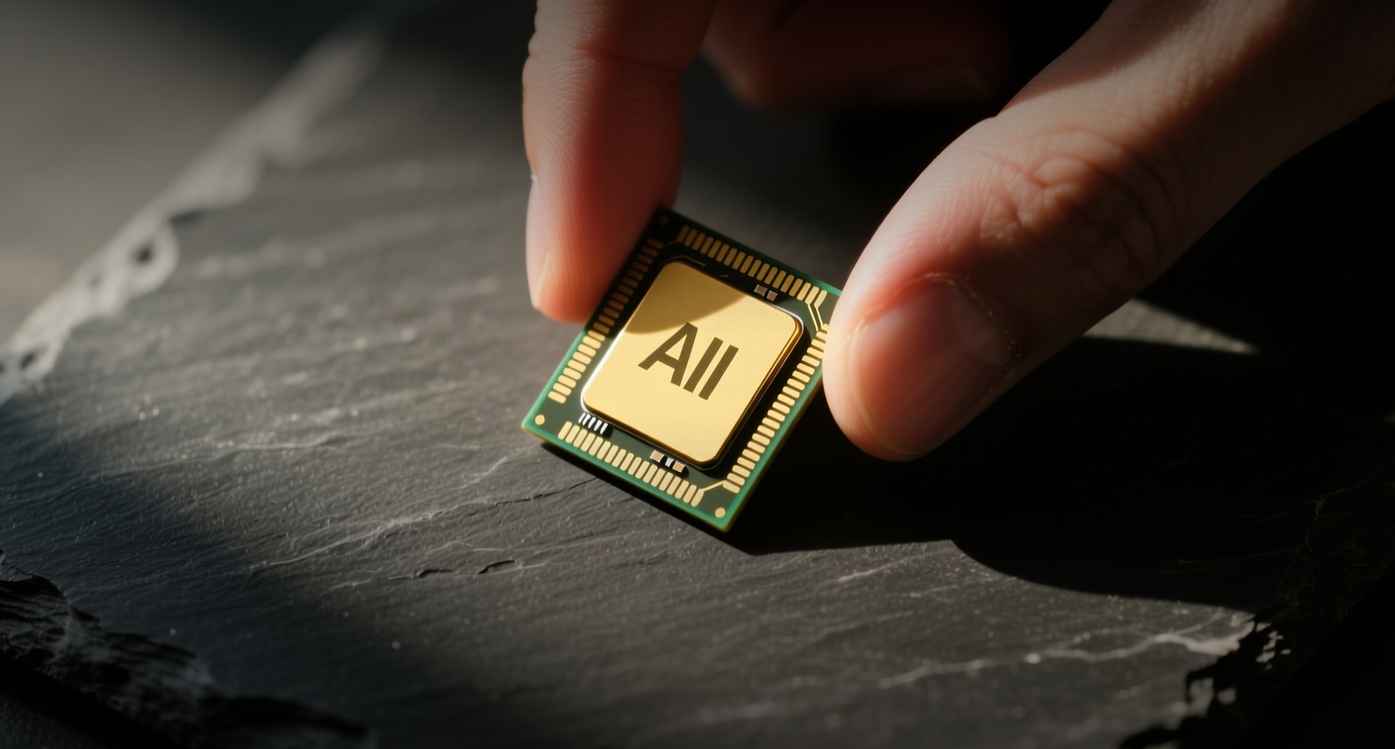
ASML Holdings fell more than 4 percent in US pre-market trading on Aug. 18, the latest sign that investors are turning more selective across the semiconductor supply chain after a strong run since late July.
Morningstar analysts raised their 12-month price target on ASML to $375, describing the company's long-term prospects as vastly improved even as its 2026 outlook offered no major surprises, according to the firm's research.
The Dutch company controls roughly 90 percent of the lithography market, supplying the extreme ultraviolet (EUV) systems essential for producing advanced chips at TSMC, Samsung, Intel, SK Hynix, and Micron. ASML employs about 33,000 people and operates from its base near Eindhoven, Netherlands.
The pre-market decline comes as the AI infrastructure debate shifts from software to hardware. Nvidia's expected $91 billion revenue run rate and TSMC's 45 percent year-over-year July growth suggest hyperscalers are still spending aggressively, but SanDisk's roughly 58 percent decline from its peak shows the market is now distinguishing between companies with scarce, mission-critical technology and those facing more uncertain returns.
The selloff follows a period of strong gains across technology stocks since late July. The State Street SPDR NYSE Technology ETF (XNTK) has risen 32 percent year-to-date, with a 52-week range of $232.82 to $392.44. The fund's top holdings include the semiconductor names that have driven much of the rally.
The AI infrastructure test
The semiconductor sector has become the primary battleground for the AI valuation debate. Nvidia captures the surge in demand for AI computing, TSMC manufactures the most advanced chips, and ASML supplies the EUV lithography systems that make those chips possible. Together, the three companies sit at the center of the entire AI infrastructure chain.
As long as all three continue reporting strong orders, rising revenue, and expanding investment plans, the market has a powerful argument that the AI boom is supported by actual spending rather than speculation. SK Hynix's approval of $38.3 billion in capital expenditure through 2031, aimed at expanding advanced DRAM and high-bandwidth memory production, reinforces this picture.
But the market is becoming more discriminating. SanDisk's decline from its peak, despite solid revenue growth, shows that investors are now focused on margins, pricing power, and the possibility that the most profitable phase of the memory cycle may be normalizing. Growing competition from Chinese memory producers has added another layer of uncertainty.
Cycle risks and valuation
Semiconductor stocks carry inherent cyclicality. Periods of strong demand, like the current AI and data center build-out, often lead to overcapacity. When that happens, pricing weakens, inventories build up, and earnings can fall quickly. This is the "peak earnings trap" — a company might report record profits and trade at a low-looking valuation, yet still be expensive if those earnings aren't sustainable.
ASML's position is somewhat insulated by its near-monopoly in EUV lithography. The company outsources most of its parts manufacturing, acting as an assembler, and its customer base spans the world's largest chipmakers. But the stock's beta of 1.66 means it amplifies broader market moves, and its price-to-earnings ratio of 33.4 reflects the market's high expectations for continued growth.
For investors, the key question is whether semiconductor orders can keep rising fast enough to support valuations that already assume years of exceptional growth. The first real warning sign would not be a single stock correction but a simultaneous weakening in semiconductor orders, capacity utilization, and investment plans across multiple layers of the AI supply chain.
ASML shares, trading at roughly 33 times trailing earnings, remain a bellwether for the sector. The pre-market drop on Aug. 18 suggests some investors are starting to price in a more cautious outlook, even as the company's long-term fundamentals remain intact.
This article is for informational purposes only and does not constitute investment advice.
