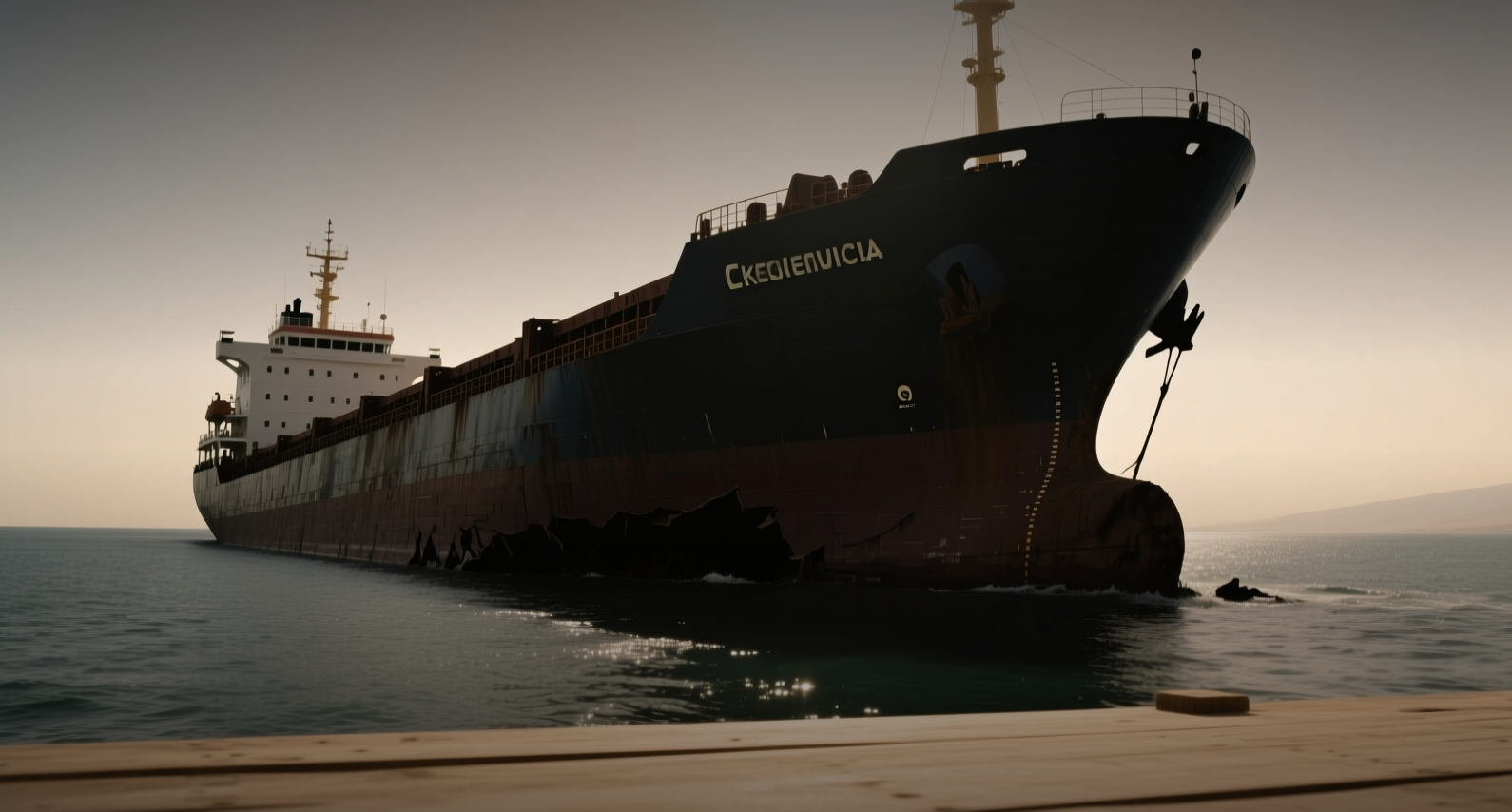
A Greek-operated bulk carrier was struck by an unknown projectile in the Strait of Hormuz, leaving one crew member missing and forcing the crew to abandon ship.
A Greek-operated bulk carrier was hit by an unknown projectile in the Strait of Hormuz on Monday, igniting a fire and leaving one crew member missing in a waterway carrying a fifth of global oil.
"An unidentified projectile reportedly struck the vessel's engine room, causing a fire in the living quarters and one crew member to go missing," British maritime security firm Pioneer Technology said in a report on Tuesday. The crew attempted to extinguish the blaze and requested external assistance before abandoning ship.
The attack came a day after two tankers — the VLCC Egypt Prosperity and the Aframax On Pride — escaped separate incidents involving explosions and warning shots in Omani waters. The Liberian-flagged Minos Pioneer, operated by a Greek company, was hit about 20 nautical miles northeast of Al Khasab, Oman, at roughly 2200 UTC on Aug. 3, according to the U.K. Maritime Trade Operations, which said authorities were investigating.
The strait handles about 20 percent of global oil and natural gas trade, and each escalation adds to the risk premium priced into crude. The incidents follow the U.S. blockade of Iranian ports in the waterway and Iran's attacks on shipping since the war began in February.
Talks and a contested waterway
The latest strike comes as President Donald Trump said negotiations with Iran were underway, calling it Tehran's "last chance" to end the conflict. Iran has denied talks with the United States are taking place, saying it is instead negotiating with Oman over a temporary route for shipping through the strait.
A proposed joint Iranian-Omani control regime would divide oversight of the channels by direction, with inbound traffic passing through a northern lane administered by Iran and outbound traffic through an Omani-controlled lane, according to the New York Times. The two states would split revenue from a "service fee" for each transit — a cost to shipping that did not exist before the war. An American official denied the account, saying the scheme would be temporary and toll-free.
Qatar is also mediating between Washington and Tehran, with Qatari Foreign Ministry spokesman Majed al-Ansari saying Tuesday that "we're looking into a diplomatic solution." Trump on Monday called off previously announced airstrikes on Iran, saying he wanted to give diplomacy time to work and to give Iran's leadership "every last chance before decapitation."
Wider regional escalation
The attacks in Hormuz coincide with a broader escalation. Yemen's Iranian-backed Houthis said they fired a drone at a "sensitive target" at an airport in Najran, Saudi Arabia, in response to what they called Saudi breaches of Yemen's airspace. The rebels recently announced a blockade on Saudi-linked shipping through the Bab el-Mandeb Strait leading to the Red Sea.
The last time the strait faced a comparable threat was during the 2019 tanker attacks, when crude prices spiked before retreating as supply disruptions proved limited. This time, the combination of a U.S. blockade, Iranian attacks and a contested administrative regime keeps the risk premium elevated, with traders watching whether talks with Oman and Qatar can restore a functioning transit system. If the negotiations collapse, the waterway could remain effectively shut, forcing rerouting of crude and liquefied natural gas around the Cape of Good Hope and adding days to voyage times and costs for tanker owners.
This article is for informational purposes only and does not constitute investment advice.