


Canada's leader insists any U.S. deal must protect agreed tariff rates on key sectors from future change, a condition whose absence sank last month's talks and now leaves Ottawa's counter-duties due Tuesday.
Canada's leader insists any U.S. deal must protect agreed tariff rates on key sectors from future change, a condition whose absence sank last month's talks and now leaves Ottawa's counter-duties due Tuesday.
Prime Minister Mark Carney said any trade pact Canada signs with the U.S. must lock in agreed tariff levels on steel, aluminum and automobiles so they cannot be changed, after last month's talks collapsed and Ottawa's retaliatory duties are set to take effect Tuesday. The demand marks the clearest explanation yet of why negotiations that officials had called close to a deal suddenly broke down, leaving the two neighbors to escalate a dispute now touching $20 billion in goods.
"There needs to be some stability and credibility" in any future pact, Carney told reporters at an event in Thunder Bay, Ontario. "There were a few instances in the negotiations where those protections were not going to be given, and in fact, the opposite was going to be inserted, which is unacceptable." The U.S. and Canada had tentatively agreed to sharp reductions on existing tariffs covering specific sectors, The Wall Street Journal reported, before the talks collapsed.
The breakdown has already produced a fresh round of duties. Washington imposed tariffs on $20 billion of Canadian goods, including alcohol, hockey sticks, cement and machinery, while Ottawa answered with counter-tariffs effective Sept. 8 across steel, aluminum, dairy, appliances, agricultural equipment, pulp and paper and electronics. Canada's existing counter-tariffs on steel and aluminum will rise to 50 percent from 25 percent to match U.S. rates that took effect Aug. 22, and Ottawa has vowed to match Washington dollar for dollar.
The White House pushed back, saying Canada had been offered the most generous trade deal among America's trading partners before rejecting the proposal, making further demands and offering little in return. Carney earlier this week criticized taunting of Canada by U.S. officials as unhelpful to resolving the dispute.
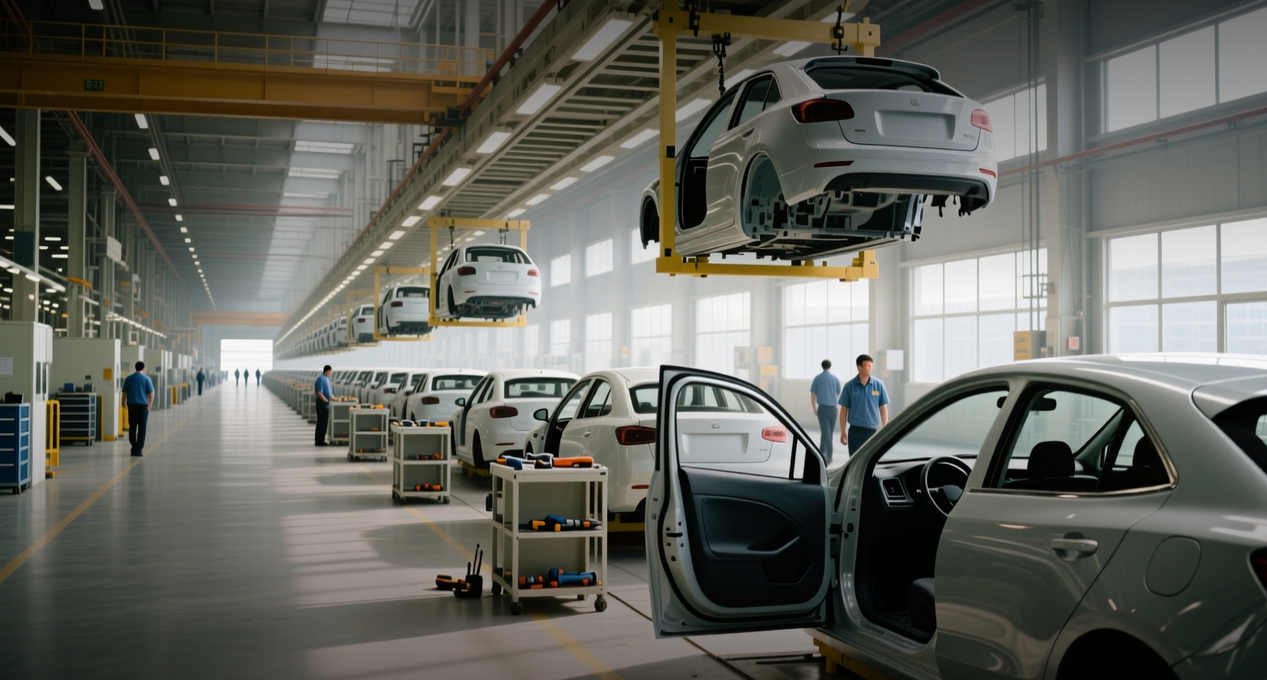
The stakes concentrate in autos, where the two economies are most deeply intertwined. President Donald Trump has threatened a potentially crippling 50 percent tariff on Canadian-made motor vehicles and auto parts starting Jan. 1, and reiterated in the Oval Office on Wednesday that the U.S. does not need Canadian goods, citing energy and forest products. Toyota and Honda together build about 76 percent of the vehicles assembled in Canada and employ more than 60 percent of the country's auto-assembly workforce, putting the Japanese automakers squarely in the path of any levy.
A tariff on a "Canadian" vehicle rarely stays contained to one border crossing. Parts for a single engine or transmission can cross the U.S.-Canada line multiple times before final assembly, so the cost compounds at every crossing rather than once. That integration is why analysts see no clear winner in the escalation. "Much more uncertainty can be expected for some time," said Atsi Sheth, chief credit officer at Moody's Ratings, noting that while the U.S. steel sector may hold a slight advantage, the highly integrated automotive sector will suffer on both sides of the border.
The auto tariff threat lands on top of an existing 25 percent duty that negotiators had been haggling to cut to 15 percent before the talks collapsed, according to Reuters. Shifting production is not a near-term option: relocating a plant takes years and billions of dollars, so neither Toyota nor Honda can simply move its way out of a January deadline. The last comparable escalation, when U.S. tariffs on Canadian steel and aluminum jumped to 50 percent in August, pushed both governments to match each other dollar for dollar rather than retreat.
For shoppers, the practical question is whether a Canadian-built Honda CR-V or Toyota RAV4 gets pricier or whether the companies quietly trim margins to hold the line. If the 50 percent rate takes effect on schedule, Canadian-built crossovers and trucks could become sharply more expensive almost overnight, and the cost of repeated border crossings would ripple through an industry that already faces stretched new-car prices. Whether Ottawa's retaliatory tariffs land Tuesday and whether Trump follows through on Jan. 1 now hinge on whether the two sides can revive the stability-guarantee terms Carney says are non-negotiable.
This article is for informational purposes only and does not constitute investment advice.
