

Cleveland-Cliffs will spend $1 billion upgrading its Middletown, Ohio steel plant, half funded by a rescoped $500 million U.S. Department of Energy grant.
Cleveland-Cliffs will spend $1 billion upgrading its Middletown, Ohio steel plant, half funded by a rescoped $500 million U.S. Department of Energy grant.
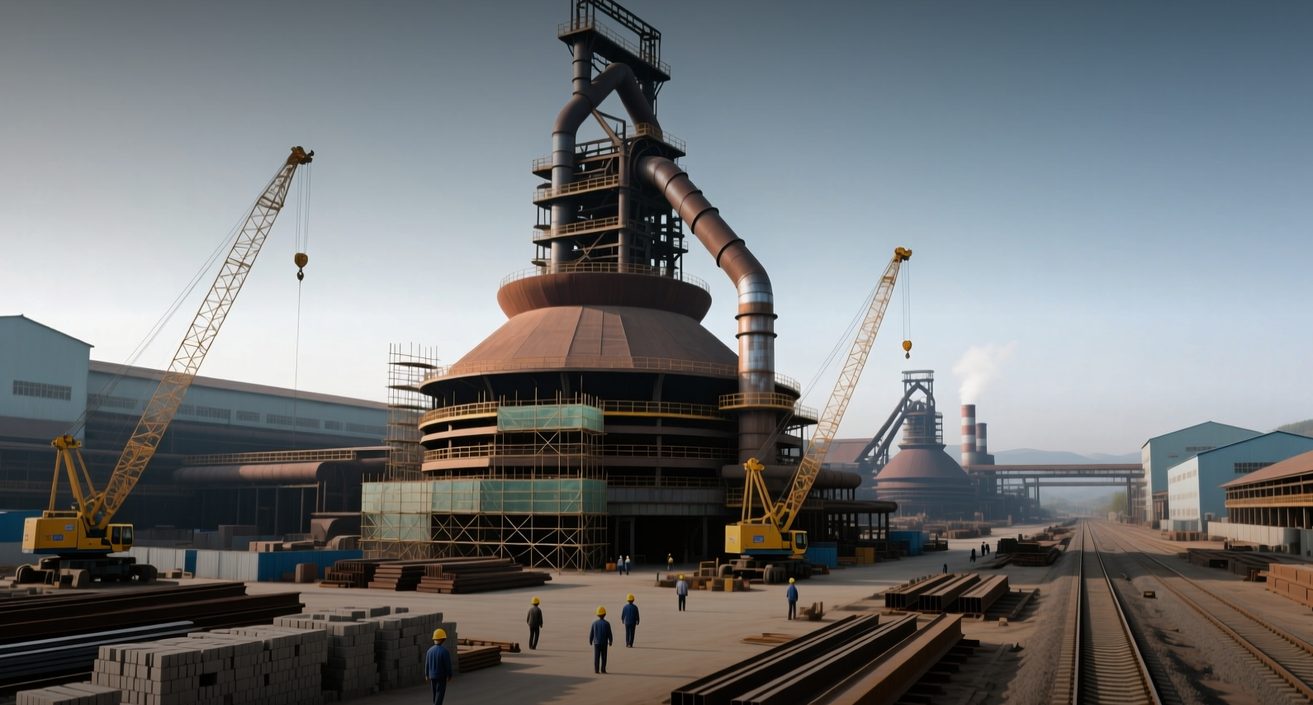
Cleveland-Cliffs will spend $1 billion upgrading its Middletown, Ohio steel plant, half funded by a rescoped $500 million U.S. Department of Energy grant.
Cleveland-Cliffs will pour $1 billion into its Middletown Works steel plant, half funded by a rescoped $500 million U.S. Department of Energy grant that backs a blast furnace rebuild and a cogeneration unit capturing furnace gas for on-site power.
"Going above and beyond a standard blast furnace reline, to include the most advanced technology available," Lourenco Goncalves, Cliffs' chairman and chief executive, said. The project preserves 2,300 jobs and keeps Middletown among North America's premier steelmaking facilities, he said.
The investment covers new blast furnace technology, advanced material handling infrastructure, and artificial intelligence-enabled process control. A new cogeneration facility will capture blast furnace gas to generate electricity and steam for on-site consumption, cutting reliance on externally supplied power and lowering operating costs. Construction begins in the coming weeks, with the blast furnace rebuild completed in the first quarter of 2030. At peak, the project will employ more than 1,500 construction workers including local union building trades.
Middletown Works, Cliffs' flagship plant for automotive-grade steels used in exposed body parts, produces about 3 million tons of raw steel annually. The optimization preserves that capacity while improving operational reliability, productivity, energy efficiency, and cost competitiveness — a bet that the blast furnace route stays viable for high-end automotive steel as producers weigh lower-emission alternatives.
The DOE award was originally granted in 2024 under the prior administration to replace the Middletown furnace with a hydrogen-powered unit, a project Cliffs committed $1.3 billion of its own money to. Cliffs abandoned those plans last year, with Goncalves citing a lack of available hydrogen during a July 2025 earnings call. The company instead rescoped the grant toward traditional coal-based steelmaking with AI and efficiency upgrades, keeping the $500 million federal contribution intact.
Vice President J.D. Vance, whose grandfather worked at the plant and who grew up in Middletown, will visit today alongside Energy Secretary Christopher Wright and Ohio officials to mark the investment, framing the project as a win for the administration's America First economic agenda.
CLF trades with a market cap of about $6.13 billion. The company, which employs roughly 25,000 people across the U.S. and Canada, is vertically integrated from iron ore mining through downstream finishing, stamping, tooling, and tubing. The Middletown investment follows a multi-year partnership with Palantir announced in April to deploy AI across operations, and a 2025 GM Supplier of the Year award from General Motors, a key customer for automotive sheet steel.
The project's completion in 2030 comes as U.S. steelmakers, including rivals Nucor and U.S. Steel, compete for automotive business under tariff protection on imports. For Cliffs, the bet is that keeping the blast furnace route efficient — rather than switching to electric-arc or hydrogen-based production — delivers the lowest-cost path to the exposed-grade automotive steel that anchors its revenue. The DOE backing effectively halves the capital burden of that bet, a tailwind for a company whose shares have lagged the broader industrial rally this year.
This article is for informational purposes only and does not constitute investment advice.
