
Delaware's 65-plus population grew 23 percent since 2020, the fastest in the nation, as retirees recalculate the full tax picture beyond income tax alone.
Delaware's 65-plus population grew 23 percent since 2020, the fastest in the nation, as retirees recalculate the full tax picture beyond income tax alone.
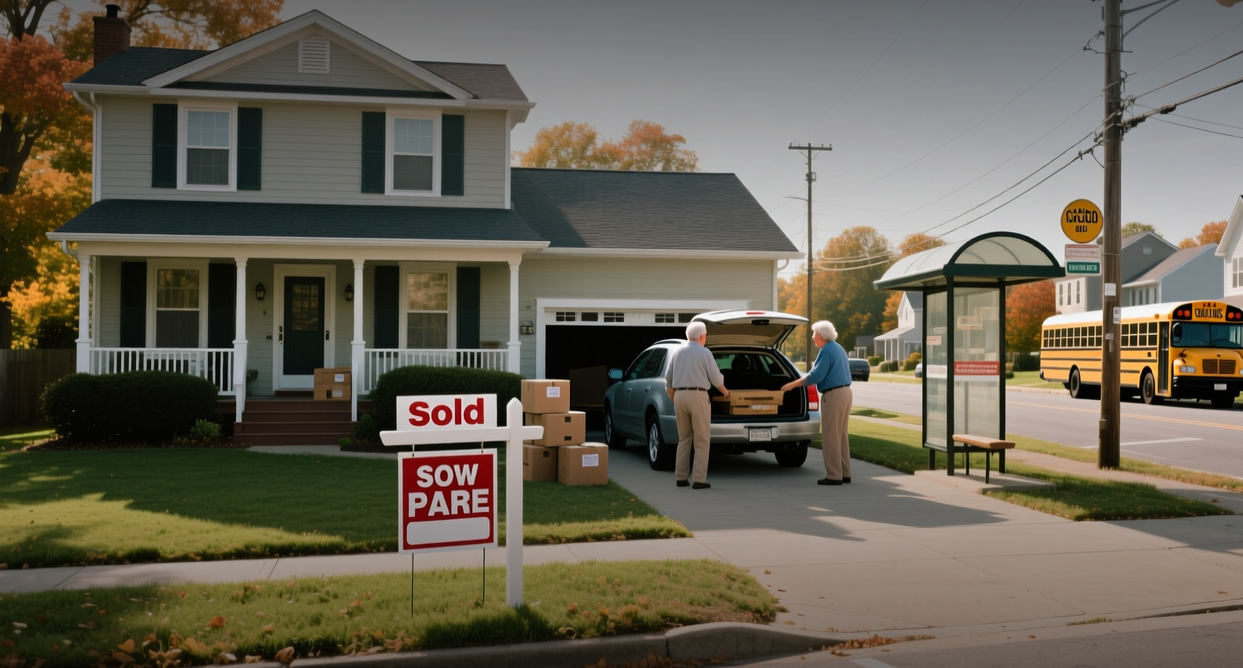
Delaware's 65-plus population grew 23 percent since 2020, the fastest in the nation, as retirees recalculate the full tax picture beyond income tax alone.
Delaware's 65-and-older population grew 23 percent since 2020, the fastest rate in the nation, as retirees from higher-tax Northeastern states weigh income, property, and sales taxes against Florida's no-income-tax appeal.
"Everybody wants to be the last person to move here," said Brad Travis Jr., a financial planner who grew up around Sussex County, noting that "property tax refugees" from New Jersey could see those costs fall from $18,000 to about $1,500.
Census estimates show Sussex County's median age rose to 53.2, nearly 14 years above the national average and up five years since 2015. IRS migration data from 2022 shows families moving to the region earned more than $136,000 annually, compared with under $92,000 for existing residents. The county has added roughly 40,000 residents since 2020, a 17 percent growth rate about five times the national average.
The influx has strained local infrastructure — schools are installing modular classrooms, and residents report months-long waits for medical appointments — even as Delaware's tax structure offers meaningful savings. A retiree with a $500,000 home could pay about $4,100 less per year in non-income-tax costs in Delaware than in Florida, according to 2026 Tax Foundation data.
Delaware levies a progressive state income tax from 2.2 percent to 6.6 percent, but retirees rarely pay it on their full income. The state exempts Social Security benefits from taxation and allows residents age 60 and older to exclude up to $12,500 each in eligible pension and retirement income — including IRA and 401(k) distributions, dividends, capital gains, interest, and net rental income. A married couple where both spouses are at least 60 can exclude up to $25,000 combined.
The state also has no sales tax and an effective property tax rate of about 0.54 percent, compared with 0.78 percent in Florida, according to 2026 Tax Foundation data. On a $500,000 home, that translates to roughly $2,700 in annual property taxes in Delaware versus about $3,900 in Florida. Homeowners insurance averages about $1,900 per year in Delaware versus $3,400 in Florida for $500,000 in dwelling coverage. With $20,000 in annual taxable purchases, Florida's average combined state and local sales tax of 7.02 percent adds about $1,400 per year — a cost Delaware residents avoid entirely.
Those figures produce an illustrative gap of about $4,100 per year in non-income-tax costs favoring Delaware, before accounting for each household's individual income-tax liability. Florida's lack of a state income tax remains a draw, but Delaware's retirement income exclusions and absence of sales tax narrow the gap considerably for many retirees.
The population surge has created pressure points. Schools in Sussex County are installing modular classrooms to accommodate growing student populations — evidence that the influx extends beyond retirees. Healthcare access has also tightened. Joe Pika, a 79-year-old former University of Delaware professor who moved to the area four years ago, told Bloomberg he waited nine months for a colonoscopy and 18 months for a dental visit, and drove 40 miles to see a dermatologist.
Delaware's healthcare infrastructure is expanding to meet demand. Beebe Healthcare operates a 210-bed medical center in Lewes, and ChristianaCare has expanded primary care and senior-focused services in Rehoboth Beach and Milford. But the pace of growth has outpaced planning, with Pika describing "an appalling lack of planning" for the issues that have coincided with the county's expansion.
A 2025 survey from the Transamerica Center for Retirement Studies found that affordable cost of living was the top consideration for retirees at 65 percent, followed by proximity to family and friends at 61 percent, and access to excellent healthcare at 49 percent. Delaware's coastal communities offer proximity to the Northeast corridor — a key advantage over Florida for retirees who want to stay close to children and grandchildren. Tax rates and cost figures cited here reflect 2026 data; retirees should verify against the latest official announcements before making relocation decisions.
This article is for informational reference only and does not constitute professional advice.
