
Iran's missile strikes on US warships mark a decisive shift to offensive maritime operations, with Tehran threatening American energy assets across the Persian Gulf as its crude exports collapse under a US blockade.
Iran's missile strikes on US warships mark a decisive shift to offensive maritime operations, with Tehran threatening American energy assets across the Persian Gulf as its crude exports collapse under a US blockade.
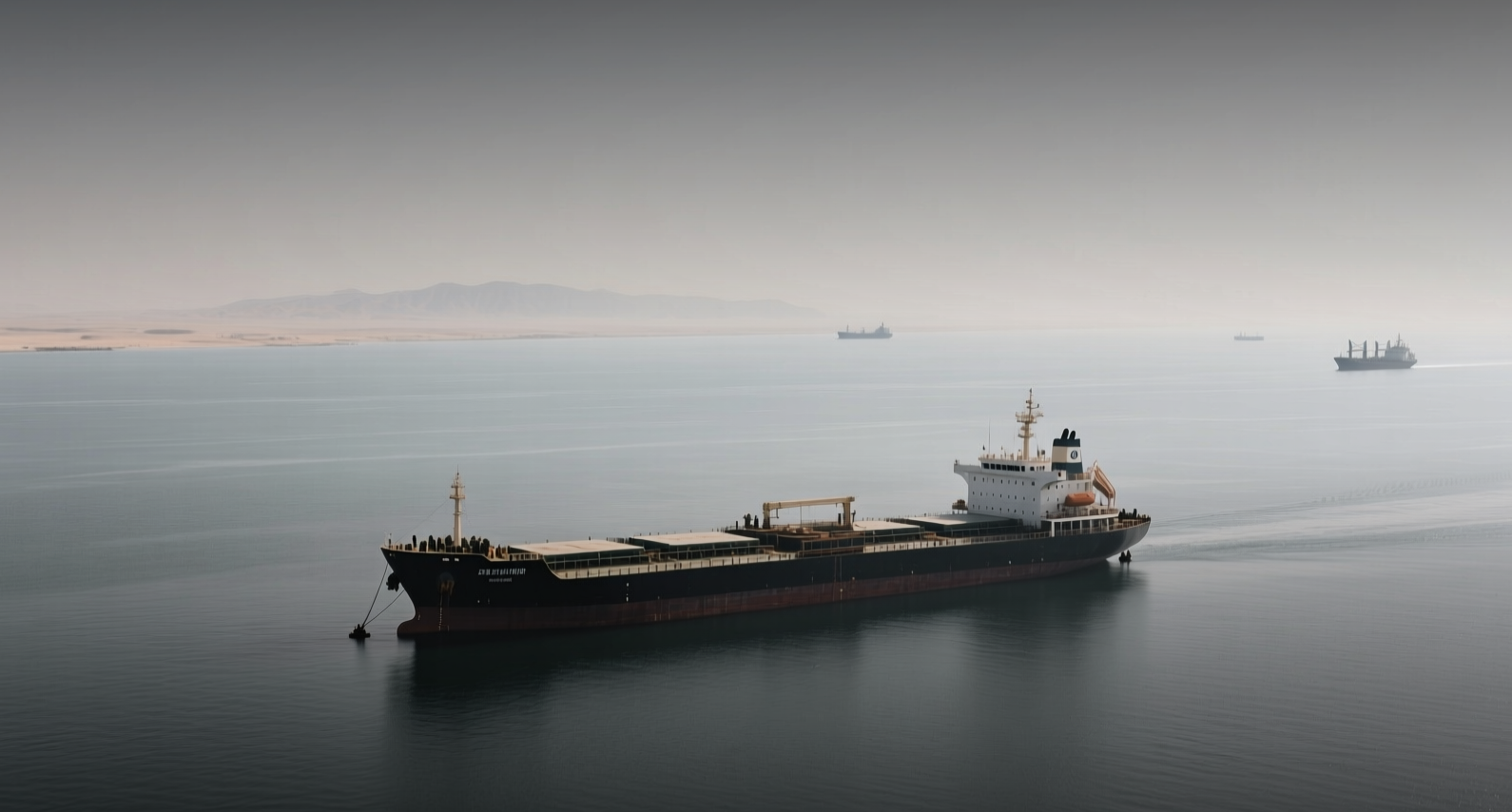
A weekend volley of ballistic missiles from Iran's Revolutionary Guards toward a US aircraft carrier and destroyer has pushed the two navies to the brink of open conflict, threatening the waterway that carries roughly 21 percent of the world's seaborne oil. Iranian crude exports have already collapsed to about 287,000 barrels a day in August, an 85 percent plunge from pre-war levels of roughly 2 million.
"The rules of the game have changed," Mohammad-Bagher Ghalibaf, Iran's parliament speaker and head of its negotiating team with the United States, said after the attacks, warning that any future strike on Iran's interests would draw "a faster, heavier and more painful response." He escalated further on Monday by threatening US oil and gas companies across the Persian Gulf, writing that "the oil and gas chain here is sprawling, accessible, and exposed."
The exchange began after US forces attacked three Iranian oil tankers, prompting Defence Secretary Pete Hegseth to warn that further Iranian attacks on American ships would be met with the destruction of Iranian tankers. Tehran responded by targeting three tankers transiting what it called unauthorized routes in the Strait of Hormuz and three US-linked vessels elsewhere. Washington said none of the missiles fired at the carrier and destroyer hit their targets, while the US military reported it had redirected 94 commercial vessels, disabled three and boarded two as of Sept. 7 while enforcing its maritime blockade.
The confrontation marks a strategic shift in Iran's approach. Tehran is no longer framing the Strait's closure as a defensive response or bargaining chip. Instead, officials describe a three-layer strategy: establishing an Iran-Oman shipping corridor through Hormuz, entering an offensive phase against the US fleet, and imposing a sanctions-based prohibited zone extending from the US blockade line into the Persian Gulf. Mohsen Rezaei, secretary of Iran's Supreme National Security Council, said on state television that Iran considered the Strait closed and would sanction vessels entering the zone to reach it.
Economic pressure mounts on Tehran
The military escalation runs parallel to a deepening economic squeeze. Washington's Treasury launched Operation Economic Outcast on Aug. 24, an effort to sever Iran's remaining financial connections and raise risks for foreign banks and companies dealing with Tehran. The campaign has since targeted financial channels in the UAE and Türkiye.
The results are visible in Iran's macro data. The rial has fallen to a record low of about 2.2 million to the US dollar, down from roughly 958,000 a year earlier. Official July figures showed average annual inflation at around 62 percent, with year-on-year inflation at 82 percent and food inflation at 134 percent. Satellite imagery reviewed by Iran International shows a sharp decline in vessel activity at Shahid Rajaee and Imam Khomeini, two of the country's most important commercial ports, since the blockade resumed in mid-July.
Oil industry workers held protests Monday at offshore platforms operated by Pars Oil and Gas Company and in the southern energy hub of Assaluyeh, demanding changes to pay, taxes and benefits. One placard read, "Uninterrupted production in a war zone."
Market implications and the risk of miscalculation
For global markets, the key question is whether Iran's new offensive posture can raise the cost of the US blockade without triggering a response its weakened military cannot absorb. Iran's crude exports have collapsed under the blockade, and analysts note the country lacks the naval capacity to sustain a conventional confrontation at sea. One social-media critic accused the government of celebrating a failed operation after losing three tankers without hitting its intended targets.
The last time the Strait of Hormuz faced a credible closure threat, in 2019 after Iran attacked tankers and a US drone was shot down, Brent crude spiked roughly 15 percent within two weeks before retreating as supply disruptions proved limited. The current escalation carries a more direct risk: Iran has explicitly threatened US energy infrastructure in the region, and US officials have warned of destroying Iranian tankers in response to further attacks.
Iran's parliament speaker Ghalibaf has signaled that the confrontation will not end with the withdrawal of US warships from missile range. "This is not defence; it is decisive entry into a military confrontation," wrote Mojtaba Zarei, a member of the parliamentary security committee, describing the new policy as one based on "pre-emptive operations" aimed at breaking the economic blockade.
For oil markets, the risk premium embedded in crude prices will depend on whether the tit-for-tat attacks remain limited to naval assets or expand to energy infrastructure. Iran has said it has not decided to sink oil tankers, citing environmental consequences, but the establishment of a prohibited maritime zone and threats against US oil companies suggest Tehran is prepared to escalate further. The next flashpoint could come within days, as Iran and Oman finalize maps for a new shipping corridor that Tehran says it will only commit to keeping open once the US ends its blockade.
This article is for informational purposes only and does not constitute investment advice.
