


Months of Hormuz disruption lifted 35 US- and European-listed shippers 68% year to date, more than five times the S&P 500, leaving the crowded trade exposed to any Iran de-escalation.
Months of Hormuz disruption lifted 35 US- and European-listed shippers 68% year to date, more than five times the S&P 500, leaving the crowded trade exposed to any Iran de-escalation.
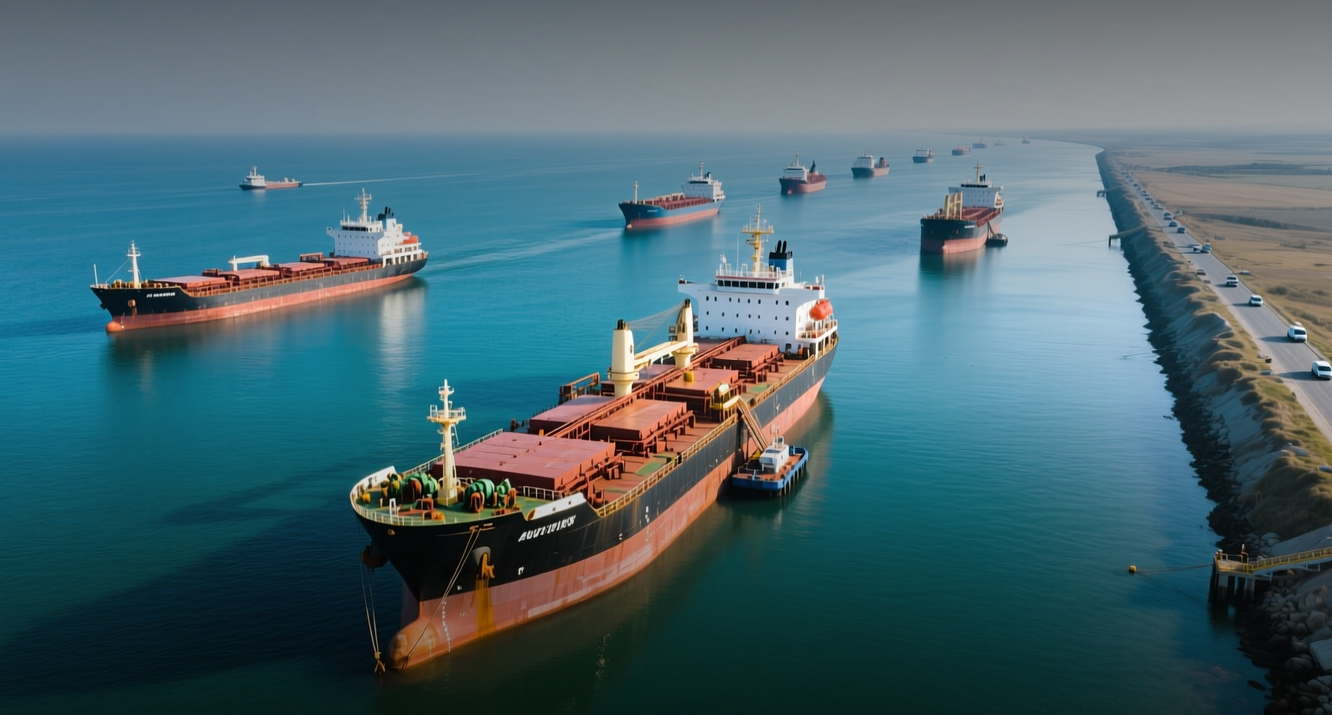
The months-long Strait of Hormuz crisis has turned the long-overlooked shipping sector into one of 2026's crowded trades, lifting 35 US- and European-listed carriers about 68% year to date — more than five times the S&P 500's advance.
"The shipping industry can serve as a hedge against geopolitical instability," Andreas Povlsen, managing director at Hayfin Capital Management, said, noting freight markets have benefited from shaky conditions including the COVID-19 pandemic, Red Sea Houthi attacks and Russia's invasion of Ukraine.
Crude oil tanker stocks led the rally with gains of 120% year to date, followed by car carrier operators, gas shippers and dry bulk carriers, Lloyd's List Intelligence data shows. Danaos Corp. shares climbed to their highest since 2008 and are up 60% this year, while Frontline Plc and Teekay Tankers Ltd. reached their strongest levels since 2011. BW LPG Ltd. hit a record, and International Seaways Inc. touched an all-time high last week. The Breakwave Tanker Shipping ETF, which tracks forward freight agreements for crude tankers, has jumped 650% since the Middle East conflict began in February and more than 23-fold this year.
The outsized gains rest on a single assumption — that the disruption to the Strait of Hormuz, which handles roughly a fifth of global oil trade, persists. Nicolas Tirogalas, chief executive of London-based asset manager Tufton Investment Management, said longer shipping distances and rising ton-mile demand have boosted demand across oil and chemical tankers, dry bulk carriers and gas vessels. Even if the Iran conflict ends, he said, conditions are unlikely to return to pre-war norms, because economies that find alternative suppliers rarely revert, instead managing future disruption risk through supply diversification.
The conflict since February has forced tankers onto longer routes and driven up insurance costs, tightening effective vessel supply while global trade continues. That has pushed freight rates higher and swelled carrier revenue, drawing investors who had already rotated into the neglected sector to position for downstream commodity supply chains and cash-flow-generating hard assets. The earnings effect is visible across the complex: COSCO Shipping Energy reported interim net profit up 140.6% year on year to 4.556 billion yuan, even as container peers COSCO Shipping Holdings and Orient Overseas International posted declines of 23.6% and 23.7% respectively.
The rally has extended beyond tankers into the broader freight market. Trans-Pacific container rates climbed to fresh highs last week, with Asia-U.S. West Coast prices up 2% to $7,621 per forty-foot equivalent unit and East Coast rates up 2% to $9,791, according to Freightos data cited by analyst Judah Levine. Asia-Europe lanes have pulled back from July peaks but remain roughly 40% to 70% above pre-peak May levels.
The concentration of gains in a handful of names leaves the trade vulnerable to a sharp reversal. The last comparable episode — the Red Sea attacks that began in late 2023 — saw container and tanker equities surge for months before giving back much of the move as carriers rerouted and capacity returned. A de-escalation in the Iran conflict would unwind the ton-mile premium underpinning current freight rates, hitting the most crowded positions hardest.
For investors, the question is whether the Hormuz disruption proves durable enough to justify valuations that already price in years of elevated rates. If the conflict persists, tanker owners stand to keep capturing outsized cash flows; if it de-escalates, the same leverage that powered the 68% advance could amplify the downside.
This article is for informational purposes only and does not constitute investment advice.
