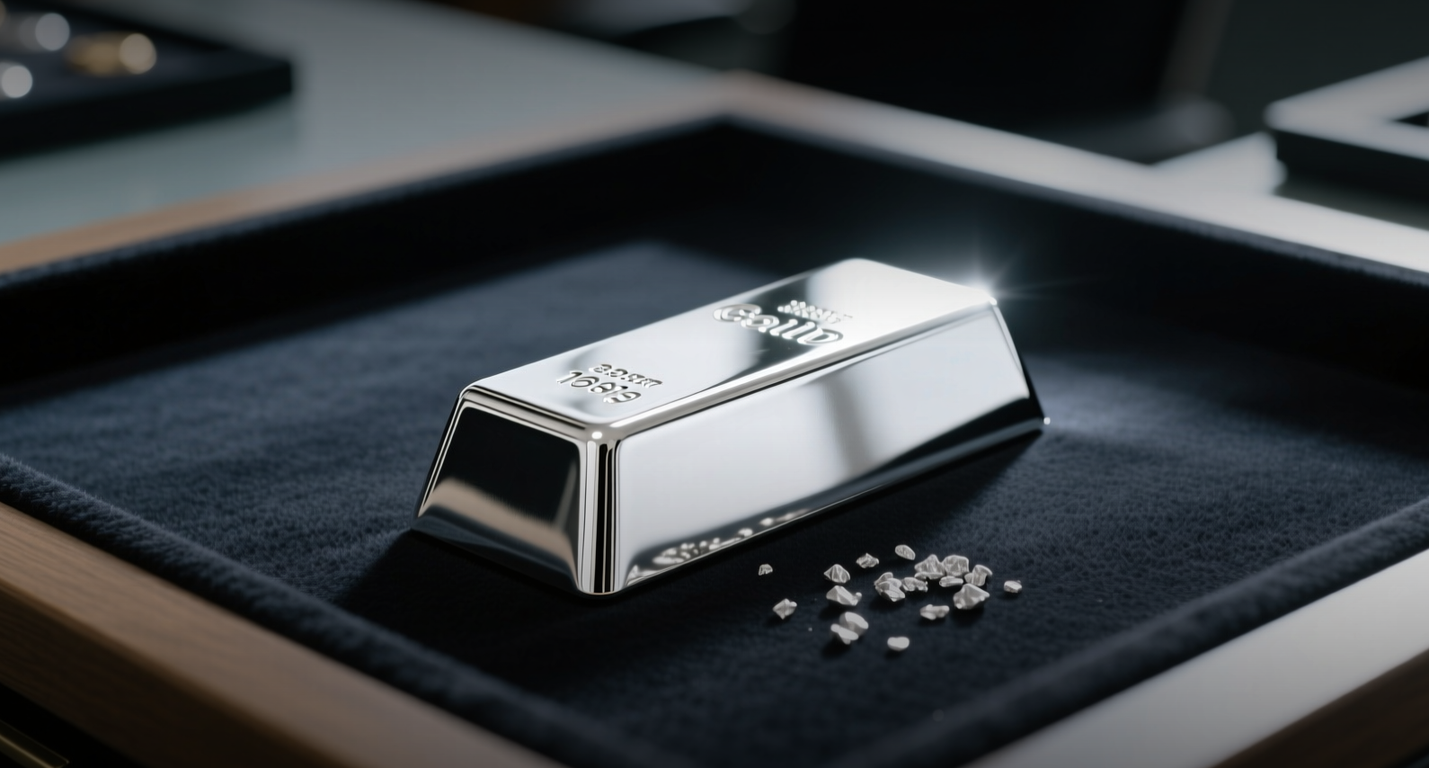
The US Dollar Index's continued slide pushed silver to $66.08 per ounce, up 1.2 percent, as traders positioned for Friday's nonfarm payrolls report that could determine the Federal Reserve's next rate move.
"The payrolls report will probably be the biggest defining moment of the week. If the jobs report misses expectations, and September rate hike bets decline, that could see gold move higher," Ilya Spivak, head of global macro at Tastylive, said.
The dollar's depreciation makes greenback-priced metals less expensive for holders of other currencies, while US Treasury yields slipped from multi-year highs. Markets are pricing a 62 percent probability of a US rate hike at the Fed's September 15-16 meeting, according to the CME FedWatch Tool. The ADP National Employment Report showed US private payrolls increased moderately in August, and a Fed survey published Wednesday indicated economic activity edged up with prices rising moderately.
Gold rose 1.1% to $4,434.70 per ounce after touching a near one-month low in the previous session. Platinum climbed 1% to $1,777.79 and palladium firmed 0.8% to $1,356.50, while US gold futures gained 1.5% to $4,480.10.
Silver's advance tracks the broader precious metals complex, where dollar depreciation has been the primary driver. Higher rates increase the opportunity cost of holding non-yielding assets, so any reduction in rate-hike expectations tends to support metals prices. The Fed's Beige Book survey, published Wednesday, showed economic activity increased modestly, employment rose slightly, and prices increased moderately in recent weeks, a mixed reading that may do little to sway policymakers ahead of their September meeting.
A weaker-than-expected NFP print could reduce September rate-hike odds and extend silver's gains, while a strong report would reinforce the dollar's recovery and pressure the metal. Silver's dual role as an inflation hedge and industrial metal leaves it exposed to both the Fed's policy path and the broader commodity complex, where crude prices above $90 per barrel on US-Iran tensions continue to fuel inflation concerns.
Geopolitical risk remains in the background. Top aides to US President Donald Trump are pushing to keep the Iran conflict from escalating before November's midterm elections, four people familiar with the discussions said, though White House officials may consider ramping up military action after the November 3 vote. Escalating Middle East tensions have kept oil prices elevated, adding to global inflation pressures that support precious metals as hedges.
This article is for informational purposes only and does not constitute investment advice.