
SpaceX's $6.7 billion cloud contract backlog provides near-term AI revenue visibility, but $15.8 billion in quarterly capex keeps economics mixed.
SpaceX's $6.7 billion cloud contract backlog provides near-term AI revenue visibility, but $15.8 billion in quarterly capex keeps economics mixed.
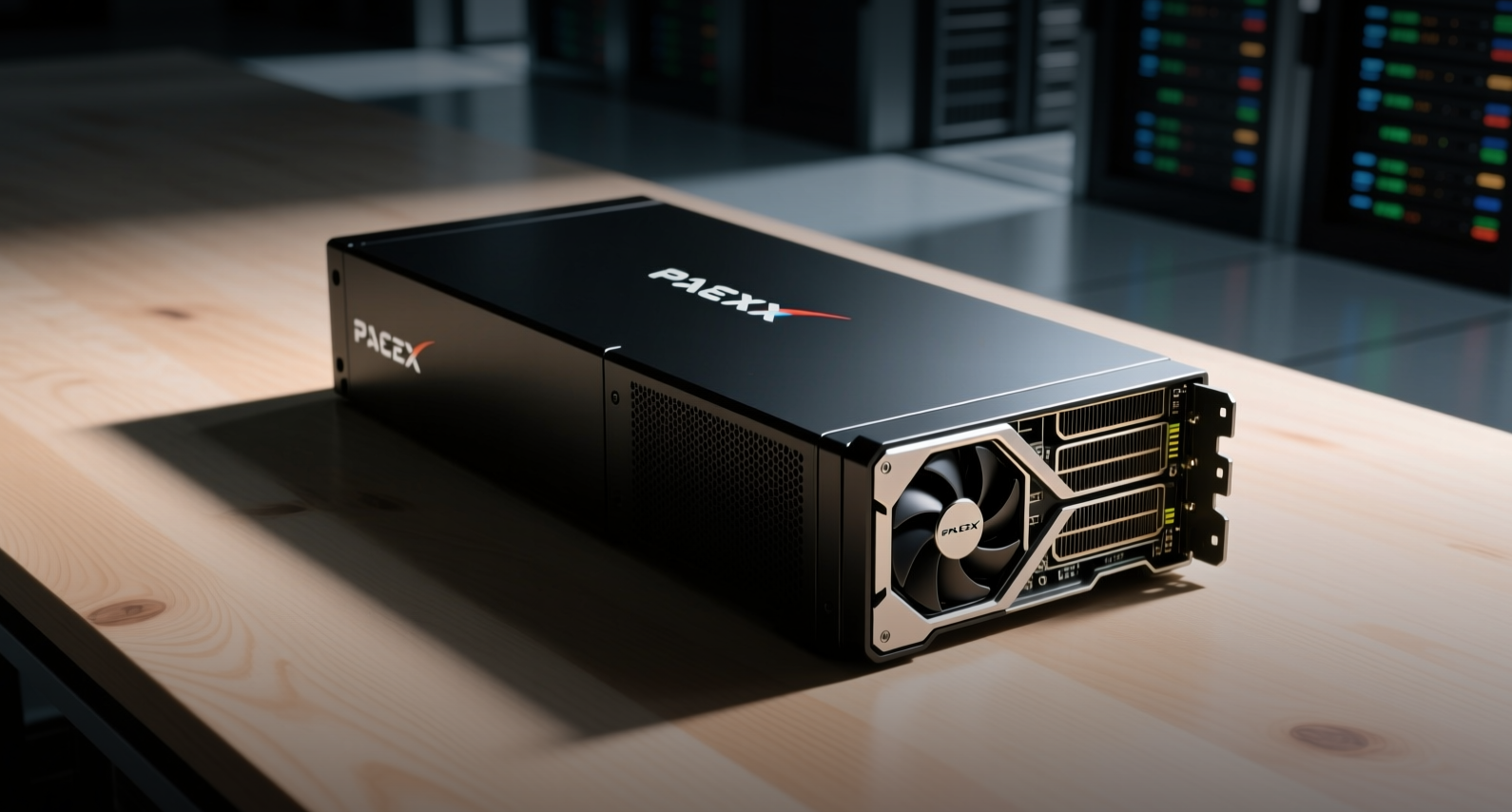
SpaceX's $6.7 billion in signed cloud contracts for the second half of 2026 gives its AI unit near-term revenue visibility, but $15.8 billion in quarterly AI capex keeps the economics mixed.
"The new hosting deals come with high incremental EBITDA margins," CFO Bret Johnsen said on the company's first earnings call as a public company, adding that the agreements keep SpaceX on track to reach a $100 billion annualized revenue run rate by December.
The contracts, signed in the opening weeks of the current quarter for a six-month period beginning in October, follow compute-capacity agreements worth $920 million with Google and $1.25 billion per month with Anthropic. AI solutions and infrastructure revenue surged to $2.2 billion in Q2 from $480 million in Q1 and $310 million a year earlier. Overall AI revenue reached $2.56 billion, up from $818 million in Q1 and $737 million a year ago. The segment's operating loss nearly halved sequentially to $1.3 billion, while adjusted EBITDA swung to positive at $1.1 billion.
The investment stakes are clear: SpaceX shares fell 5% to 8% after the August 4 earnings release as investors weighed capex that more than doubled to $18.4 billion in Q2, versus the $13.2 billion analysts had expected. "The stock is down because the capex for the AI segment was more than double what was expected," Melissa Otto, global head of Visible Alpha research at S&P Global, told Fortune. Otto called the $1 trillion annual revenue target "ambitious" and said it "remains a show-me story."
The cloud pivot
SpaceX's AI unit has shifted from building proprietary models to renting out compute capacity to some of the biggest names in AI. The company built two data centers in and around Memphis, Tennessee to train xAI models, then redirected much of that capacity to paid hosting for Anthropic and Google. AI compute capacity reached 1.4 gigawatts in Q2, up from 1.0 GW in Q1 and 0.4 GW a year earlier. Musk said the company expects to exceed 2 GW by the end of 2026 and scale to 10 GW by the end of next year.
The payback math is aggressive. Johnsen said AI compute investments are delivering a payback period of less than one year, and the company plans to maintain similar capex levels over the coming quarters. SpaceX raised $100 billion in available funds through a post-IPO bond sale to finance the buildout.
Grok pipeline and the trillion-dollar question
On the product side, SpaceXAI launched Grok 4.5, developed jointly with Cursor for finance, legal and coding applications. President Gwynne Shotwell said enterprise token consumption tripled immediately after the model's July debut. Musk said Grok 4.6 ships next week, followed by Grok 4.7 within three to four weeks. Grok 5, due before year-end, will incorporate SpaceX's complete 25-year data archive, which Musk said would make it "by far the best engineer."
Musk has pulled forward the company's internal target for $1 trillion in annual revenue from 2031 to 2030, with a "nonzero chance" of hitting it in 2029. That would require roughly 10x growth from the $7.8 billion in Q2 revenue, which nearly doubled year over year. Starlink contributed $4.3 billion in Q2 revenue, up 66%, with 12 million subscribers. The rocket business added $962 million.
The company has also agreed to acquire AI coding platform Cursor for $60 billion, with the deal expected to close in Q3. SpaceX merged with xAI in a transaction valuing the combined company at $1.25 trillion. Musk confirmed future AI infrastructure will be built exclusively on Nvidia's Vera Rubin platform.
SpaceX shares closed below the $135 IPO price even after revenue nearly doubled, trading around $125. The market is pricing in execution risk on the capex-to-revenue conversion. October is when the next wave of cloud revenue starts flowing, and December is when the company says it will hit the $100 billion annualized run rate. Those dates will determine whether the AI economics story holds up — or whether the $15.8 billion quarterly spend becomes a drag on the stock.
This article is for informational purposes only and does not constitute investment advice.
