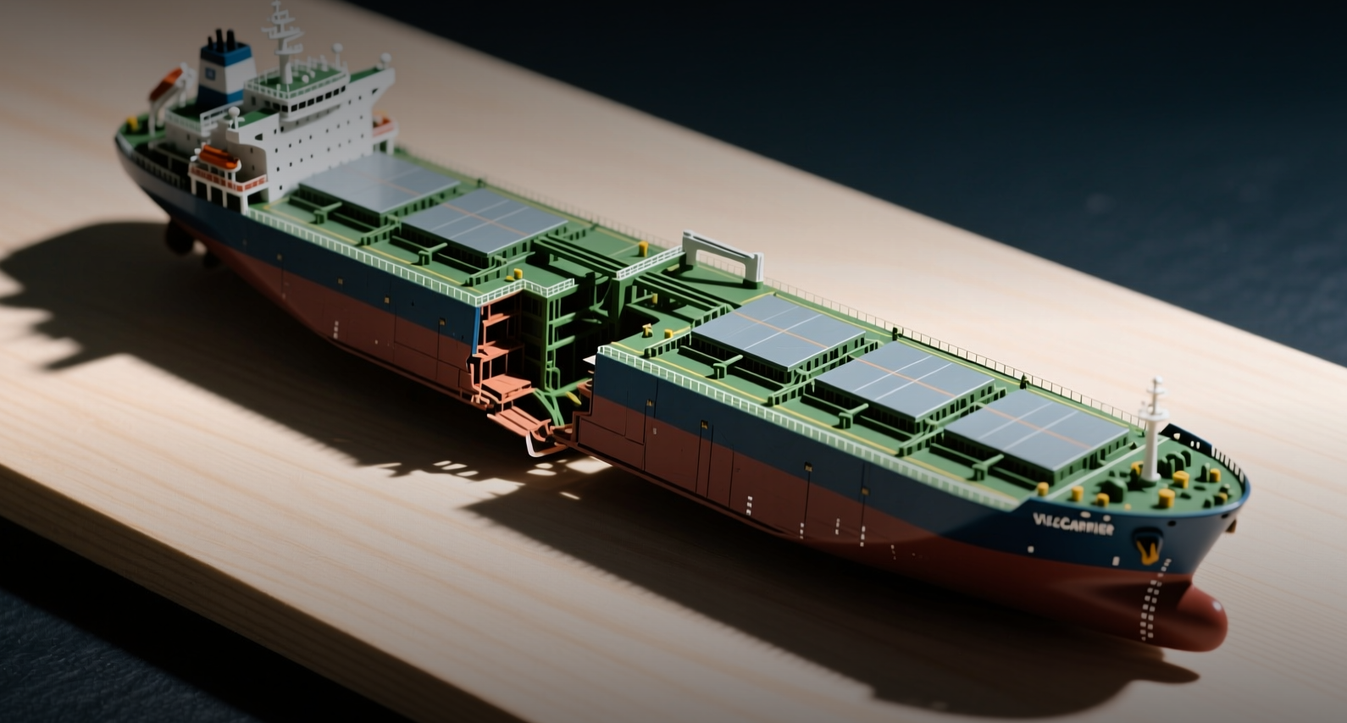
Tanker owners are capturing war premiums topping 40% as shippers reroute around the Strait of Hormuz, making VLCC operators the conflict's clearest winners.
The renewed US-Iran conflict has pushed spot rates for Very Large Crude Carriers above $120,000 a day, more than double the pre-escalation average, as shippers charge war-risk premiums to navigate the Strait of Hormuz, Baltic Exchange data show. The spike marks the highest tanker earnings since the 2020 oil-price war and has turned vessel owners into the war's most direct financial beneficiaries, outperforming oil producers and refiners.
The US launched a third consecutive night of strikes on Iran on July 15, targeting missile and drone sites near Bandar Abbas and Greater Tunb Island, according to US Central Command. Iran retaliated by striking two tankers in the Omani area of the strait, killing one crew member of Indian nationality and injuring several others, the UAE's ministry of defense confirmed. Tehran has declared the strait shut, while the US reimposed a naval blockade on Iranian ports, choking supply through the waterway that handled about a fifth of the world's oil before the conflict began on Feb. 28.
Brent crude climbed to an intraday high of $86 on July 14 and has gained nearly 16% since July 7, while West Texas Intermediate has risen more than 15%. The crude rally has fed directly into tanker economics: longer voyage distances around the Arabian Peninsula and war-risk insurance premiums that add $40,000 to $50,000 per trip through the region, according to shipping brokers.
How Tanker Rates Are Responding
VLCC spot earnings have surged past $120,000 a day, compared with roughly $50,000 before the latest escalation in early July, Baltic Exchange data show. The rates reflect a market where available vessel capacity has tightened as owners demand compensation for the risk of transiting waters near the Strait of Hormuz, where Iran's Islamic Revolutionary Guard Corps has claimed responsibility for disabling two supertankers.
The divergence between tanker stocks and the broader energy sector has been stark. While the S&P 500 and Nasdaq have climbed to records during the conflict, gold has fallen 22% from its pre-war peak and silver has sunk 37%, according to BeInCrypto data. Bitcoin has traded near $62,000, behaving like a risk asset rather than a haven.
What's at Stake for Shipping
The key variable is how long the strait remains contested. President Trump said the US would "keep the strait" and impose a 20% toll on all cargo shipped through it, calling the US the "Guardian of the Hormuz Strait." Iran's foreign ministry said the US attacks were "rendering futile all efforts made over the past several months to reduce tensions."
Kalshi prediction market traders now price a 92% probability that US gasoline prices exceed $4 a gallon by the end of July, up from a national average of $3.89. Whether tanker rates hold at current levels depends on the duration of the blockade and whether Iran can enforce its closure of the waterway. The last time the strait faced a sustained disruption — during the Iran-Iraq war in the 1980s — tanker rates remained elevated for months as the Tanker War unfolded.
This article is for informational purposes only and does not constitute investment advice.