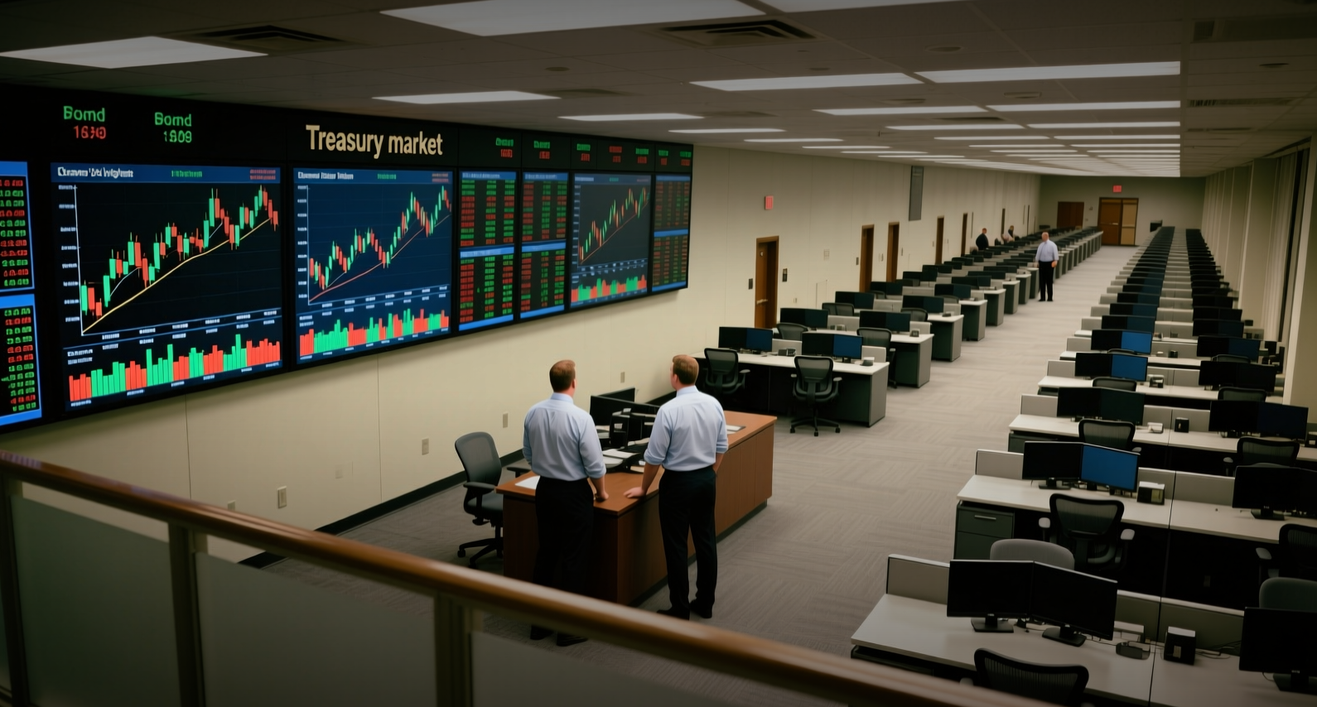
The 30-year Treasury yield has traded above 5 percent for 55 sessions, the longest stretch since 2006, as a structural wall of government and corporate supply collides with sticky inflation to keep long-end borrowing costs elevated. The 10-year yield sits near 4.78 percent, its highest since January 2025, after Federal Reserve Chair Kevin Warsh's hawkish Jackson Hole remarks pushed fed funds futures to price a 65.4 percent probability of a 25-basis-point hike at the September meeting.
"The world is drowning in enormous debt, and the only way out of this situation is growth," Treasury Secretary Scott Bessent said at the G20 Finance Ministers' Meeting in Asheville, North Carolina on Aug. 31, pushing back against the view that the bond market is signaling fiscal distress. With US national debt exceeding roughly $40 trillion, the administration plans to lower the real debt burden by lifting growth rather than cutting spending.
The long-end move is being driven by real rates rather than inflation expectations, according to Yahoo Finance analysis of the post-Jackson Hole rise. The 30-year spiked to 5.34 percent in mid-August, its highest since 2007, and the 10-year has climbed about 0.46 percentage points since Warsh's remarks. Brent crude has moved above $90 a barrel after renewed US-Iran tensions, adding another source of price pressure that complicates the Fed's path.
The stakes extend well beyond Washington. Treasury yields are the benchmark for mortgages, corporate debt and government financing worldwide, so a sustained rise tightens financial conditions across equities, currencies and emerging markets simultaneously. The next FOMC decision lands Sept. 15-16, with the August jobs report due Sept. 4 and key inflation data on Sept. 11 likely to confirm whether price pressures remain persistent enough to justify a hike.
Supply keeps piling up
The supply side of the equation is doing the heavy lifting. Record corporate bond issuance last month is set to be followed by roughly $215 billion of new corporate debt hitting the market in September, much of it tied to Big Tech's AI infrastructure buildout. That corporate demand absorbs capital that might otherwise flow into Treasuries, while the federal government continues to refinance maturing debt at higher rates.
The Treasury announced an expansion of its buyback program last month to support long-end demand, but Bank of America rate strategists Meghan Swiber and Eleanor Xiao said investors remain reluctant to extend duration. "Despite the Treasury's buybacks and recent policy measures, investors remain reluctant to extend duration," they wrote. Options activity shows traders positioning for the 30-year yield to climb as high as 5.7 percent, with a roughly $6.5 million trade in December long-bond futures put options spotted this week.
The last time the 30-year yield spent this long above 5 percent was in 2006, before the global financial crisis forced the Fed into an aggressive easing cycle. The current dynamic differs: inflation is running above the Fed's 2 percent target, and Warsh warned at Jackson Hole that price pressures remain "excessively high," leaving little room for the rate cuts that would relieve long-end pressure.
A fiscal loop tightens
Higher yields feed back into the fiscal arithmetic. As old government debt matures and is refinanced at higher coupons, interest expenses consume a growing share of federal revenue, which in turn requires more borrowing and more Treasury supply — a self-reinforcing loop that keeps upward pressure on yields. Bessent argues growth, not austerity, is the answer, and the administration is leaning on stablecoin institutionalization and bank deregulation to expand Treasury demand.
President Donald Trump publicly pressured Warsh to cut rates, telling reporters the same day that US rates are "too high" and "should be the lowest in the world." The tension between the White House and the Fed adds another layer of uncertainty to the September decision, with some strategists warning that if Warsh hesitates to hike, insurers and pension funds could accelerate long-duration selling and push yields even higher.
For investors, the critical variables are inflation, Fed policy, Treasury issuance and oil prices. If inflation stays sticky and government borrowing remains elevated, yields could stay higher for longer, tightening financial conditions and pressuring expensive equity valuations, particularly in growth and technology sectors whose future earnings are discounted at higher rates. The central question for the rest of 2026 is whether the economy can grow fast enough to absorb the rising cost of servicing the debt without creating a larger fiscal and financial-market problem.
This article is for informational purposes only and does not constitute investment advice.