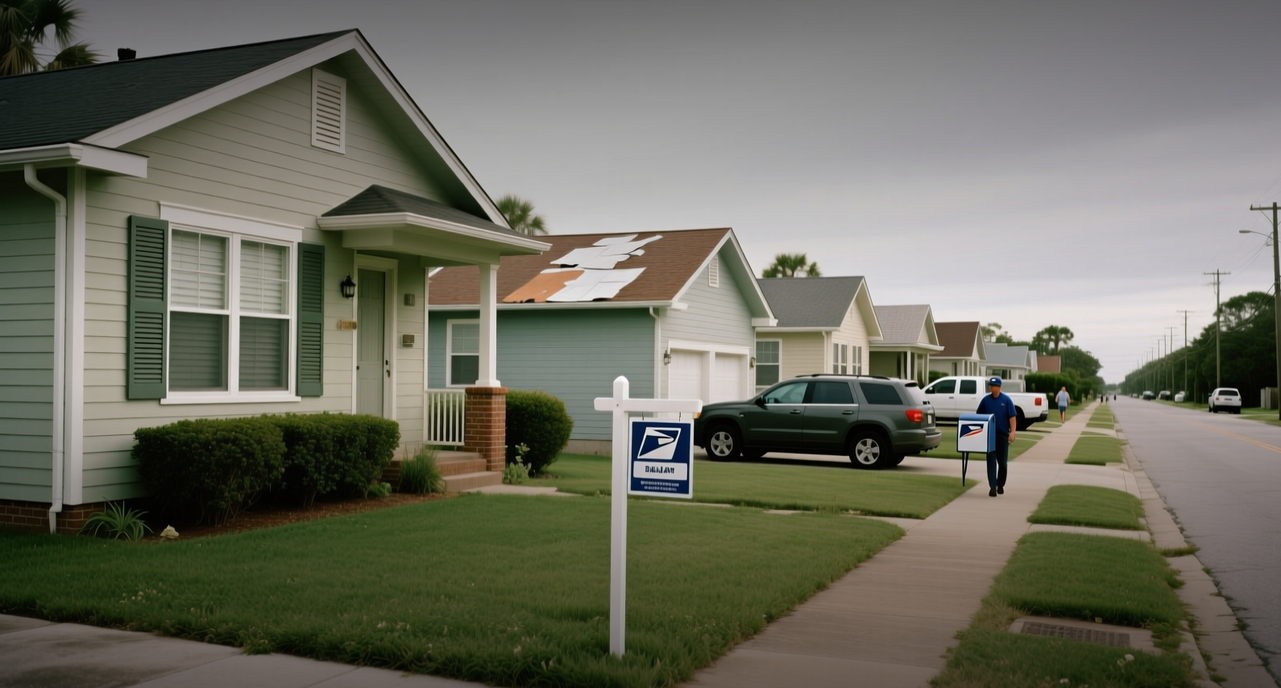
Property insurance now costs the typical mortgaged US single-family household $209 a month, or about $2,500 a year, the highest on record, according to Intercontinental Exchange data for June 2026.
"Rising home-insurance costs are an immediate affordability concern for families across the country," TJ Helmstetter, a spokesperson for the advocacy group Insurance Fairness Project, said. "People are worried about their future, families are being forced to make difficult financial trade-offs because of rising premiums, and voters want lawmakers to address the crisis."
The June figure is up from $204 a month in 2025. Property-insurance costs have climbed nearly 80% since the start of 2020, per ICE, which began tracking the series in December 2013. Premiums now absorb 9.6% of the typical homeowner's monthly housing payment, up from a low of 7.2% in 2018.
The burden is unevenly distributed. New Orleans homeowners devote 24.3% of their monthly housing payment to insurance, followed by Baton Rouge at 17.9% and Oklahoma City at 17.5%. Over the past 12 months, Greenville, South Carolina, recorded the steepest increase at nearly 16%, with Honolulu and Columbia, South Carolina, close behind at 15%.
Carriers are repricing for catastrophe exposure. In the Carolinas, insurers are factoring in Hurricane Helene, which made landfall in September 2024. In Minneapolis and Des Moines, Iowa, they are pricing hail and severe convective storms — thunderstorms with lightning, tornadoes or destructive winds — a peril ICE described as frequently overlooked but now driving double-digit increases.
Miami is the exception. Premiums there rose just 1.5% year over year, and insurance's share of the monthly payment fell to 16.2% from 17.4%.
Households are responding in two ways: dropping coverage or raising deductibles. Homeowners without a mortgage can legally go "bare," and the Consumer Federation of America warned that either route risks the loss of possessions and the home itself if disaster strikes. The group also flagged a spillover effect: "Neighborhoods with many uninsured homes will see more damaged and vacant homes, which can lead to a downward spiral in the surrounding property values and tax base." Higher deductibles lower monthly premiums but leave the homeowner carrying the out-of-pocket amount, the Urban Institute noted.
Switching carriers is the clearest lever. Homeowners who changed insurers cut premiums by an average of 6.6% over the past year, while those who stayed with their existing carrier paid 10.4% more, ICE found. The gap is widest where premiums are highest: Miami switchers saved an average of 18.5%.
For owners already stretched, the June reading sets a higher baseline for the next renewal cycle, and the Consumer Federation of America said those who cannot absorb the increase may be forced to sell or risk falling behind on mortgage payments. The next data point to watch is ICE's July premium update, which will show whether the 2026 cooling in Miami spreads to the Carolinas and the Midwest storm belt.
This article is for informational purposes only and does not constitute investment advice.