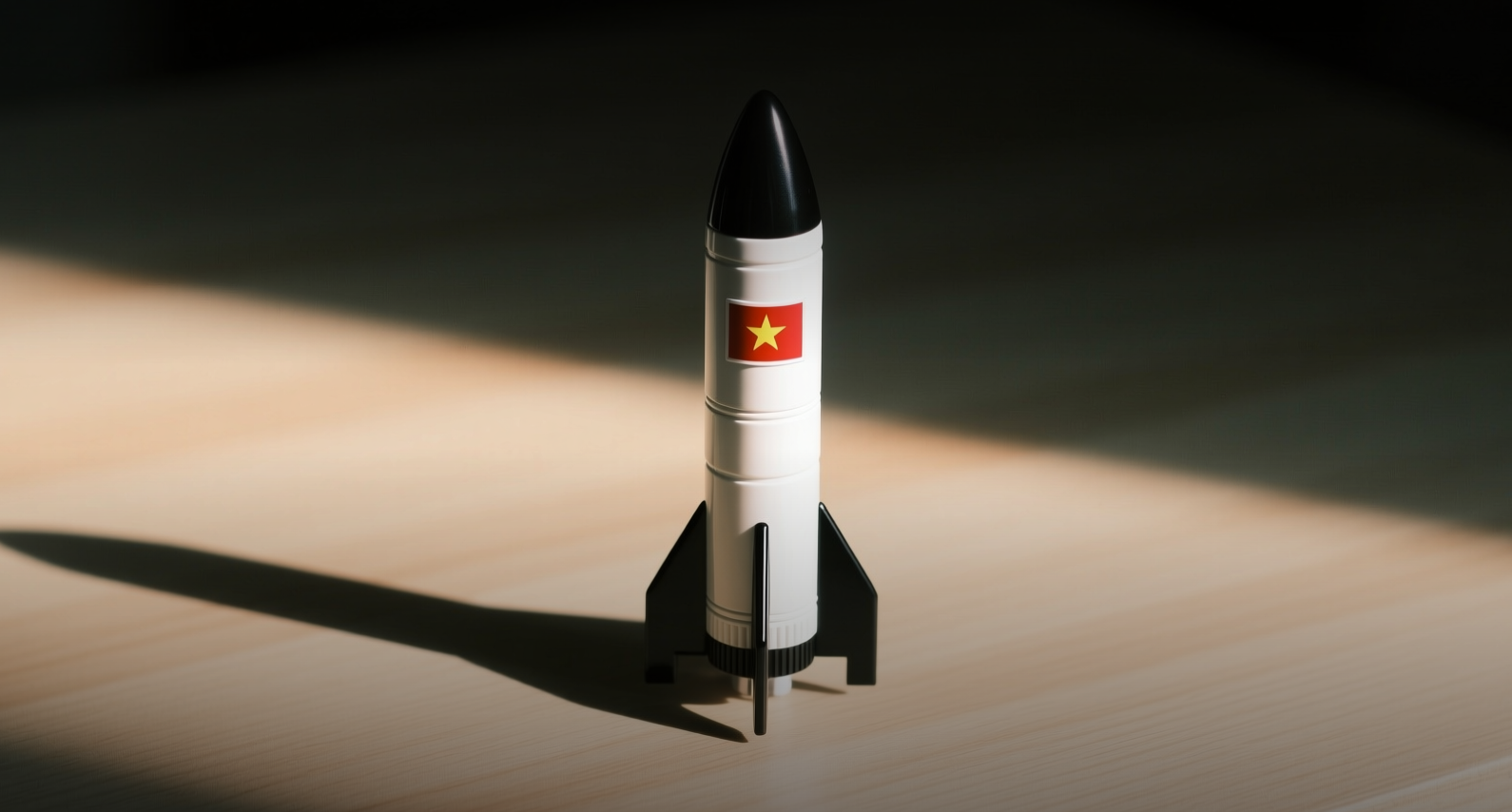
Vietnam's newest space company has secured a ride to orbit, marking a shift from government-led satellite projects toward a commercial industry.
VinSpace, the aerospace unit of Vietnamese conglomerate Vingroup, signed a launch contract with SpaceX that will carry its first satellites into orbit in 2027, giving the country's private space industry a commercial path to space.
"Reliable access to space is fundamental to turning satellite innovation into operational missions," Thu Vu, chief executive officer of VinSpace, said. "This contract with SpaceX is an important milestone in VinSpace's long-term strategy to help build Vietnam's space ecosystem."
The satellites will fly on a Transporter rideshare mission in the second quarter of 2027, part of SpaceX's program that starts at $350,000 for payloads up to 50 kilograms. VinSpace was established in November 2025 with charter capital of 300 billion Vietnamese dong, about $11.4 million. Pham Nhat Vuong, founder and chairman of Vingroup, holds 71 percent of the company, while Vingroup owns 19 percent.
The deal lets VinSpace test domestically developed satellite modules in orbit, a step toward building a commercial aerospace ecosystem in Vietnam that could eventually serve customers across Southeast Asia. The company plans "Make in Vietnam" nanosatellite constellations for telecommunications and remote sensing.
A Fast Track From Startup to Orbit
VinSpace was created less than a year ago, yet its timetable is unusually aggressive. The company is developing its own spacecraft, manufacturing capability and ground infrastructure, with first missions intended to test technologies built in Vietnam before they become commercial products. It has been building cleanroom facilities, testing equipment and ground-station infrastructure to support satellite production and operations.
The rideshare model is particularly useful for a new entrant. Developing a satellite is only part of the challenge — the spacecraft must be tested, transported, integrated with a launch vehicle and delivered to the right orbit. Buying an entire rocket makes little economic sense for a small initial mission. SpaceX's Transporter program regularly carries dozens of satellites on Falcon 9 rockets, letting spacecraft developers purchase a portion of a launch instead of funding an entire mission. NASA's R5-S9 technology-demonstration CubeSat, for example, launched on Transporter-17 in July.
Vietnam already has experience putting spacecraft into orbit. The country launched its first Earth-observation satellite, VNREDSat-1, in 2013, following the F-1 student satellite in 2008. Vietnamese universities and state research institutions have since developed additional small satellites. VinSpace adds a major private-sector player to that national capability.
Beyond Hardware, a Broader Tech Push
The deal fits into Vingroup's wider expansion into technology and industrial businesses. In the past year, the conglomerate has established companies focused on robotics, energy and high-speed rail. VinDynamics, another Vingroup member, signed a memorandum of understanding with Germany's Schaeffler in April to develop core components for humanoid robots.
The broader Vietnamese tech sector has pursued similar partnerships. FPT Group has worked with Nvidia, Microsoft and SAP on AI infrastructure, while Vietjet signed a contract with SpaceX's Starlink for in-flight internet in May. The National Innovation Center and Thermo Fisher Scientific agreed in August to develop a shared semiconductor and biomedical laboratory at NIC Hoa Lac.
For Vietnam, the opportunity extends beyond putting hardware in orbit. Remote sensing can support agriculture, forestry, disaster response and infrastructure monitoring. Satellite communications can extend connectivity to areas where terrestrial networks are hard to deploy. Those are the markets VinSpace says it ultimately wants to address.
The 2027 mission will be an early test of more than a satellite. VinSpace must show its spacecraft can survive launch, operate in orbit and return useful engineering results — then turn those results into repeatable manufacturing and commercial capabilities. For a company created only in late 2025, the timetable is aggressive. For Vietnam's space sector, it could mark the beginning of a shift from government-led projects toward a commercial industry capable of designing, building and monetizing its own space assets.
This article is for informational purposes only and does not constitute investment advice.