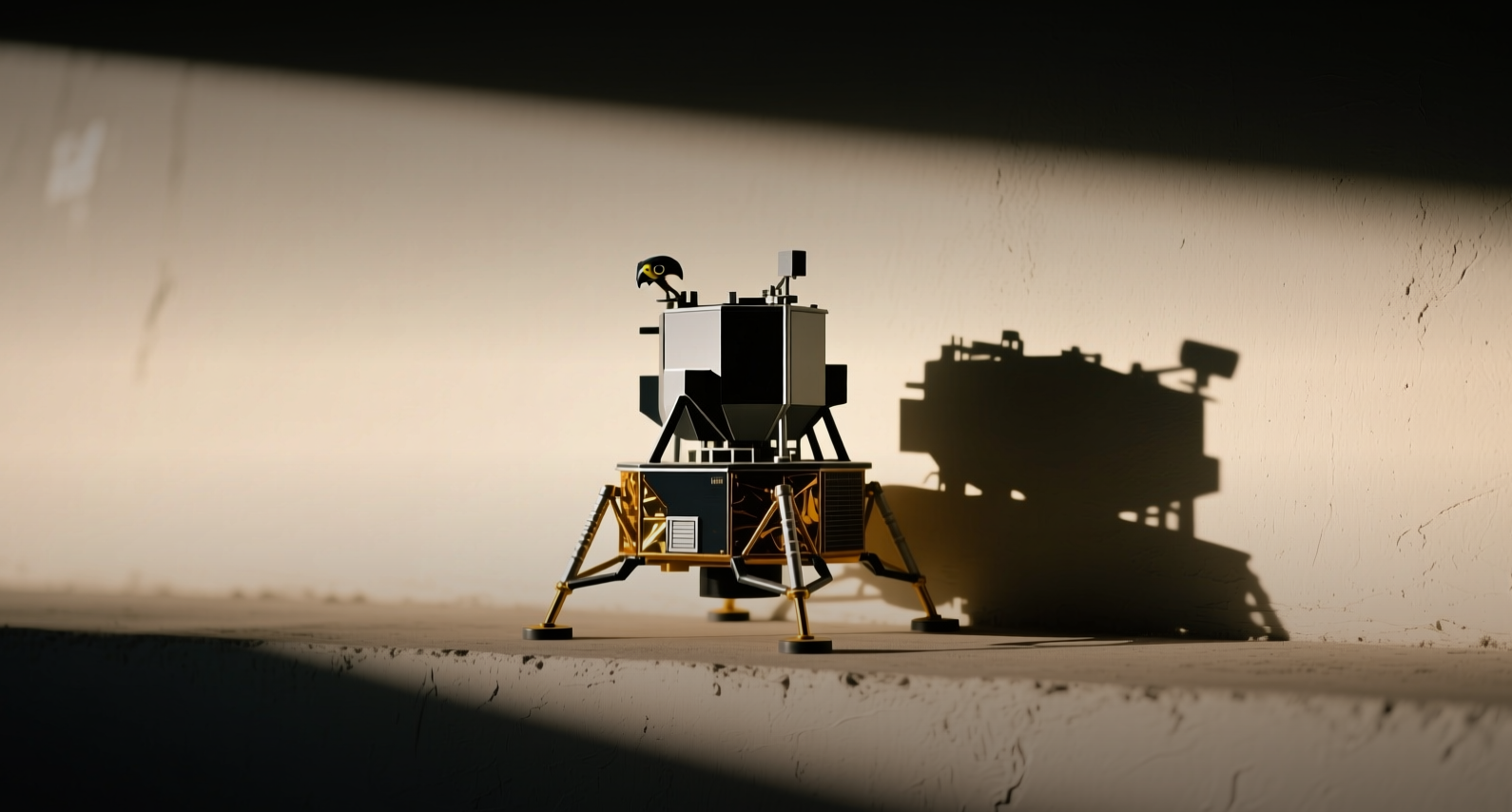
Voyager Technologies closed its $300 million acquisition of Astrobotic Technology on Monday, securing a $298 million NASA contract in the same week.
Voyager Technologies completed its $300 million acquisition of lunar lander developer Astrobotic Technology on Monday, weeks after the target secured a $298 million NASA contract for two moon missions.
"Astrobotic was built to make the moon accessible to the world, and joining Voyager will hit the accelerator on that mission for our customers," John Thornton, former Astrobotic chief executive and now head of Voyager Lunar Systems, said.
Voyager paid $162 million in cash and stock plus assumed $9 million in debt, with an additional $129 million in earnout payments tied to performance milestones. The deal, first announced June 2, renames Astrobotic as Voyager Lunar Systems and keeps Thornton at the helm. The acquisition came days after NASA awarded Astrobotic two Peregrine lander missions under its Commercial Lunar Payload Services program, valued at $298 million and scheduled for 2028.
The combination positions Voyager as a full-stack lunar operator at a time when NASA is accelerating its Artemis program. The company's "LEO, Lunar, Lagrange" strategy now includes landers, rovers, power systems and inflatable habitats — a breadth of capability that few private space firms can match.
A Lunar Stack Takes Shape
Voyager's lunar ambitions extend beyond the NASA contract. The company has invested in Max Space, a developer of inflatable habitats that could be deployed on the moon, and developed anti-dust coatings for lunar surface equipment. Astrobotic's Griffin-1 lander, which will deliver Astrolab's FLIP rover and several smaller payloads, has been shipped to NASA's Jet Propulsion Laboratory for environmental testing ahead of a launch as soon as the fourth quarter.
The former Astrobotic also brings capabilities beyond the moon. It was one of seven companies selected by NASA on July 8 for the STRIDE program, which develops robotic mobility technologies for future Mars missions. The seven awards carry a combined value of $17 million.
Debt, Dilution and the Cost of Scale
Voyager's expansion comes with a rising financial burden. The company posted net losses that deepened from $25 million in 2023 to $62 million in 2024 and nearly $105 million in 2025. To fund the acquisition and operations, Voyager closed an upsized $250 million credit facility last week, following a $435 million convertible note issuance in November carrying a 0.75% coupon.
Matthew Kuta, president of Voyager, said the company plans to invest in Astrobotic's Pittsburgh facilities and expand its workforce. He also pointed to shared benefits in propulsion technology, noting that Astrobotic's rotating-detonation rocket engine, tested earlier this year at NASA's Marshall Space Flight Center, could serve Voyager's national security propulsion work, including missile defense applications.
Voyager stock traded at about $30.55 on Monday, down roughly 2 percent, as investors weighed the acquisition's strategic value against the company's deepening losses and rising debt load.
This article is for informational purposes only and does not constitute investment advice.