Report
No Data Yet

## Executive Summary Luma AI has finalized a $900 million Series C funding round, elevating its valuation to over $4 billion. Led by **Humain**, the investment underpins a significant strategic expansion into London, where the company plans to hire approximately 200 employees. This move positions **Luma AI** to compete more aggressively in the advanced AI model development sector and capitalizes on the UK's supportive environment for technology and engineering. ## The Event in Detail The Series C financing provides **Luma AI** with substantial capital to advance its goal of creating a "world model." The London expansion will establish a new hub focused on research, engineering, partnerships, and strategic development. This decision aligns with a broader push within the United Kingdom to foster a world-leading AI industry, as a recent report from the Association for Consultancy and Engineering (ACE) and Autodesk noted that 68% of UK business leaders are increasing their investment in technology. ## Market Implications **Luma AI**'s successful funding round intensifies the competitive landscape for generative AI, particularly in the race to develop foundational "world models." The company's valuation and capital raise are indicative of a larger market trend where investors are committing vast sums to a select group of leading AI firms. The move to London also reflects a growing trend of US-based tech firms establishing significant operational and research footprints in Europe to tap into local talent and address regional market needs, similar to **HPE** and **Nvidia** launching an "AI Factory Lab" in France to address data sovereignty. ## Expert Commentary While specific commentary on the Luma deal is not available, industry leaders have spoken to the broader strategic context. A recent report from **ACE** and **Autodesk** called for a national strategy to secure the UK's global leadership in AI. **Kate Jennings**, ACE Chief Executive, stated, "AI will not replace engineers; it will empower them to reimagine what is possible. With the right frameworks, leadership, and skills, the UK can lead the world in safe, ethical and innovative engineering." **Paul Marland**, Director of EMEA Construction at Autodesk, added, "AI is revolutionising engineering, driving both creativity and efficiency... Collaboration between industry and government will be key to establishing effective frameworks and policies, ensuring the UK remains at the forefront of engineering excellence." ## Broader Context The investment in **Luma AI** is part of an unprecedented venture capital boom in the AI sector throughout 2025. Other notable raises include **Reflection**, a developer of open foundation models, which raised $2 billion at an $8 billion valuation, and **Thinking Machines**, which secured a $2 billion seed round at a $10 billion valuation. Both companies count **Nvidia** as a key investor, underscoring the chipmaker's pivotal role in fueling the AI ecosystem. This environment has created a class of highly capitalized "unicorn" startups, with dozens of companies achieving valuations over $1 billion this year, signaling sustained investor confidence in the long-term commercial potential of artificial intelligence.

## Executive Summary A distinct trend of positive corporate earnings revisions is gaining momentum across the market, largely propelled by tangible efficiency gains and margin expansion delivered by Artificial Intelligence. This technological shift is bolstering analyst confidence in key technology leaders and fostering a narrative of a "perfect recovery." However, the optimism is not universal, with certain sectors, such as cryptocurrency-linked stocks, experiencing downward pressure, indicating a nuanced and selective market environment. ## The Upward Revision Trend An increasing number of companies are issuing upward guidance on their financial outlooks, reflecting a notable shift in corporate sentiment. This trend is supported by specific analyst actions, such as **RBC**'s double upgrade of Swedish security provider **Securitas**, citing an expected "cleaner operation" and improved free cash flow following its strategic transformation. The brokerage noted that a mix-shift towards its higher-margin technology business is a key profit driver. Similarly, **BMO Capital** upgraded **Old Dominion Freight Line**, citing an improving business backdrop. This positive sentiment contrasts with significant downturns in other areas; for example, cryptocurrency-linked stocks, including **Coinbase** and **Mara Holdings**, have tumbled as the prices of digital assets like **Bitcoin** and **Ether** have fallen sharply. ## AI: The Engine of Efficiency Artificial Intelligence has emerged as a primary catalyst for the newfound corporate optimism. According to a CMO Barometer survey by **Serviceplan Group**, 68% of CMOs identify AI as their dominant priority for 2026, with efficiency and integration being the most important elements. This focus is substantiated by a recent **McKinsey** study, which found that currently available AI tools could automate approximately 57% of U.S. work hours. The practical application of this technology is already yielding measurable results. An analysis from **Fospha** on AI-powered advertising campaigns revealed a 5.1 times higher incremental return on ad spend compared to manual campaigns. At an operational level, employees are leveraging AI to significantly reduce workloads. While some companies are still in the experimental phase of AI deployment, the productivity gains for early adopters are substantial, creating what one AI consultant described as an "arbitrage opportunity" for tech-savvy workers. ## Market Implications and Analyst Commentary Wall Street has responded positively to companies effectively leveraging AI. **Nvidia**, a central player in the AI space, received an increased price target from **Morgan Stanley**, which cited "AI strength across the board." This sentiment was echoed by **Oppenheimer**'s analysis of **Amazon** Web Services and **Guggenheim**'s buy rating for **Alphabet**, which noted "surging enterprise AI demand." A significant validation of this trend came from **Nvidia**'s strategic $2 billion investment in **Synopsys**, a developer of design automation software, causing **Synopsys** shares to rise. This move signals a deep, long-term commitment to advancing the AI hardware and software ecosystem. However, not all analysts are in agreement. **Seaport** reiterated a "sell" rating on **Nvidia**, citing concerns about "growing competitive pressure." ## Broader Context Despite the market enthusiasm, data suggests the AI-driven transformation is still in its early stages. A **McKinsey** report indicates that around two-thirds of companies are still in the experimentation or pilot stage of AI deployment. While 71% of organizations are increasing their AI initiatives, only 19% report extensive integration across their marketing operations. This gap between adoption and deep integration suggests that the current wave of positive guidance is based on initial efficiency gains, with more significant, enterprise-level benefits yet to be fully realized. The ability of companies to move from tactical automation to operational transformation will likely become a key differentiator for performance in the coming years.

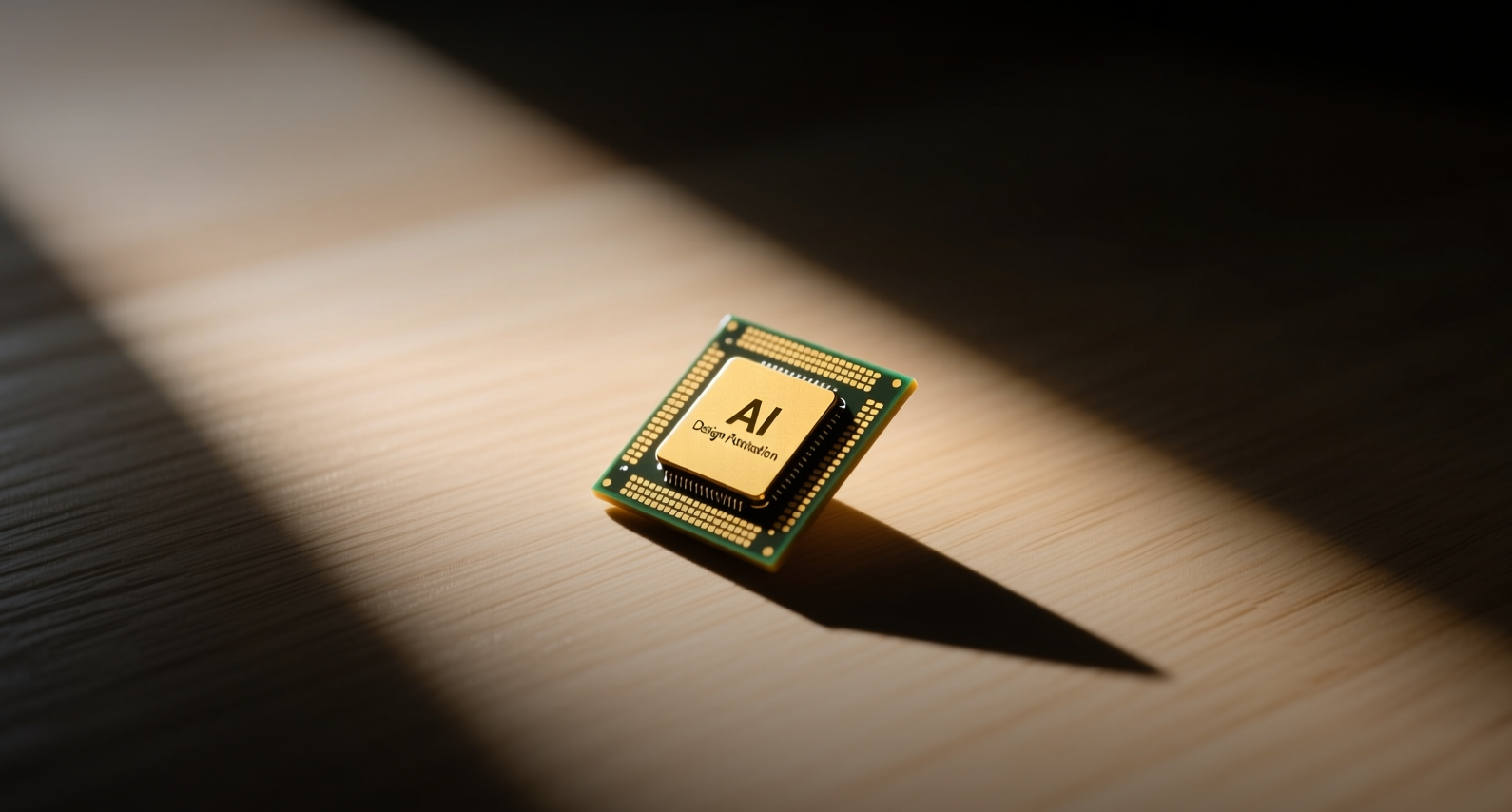
## Executive Summary **Nvidia** has made a strategic $2 billion investment in **Synopsys**, a leading provider of electronic design automation (EDA) software. The move, which gives **Nvidia** a 2.6% stake in the company, is part of a multi-year collaboration aimed at integrating artificial intelligence into the complex process of chip design. This partnership underscores a significant trend of leveraging AI to solve deep engineering challenges and solidifies **Nvidia's** position within the core of the semiconductor supply chain. ## The Event in Detail According to official statements, **Nvidia** purchased shares of **Synopsys** at a price of $414.79 per share. **Synopsys** is a critical player in the semiconductor industry, providing the essential software tools used to design and verify the functionality of complex microchips before they enter costly manufacturing stages. This investment is not merely financial but is the foundation of a deeper engineering and design partnership intended to accelerate innovation for R&D teams globally. The collaboration will focus on optimizing **Synopsys'** software suite by leveraging **Nvidia's** AI platforms, including its CUDA-X libraries. The goal is to empower engineers to design and test next-generation intelligent products more rapidly and accurately. ## Financial Mechanics and Strategic Rationale The $2 billion stock purchase provides **Nvidia** with greater influence over a key supplier and technology partner. By embedding its AI and accelerated computing architecture directly into the industry-standard design tools from **Synopsys**, **Nvidia** creates a more integrated and powerful ecosystem. This strategy ensures that future semiconductors are developed in an environment optimized for **Nvidia's** platforms, creating a significant competitive moat. As stated by **Nvidia** CEO Jensen Huang, the partnership aims to "harness the power of Nvidia accelerated computing and AI to reimagine engineering and design." This reflects a strategic imperative to move AI from a high-level application to a fundamental component of industrial creation and manufacturing. ## Market Implications This investment has significant implications for the broader technology landscape. It signals a major shift in the EDA industry toward AI-driven workflows, likely compelling competitors to deepen their own AI integrations. For **Nvidia**, it strengthens the "stickiness" of its ecosystem, making its hardware and software platforms indispensable not just for running AI models but for creating the very hardware they run on. This move can be seen as a form of vertical integration of AI into the supply chain, ensuring that the foundational tools of the semiconductor industry are aligned with **Nvidia's** technological roadmap. It reinforces the idea that the future of advanced manufacturing and design is intrinsically linked to AI-powered simulation and verification. ## Broader Context **Nvidia's** investment in **Synopsys** is consistent with its broader strategy of forging deep partnerships across key industries. The company has announced similar collaborations with automotive firms like **Toyota** and industrial giants like **Siemens** to integrate its Omniverse and digital twin technologies. This pattern reveals a clear objective: to establish **Nvidia's** accelerated computing platform as the fundamental operating system for the next generation of industrial design, simulation, and physical AI systems. The **Synopsys** partnership secures a critical piece of that vision within the core of the technology sector itself.