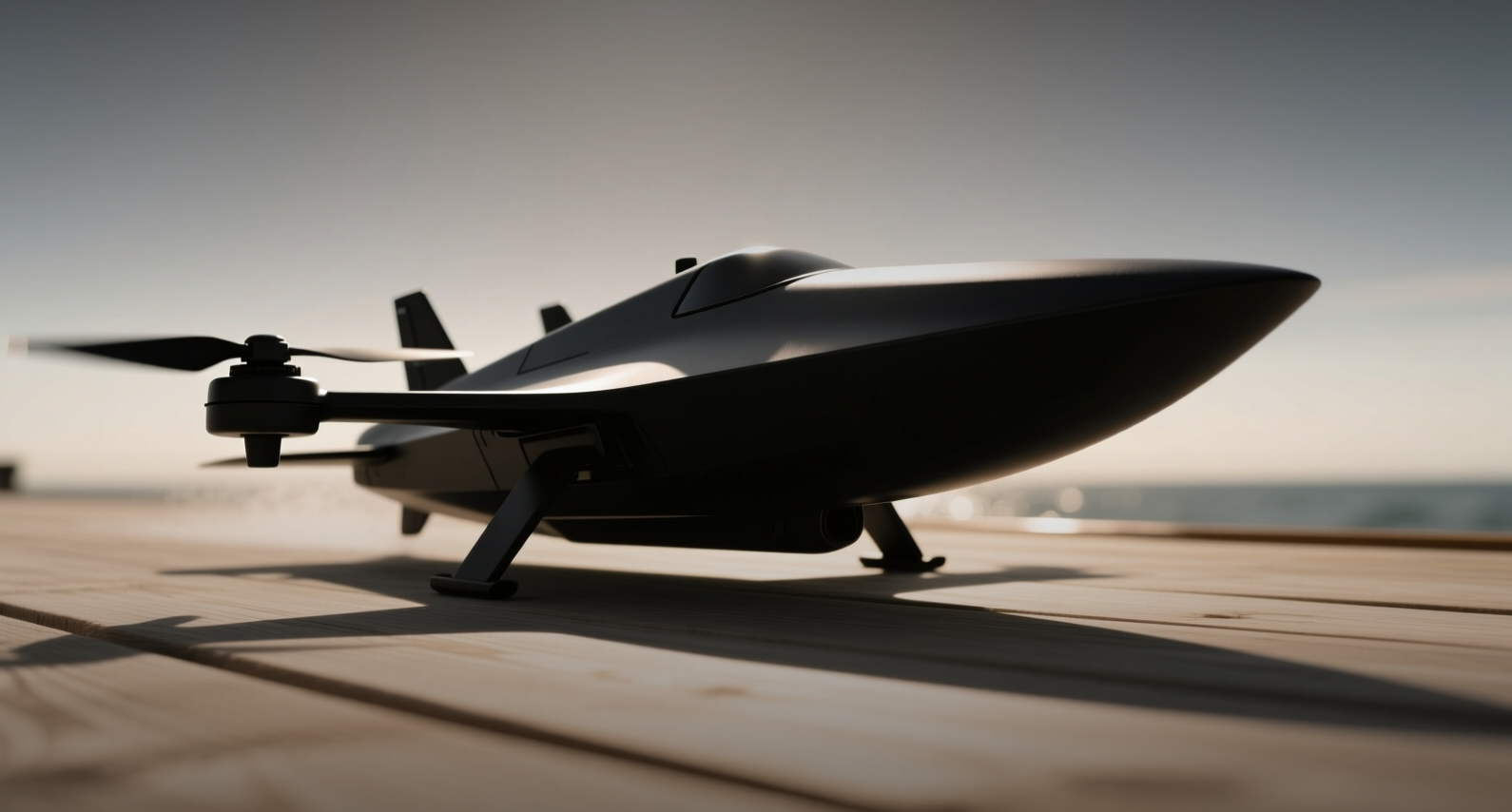
The U.S. military used an unmanned surface vessel for a combat rescue in June, a milestone as NATO accelerates drone programs across the Baltic and Indo-Pacific.
The U.S. Navy used an unmanned surface vessel in June to rescue two American helicopter crew members shot down by Iran, as NATO races to field sea drones after capabilities demonstrated in the Ukraine war.
"Rescue operations like it are just one of the tasks for which they are preparing to use these sea drones," Navy officials said, speaking during NATO's Baltic Operations exercise where American and British sailors tested unmanned maritime systems.
The rescue came as NATO allies accelerate unmanned naval programs. Poland awarded a contract to Shield AI for V-BAT drones to be deployed on a Navy vessel by 2026, becoming the first NATO eastern flank country to acquire the system. The V-BAT has proven effective in GPS-denied environments, according to Shield AI President Ryan Tseng. The system includes ground control stations, antennas, spares, and maintenance equipment, the company said. Separately, the MQ-28 Ghost Bat collaborative combat aircraft debuted in the Valiant Shield 26 exercise in the Indo-Pacific this week, operating alongside crewed fighters in a multinational large-force setting for the first time. The drone, configured with an infrared search and track sensor system, is designed to extend sensor coverage and serve as a weapons platform while reducing risk to human pilots.
The Baltic Sea has become a focal point for drone development as security threats against critical energy and communications infrastructure increase. The region handles about 15% of global maritime trade, and NATO's ability to monitor it with unmanned systems has become a strategic priority after Russia's invasion of Ukraine demonstrated the effectiveness of maritime drones in combat. Since 2025, when Poland launched the Drone Force as its latest military component, the country has accelerated purchases of various classes of unmanned systems.
Drone Warfare's Proliferation Across Domains
The U.S. military is testing unmanned systems across air, sea, and land domains simultaneously. The RIMPAC exercise, which began this week in Hawaii with 30 surface ships, 5 submarines, 206 aircraft, and 30,000 personnel from 30 countries, includes extensive unmanned systems integration. The Pentagon's counter-drone initiative, which Poland joined last month, connects partner countries with emerging technology suppliers.
The MQ-28's participation in Valiant Shield — operating from an austere airfield under the Agile Combat Employment concept — shows how collaborative combat aircraft could be employed across the Indo-Pacific. The drone is slated to enter service with the Royal Australian Air Force in 2028, potentially making it the first operational collaborative combat aircraft worldwide. Boeing is now building the first of nine Block 2 drones for the RAAF, with the Block 3 version expected to be substantially larger with an internal weapons bay capable of carrying an AIM-120 missile or two Small Diameter Bombs. The RAAF has already used Block 1 MQ-28s to demonstrate crewed-uncrewed teaming with E-7A Wedgetail early warning aircraft and F/A-18F Super Hornet fighters.
Market Implications of the Naval Drone Shift
Defense contractors focused on unmanned maritime systems stand to benefit as NATO countries increase procurement. Shield AI's V-BAT contract with Poland follows similar acquisitions by Greece, the Netherlands, the U.S. Navy, and Japan. The company said it is actively pursuing partnerships with Polish industry to support future autonomy, aviation, and defense programs. Boeing's MQ-28 program is positioning for export sales to Japan and other Indo-Pacific allies, with Japan already named as a potential customer.
The last major escalation in naval drone use came during the 2022-2023 Black Sea campaign, where Ukraine's unmanned surface vessels sank several Russian warships, demonstrating that low-cost drones could challenge conventional naval power. That precedent has driven NATO's current acceleration, with defense budgets across the alliance shifting toward autonomous systems. The U.S. Air Force's first two Increment 1 collaborative combat aircraft prototypes, the YFQ-44 Fury, have already begun testing out of Edwards Air Force Base, California, as part of efforts to validate autonomous operations in contested environments.
The Iran shootdown adds a new dimension to the naval drone race. The Strait of Hormuz, through which about 20% of global oil passes, remains a potential flashpoint where unmanned systems could play a decisive role in future conflicts. The U.S. Navy's use of a sea drone for a combat rescue in that theater demonstrates that these systems are moving from experimental to operational status faster than previously expected.
This article is for informational purposes only and does not constitute investment advice.