
AI data center investment is driving US goods-producing payrolls to grow faster than services for the first time in years, a structural shift the Federal Reserve is weighing as it assesses economic resilience and the path for interest rates.
AI data center investment is driving US goods-producing payrolls to grow faster than services for the first time in years, a structural shift the Federal Reserve is weighing as it assesses economic resilience and the path for interest rates.
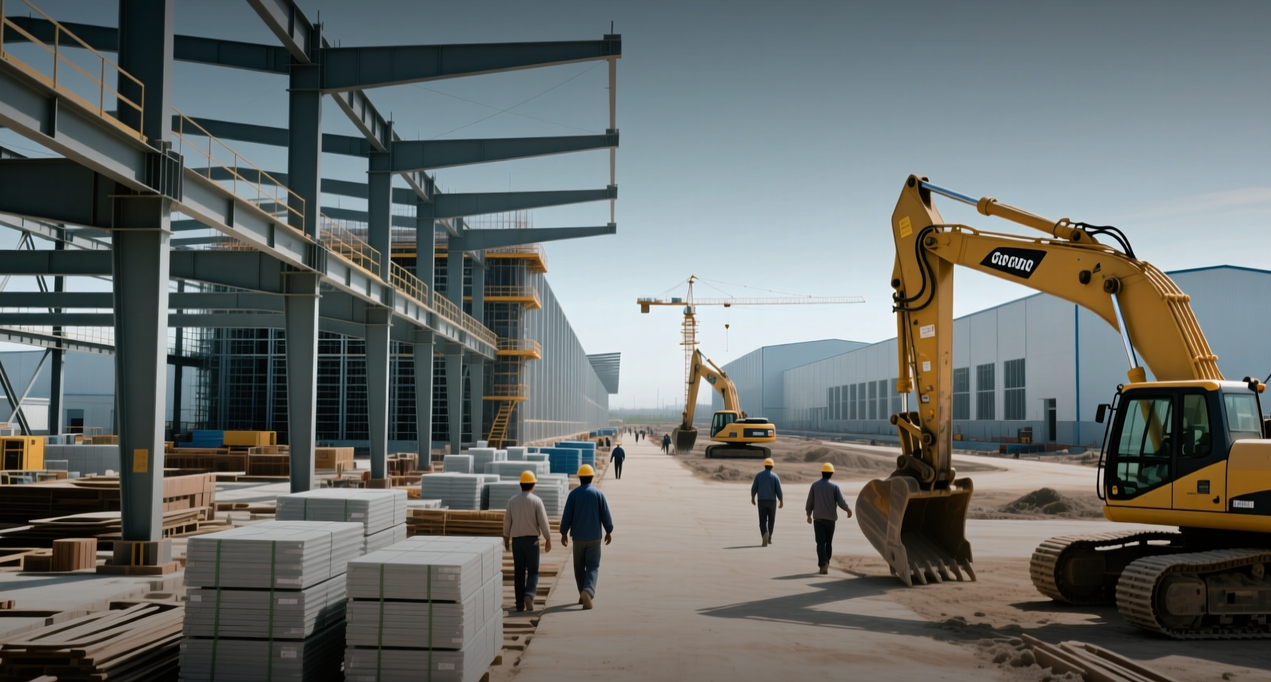
The AI infrastructure buildout is redrawing the shape of the US labor market, with goods-producing payrolls now growing faster than the far larger services sector for the first time in years — a shift the Federal Reserve is reading as evidence the economy can absorb higher-for-longer rates. Bureau of Labor Statistics data show goods-producing industries added workers at a 0.6 percent pace over the six months through August, the strongest stretch since 2023 and ahead of the 0.4 percent gain in services, even as the August nonfarm payroll report beat forecasts with its best monthly job additions in five months and unemployment holding at 4.1 percent.
"The recent improvement in manufacturing and construction is closely tied to the large-scale AI push and data center buildout, with tax provisions in the Beautiful Act passed last year further spurring equipment and facility investment," Veronica Clark, an economist at Citigroup, said.
Manufacturing alone added 43,000 jobs over the past three months, the strongest quarterly run since late 2022, while a breadth gauge spanning 72 manufacturing sub-industries climbed in August to its highest reading in nearly four years. Machinery, primary metals, fabricated metal products, computers and electronics, and electrical equipment and appliances all posted steady gains, according to BLS data. The White House moved quickly to claim the report as evidence of policy success, with National Economic Council Director Kevin Hassett telling reporters that employment in factory construction has risen by 90,000 since President Donald Trump took office, a pipeline he said would seed future jobs.
The stakes for investors run through the rate path. A goods-producing recovery that holds would give the Fed cover to keep policy restrictive for longer, since it suggests the AI capex cycle is transmitting into the real economy rather than stalling in financial markets. PwC, working with Oxford Economics, projects $31.6 trillion in cumulative global data center capital expenditure through 2050, with the US capturing roughly $15.1 trillion, or 48 percent of the total, and annual spending climbing from about $800 billion in 2026 toward $1.1 trillion by 2030.
Yet the durability of the rebound is contested. Gregory Daco, chief economist at EY-Parthenon, cautioned that the recent manufacturing gains follow three years of sustained layoffs, making the bounce partly a low-base effect amplified by a specific investment cycle whose staying power remains unproven. The last time goods-producing employment expanded at a comparable clip, in the 2023 rebound, the run faded within two quarters as rate-sensitive demand cooled, a pattern that argues for treating the current strength with some skepticism.
The composition of hiring matters as much as the headline. Because data centers are long-lived assets while the computing equipment inside them turns over on roughly four- to six-year cycles, PwC calculates that every dollar of construction spending commits the market to about $12 of subsequent ICT investment, with equipment accounting for 70 percent of data center capex this year and rising to 93 percent by 2050. That structure suggests the employment impulse is not a one-off construction surge but a continuously renewing technology platform, which would extend the goods-sector tailwind well beyond the current quarter.
For the Fed, the divergence between goods and services hiring is one input among several as officials weigh whether the labor market is cooling toward a soft landing or cracking under the weight of restrictive policy. A resilient goods sector tied to AI capex supports the case for patience on cuts, while any fade in that momentum — or a services slowdown that outpaces it — would strengthen the argument for easing sooner. The next policy meeting, where markets will parse the Fed's updated projections, offers the first test of how much weight officials assign to the construction-led strength.
This article is for informational purposes only and does not constitute investment advice.
