
Key Takeaways:
- BMW will invest $1.7 billion to build the iX5 EV SUV at its South Carolina plant
- The iX5 is BMW's first American-made all-electric vehicle
- The investment comes as US EV sales dropped 27% in Q1 2026 after the federal tax credit ended
Key Takeaways:
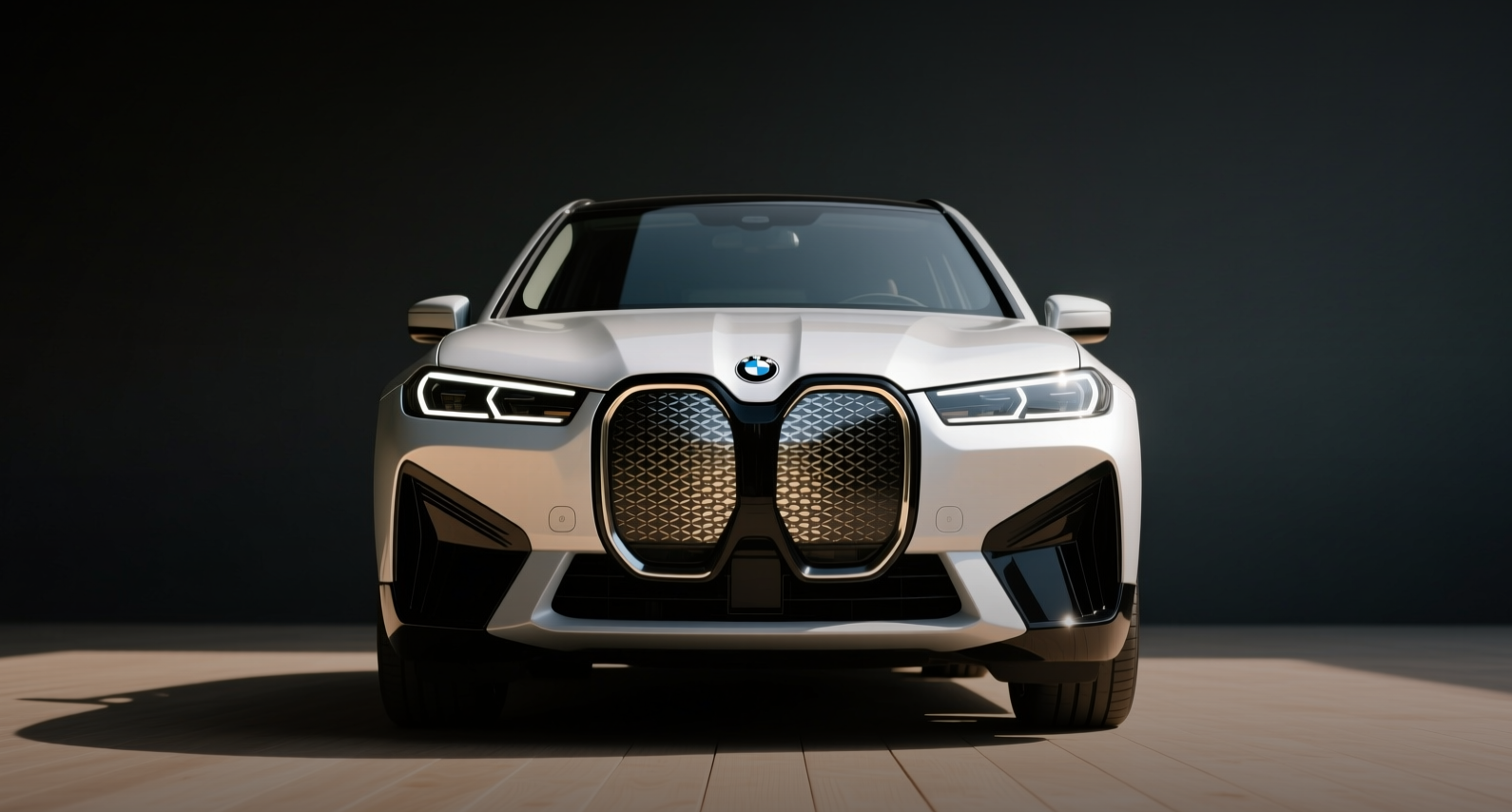
BMW will build its first American-made all-electric SUV at a $1.7 billion expanded South Carolina plant, betting on domestic production as rivals retreat from EV commitments.
BMW's $1.7 billion investment to assemble the iX5 electric SUV in South Carolina marks the German automaker's bet that US manufacturing can revive its EV momentum as competitors cancel models and scale back electric ambitions.
"The US is a core market for BMW, and we want the customer to decide what powertrain they want," Sebastian Mackensen, CEO of BMW North America, said in a Fox Business interview. "This investment reflects our long-term commitment to American manufacturing and electrification."
The iX5 will be built at BMW's Spartanburg plant, the company's largest factory worldwide, which currently produces the X3, X5, X6, X7 and XM models with combustion and plug-in hybrid powertrains. The facility's expansion adds capacity for battery-electric assembly lines. BMW has not disclosed the iX5's range or battery specifications, but the SUV is expected to use the company's sixth-generation eDrive technology with cylindrical battery cells that the automaker has said offer 30% more range and 50% faster charging than current prismatic cells.
The move comes as BMW phases out its current EV lineup in the US. The i4 hatchback will end production by late 2026, and the iX luxury SUV is being discontinued in America, though it remains on sale in Europe, according to Car and Driver. Both models will be replaced by vehicles built on BMW's Neue Klasse platform, starting with the iX3 midsize SUV arriving this summer and an electric i3 sedan offering up to 440 miles of range. BMW's US investment shows confidence in domestic EV demand even as the broader market contracts — American EV sales dropped 27% in the first quarter of 2026 after the federal $7,500 tax credit ended in September 2025, according to Cox Automotive.
The iX5 investment contrasts sharply with the retreat of several automakers from US EV production. Ford ended production of the F-150 Lightning in 2025. Honda canceled its 0 Series Saloon and SUV, booking a $15.7 billion loss in its EV division. Hyundai stopped selling the standard Ioniq 6 and the 2026 Kona Electric in the US, while Kia discontinued the Niro EV. Tesla is ending production of the Model S and Model X in the second quarter of 2026, with CEO Elon Musk calling the sedan's exit an "honorable discharge."
BMW's strategy — invest in US assembly while refreshing its EV portfolio — mirrors a broader industry recalibration rather than a retreat. "It's a part of many legacy automakers retooling their EV strategies," Seth Goldstein, an analyst at Morningstar, told Business Insider. "A lot of automakers are going back to the drawing board. They're looking to discontinue unprofitable EVs and replace them with more affordable, long-range EVs."
The Spartanburg plant has been BMW's primary US manufacturing hub since 1994 and has produced more than 7 million vehicles. Adding EV assembly to the facility allows BMW to avoid import tariffs on vehicles built in China or Europe — a critical advantage as the Trump administration has maintained tariffs on foreign-made EVs. The iX5 will compete with the Tesla Model Y, the Mercedes-Benz EQS SUV, and the upcoming Rivian R2, all of which are built in North America.
"We remain fully committed to electrification in the US," a BMW spokesperson told BMW Blog. "This marks the beginning of the Neue Klasse era and the introduction of these technologies across our future portfolio."
BMW's EV push in the US comes as it navigates a 27% industry-wide sales decline in the American EV market during the first quarter. If the iX5 succeeds, it could help BMW reclaim ground lost to Tesla and Hyundai in the US EV segment, where BMW held a 3.2% market share in 2025, according to EV Volumes data.
This article is for informational purposes only and does not constitute investment advice.
