


Key Takeaways: Broadcom and Marvell Technology both posted record AI-driven quarters, but their divergent strategies in custom silicon are reshaping who captures the hyperscaler wallet.
Key Takeaways: Broadcom and Marvell Technology both posted record AI-driven quarters, but their divergent strategies in custom silicon are reshaping who captures the hyperscaler wallet.
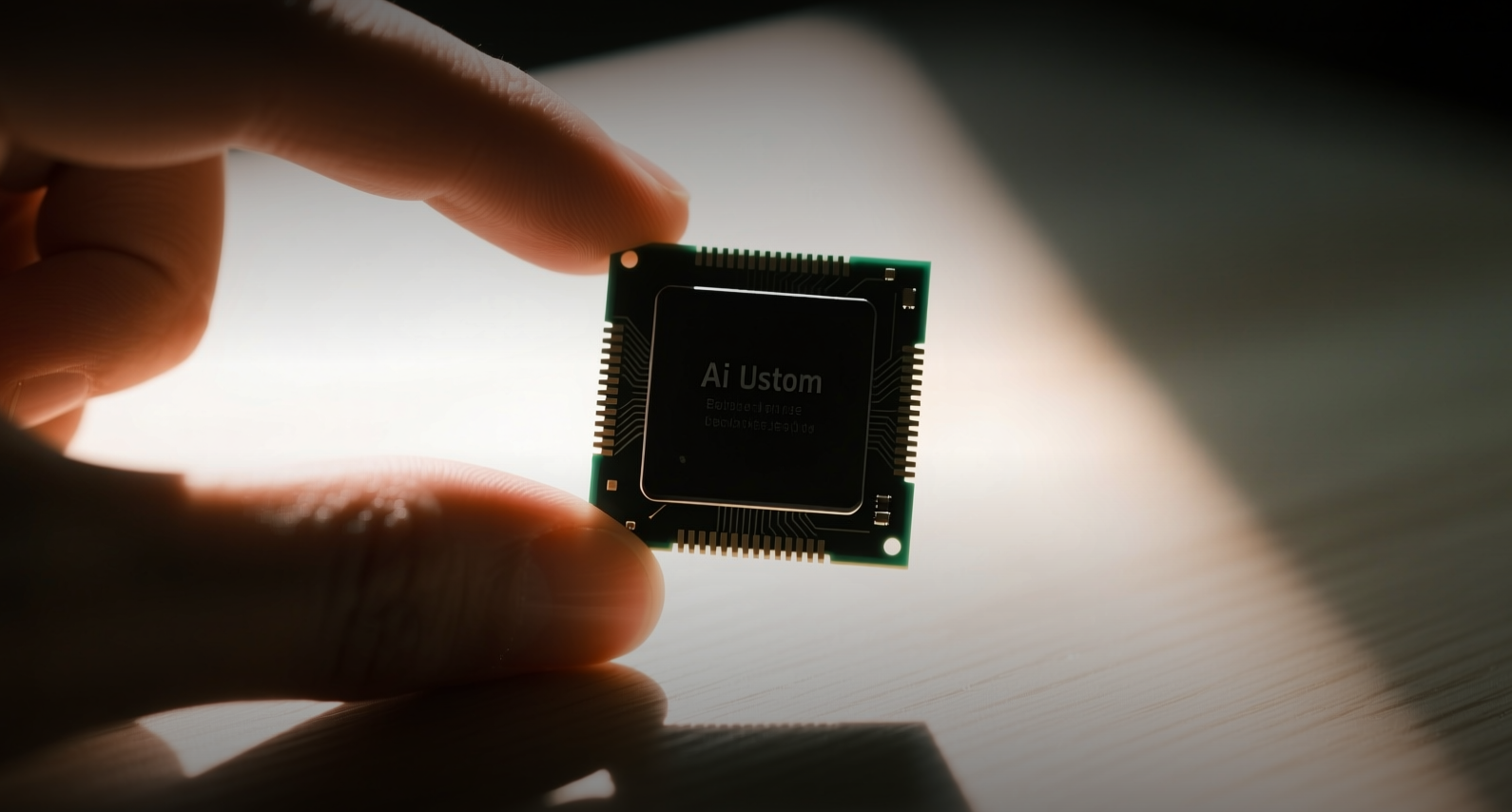
Broadcom and Marvell Technology both posted record AI-driven quarters, but their divergent strategies in custom silicon are reshaping who captures the hyperscaler wallet.
Broadcom guided fiscal 2026 AI semiconductor revenue to $56 billion, up 180 percent year over year, while Marvell shares surged 363 percent in the past year on custom silicon and networking demand from hyperscalers.
Hock Tan, CEO at Broadcom, said the company is developing custom AI accelerators for six hyperscale customers, including Google, Meta, OpenAI and Anthropic, with long-term supply agreements extending into 2028.
Broadcom's Q2 AI semiconductor revenue hit $10.8 billion, up 143 percent year over year, on total revenue of $22.2 billion, up 48 percent. Adjusted EPS reached $2.44, topping consensus of $2.40. The company projects Q3 AI revenue of approximately $16 billion, more than 200 percent growth, and reaffirmed fiscal 2027 AI revenue guidance above $100 billion. Marvell delivered record Q1 fiscal 2027 revenue of $2.418 billion, with data center accounting for 76 percent of total, and expects interconnect revenue to grow more than 70 percent year over year.
The two companies are competing for the same hyperscaler capex pool, projected at $550-600 billion in 2026 by Wedbush analysts, up from about $380 billion in 2025. Broadcom holds roughly 60 percent projected market share in AI server compute ASICs by 2027, but Marvell's partnership with NVIDIA and its XPU program could capture a growing slice of the custom silicon market.
Broadcom's model centers on vertically integrated custom accelerators. The collaboration with OpenAI produced the Jalapeño inference processor, developed in nine months with Broadcom handling silicon implementation, Tomahawk networking and system integration. The chip is slated for deployment in gigawatt-scale data centers beginning late 2026, with a contractual commitment to deploy 1.3 gigawatts of compute in 2027 as part of a broader 10-gigawatt agreement through 2029. Broadcom's advanced 3.5D XDSiP packaging platform is critical to the performance and efficiency of custom AI XPUs.
Marvell's approach leans on interconnect and switching as the entry point. Scale-out switch revenue is expected to exceed $600 million in fiscal 2027 and reach a $1 billion annualized run rate in fiscal 2028. Custom silicon revenue is on track to grow more than 20 percent year over year in fiscal 2027 and more than double in fiscal 2028, led by its XPU program and attach opportunities in NIC and CXL. The expanded partnership with NVIDIA links Marvell's custom silicon and optical networking capabilities with NVLink Fusion, optics and AI-RAN opportunities.
NVIDIA remains the dominant force in AI computing, with data center revenue reaching $75.2 billion in Q1 fiscal 2027, up 92 percent year over year, driven by Blackwell 300 products and demand for InfiniBand, Spectrum-X Ethernet and NVLink solutions. AMD's EPYC server CPU revenue is expected to grow more than 70 percent year over year in Q2 as hyperscalers deploy broader AI compute architectures. Astera Labs' Leo CXL smart memory controllers add another layer of competition in the interconnect space.
Broadcom trades at a forward price-to-sales multiple of 12.44x, roughly double the broader sector's 6.41x, with a Zacks Value Score of D. The consensus estimate for fiscal 2026 EPS is $11.73, suggesting 72 percent growth from fiscal 2025. Marvell trades at a P/E of 89.16x versus the industry's 41.13x, with a Value Score of F. Both carry Zacks Rank #3 (Hold) ratings.
Broadcom's free cash flow hit a record $10.26 billion in Q2, representing 46 percent of revenue, providing the balance sheet to fund multi-year custom silicon commitments. The company's stock has gained 24 percent year to date through early August, while Marvell's 363 percent surge reflects the market pricing in aggressive growth from a smaller base.
The key question for investors is whether the custom silicon market can support both players at current valuations. Broadcom's contracted demand through 2029 provides unusual revenue visibility, but Marvell's faster growth trajectory and NVIDIA partnership offer a different risk-reward profile. With hyperscaler capex projected to reach $550-600 billion in 2026, both companies have room to grow — but execution on multi-year commitments will determine which stock delivers on its premium.
This article is for informational purposes only and does not constitute investment advice.
