
AI data center buildout is fueling a surge in demand for 800G optical modules, pushing Cambridge Technology's first-half profit to as much as 359 million yuan.
AI data center buildout is fueling a surge in demand for 800G optical modules, pushing Cambridge Technology's first-half profit to as much as 359 million yuan.
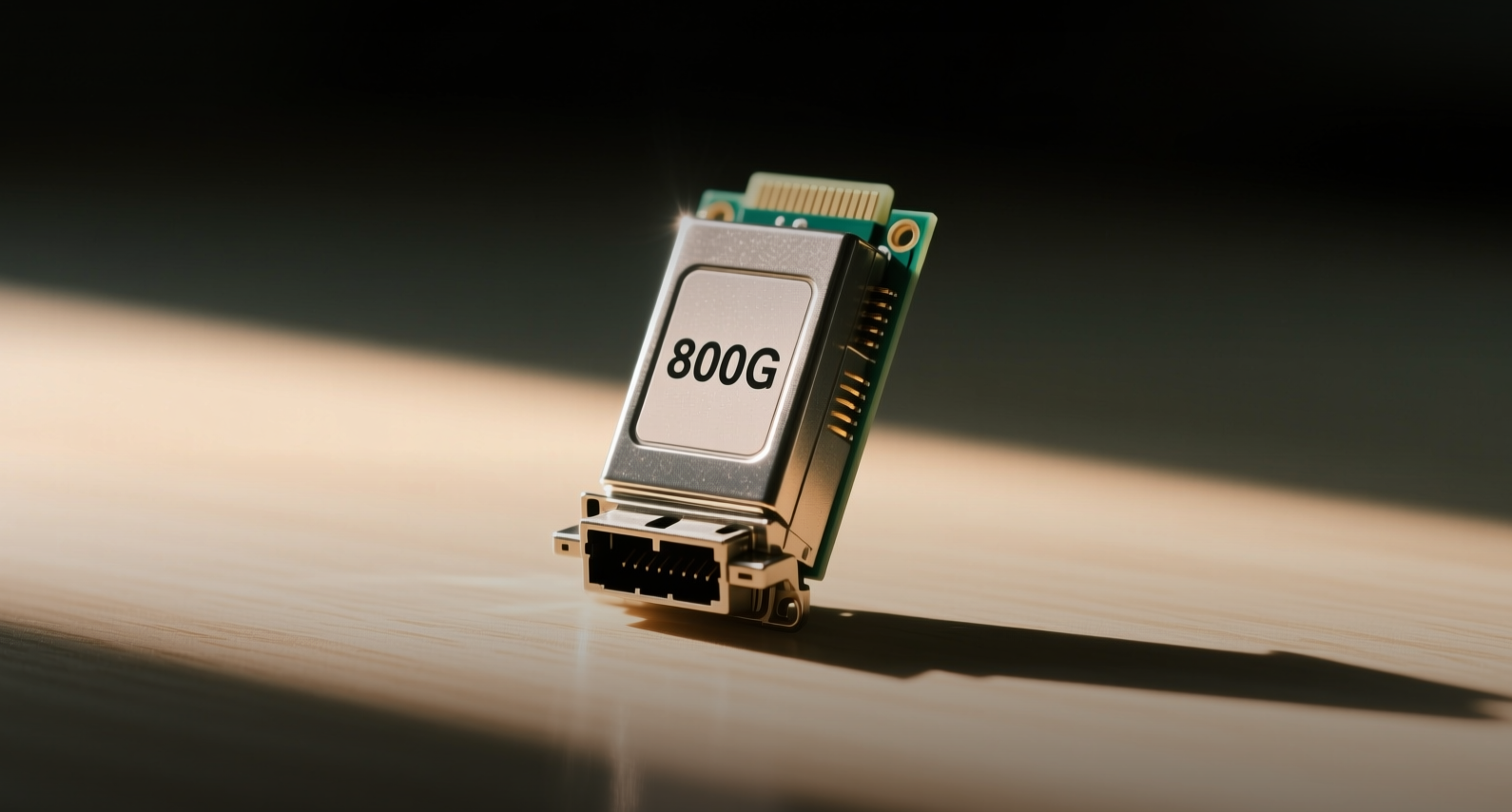
AI data center buildout is fueling a surge in demand for 800G optical modules, pushing Cambridge Technology's first-half profit to as much as 359 million yuan.
Cambridge Technology, a Shanghai-listed optical module maker, said it expects net profit attributable to shareholders of 310 million yuan ($42.7 million) to 359 million yuan for the first half of 2026, a jump of 157% to 197% from a year earlier. The company cited rapid growth in its high-speed optical module business as AI data center expansion drives demand for 800G transceivers and higher-speed products.
"AI data center construction is accelerating, pushing up demand for high-speed interconnect products," the company said in a stock exchange filing Monday. "Order volumes and product shipments grew significantly year over year."
The profit forecast implies second-quarter earnings of roughly 189 million yuan to 238 million yuan, compared with 121 million yuan in the year-ago period. Revenue growth was driven by both higher shipment volumes and a richer product mix, as 800G modules — which carry a higher average selling price than earlier 400G generations — accounted for a growing share of sales. Non-recurring items had a limited impact on the bottom line, with the bulk of the gain coming from core operations.
The results show how AI infrastructure spending is cascading through the supply chain. Optical modules, which convert electrical signals to optical signals for data transmission, are a critical component in the high-bandwidth networks linking AI servers within data centers. The transition from 400G to 800G and eventually 1.6T transceivers is creating a multiyear upgrade cycle for companies across the optical component ecosystem, including Coherent Corp., Lumentum Holdings, and Fabrinet.
Currency headwind clips gains
The strong operating performance was partly offset by currency losses. Cambridge Technology recorded about 202 million yuan in foreign-exchange losses during the period, primarily from Hong Kong dollar-denominated funds raised through its Hong Kong IPO and subsequent placements. The company held the proceeds in Hong Kong dollars, and weakness in the US dollar — to which the Hong Kong dollar is pegged — triggered the losses. That compares with a 13.7 million yuan FX gain in the same period last year.
The foreign-exchange drag is expected to diminish as the company deploys the IPO proceeds into capacity expansion and working capital, reducing its Hong Kong dollar exposure over time.
Supply chain strains and capacity race
The optical module industry is racing to keep pace with hyperscaler demand. AXT Inc., a supplier of indium phosphide substrates used in optical components, said it plans to double InP wafer capacity in 2026 and again in 2027, with a new dedicated production facility under evaluation for 2028. The company raised $632.5 million in capital to fund the expansion, and its InP backlog has exceeded $100 million.
Gain equalization filters — passive components that maintain signal quality in dense wavelength division multiplexing systems — are also seeing surging demand as networks shift to 800G and 1.6T coherent transmission. The global market for these filters is projected to grow at a compound annual rate of 9% to 13% through 2035, according to IndexBox, driven by hyperscale data center buildout and 5G backhaul expansion.
Investment angle
Cambridge Technology's guidance adds to a growing body of evidence that the AI capex cycle is accelerating. Alphabet earlier this year guided to $175 billion to $185 billion in 2025 capital spending, much of it directed at AI infrastructure. That spending flows downstream to optical component suppliers, which are racing to add capacity.
For investors, the key question is whether the optical module cycle has further to run. Cambridge Technology's 157% to 197% profit growth suggests demand remains strong, but the 202 million yuan FX loss is a reminder that currency risk can erode even the best operating stories. The company's shares are likely to open higher on the news, though the magnitude of the FX hit may temper enthusiasm. Peer companies in the optical supply chain — Coherent Corp., Lumentum, and Fabrinet — are all due to report quarterly results in the coming weeks, offering further data points on the sustainability of the AI-driven demand wave.
This article is for informational purposes only and does not constitute investment advice.
