

Key Takeaways:
- Construction Industries revenue rose 35% year over year in Q2 2026
- Higher sales volumes and favorable pricing drove the segment's surge
- Digital technology opens new growth avenues for the machinery maker
Key Takeaways:
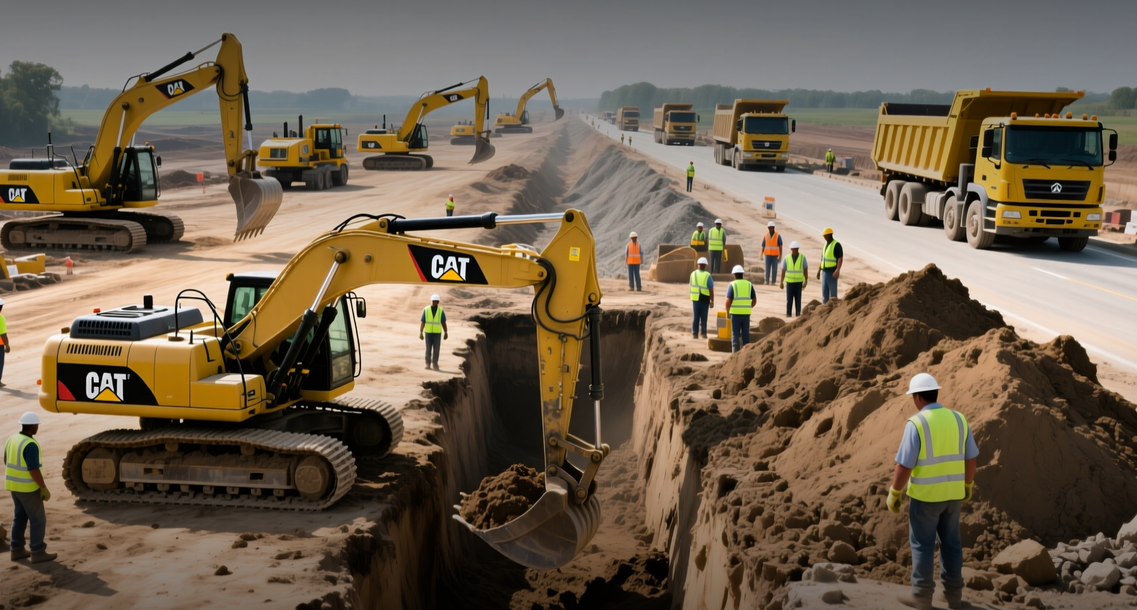
Caterpillar's Construction Industries revenue jumped 35% year over year in Q2 2026, driven by stronger demand, higher sales volumes and favorable pricing.
The segment's revenues climbed more than 30% in both Q1 and Q2 2026, according to the company's earnings release. Higher sales volumes and favorable pricing drove the growth, while digital technology is opening new growth avenues for the machinery maker, adding a second engine of expansion beyond traditional equipment sales.
The surge positions Caterpillar (CAT) as a bellwether for global construction activity, pointing to strong health in infrastructure and construction markets. The strength echoes across the broader industrial sector: Oshkosh, a Wisconsin-based maker of access equipment and specialty vehicles, reported $10.4 billion in 2025 revenue across its Access, Vocational and Transport segments, with its JLG aerial work platform business holding global leadership. Oshkosh trades at a forward price-to-earnings ratio of 10.94, reflecting investor expectations of continued demand in construction-adjacent markets.
Caterpillar did not disclose full-company revenue, earnings per share or forward guidance in the segment update. The company's next full earnings report will provide the complete picture of consolidated results and segment margins.
The central question for investors is whether the pace is sustainable. The 35% construction revenue gain signals management expects infrastructure demand to remain strong through the second half of 2026, but sustaining double-digit growth will depend on continued infrastructure spending, government funding programs and private construction activity. Digital technology adoption could provide a durable tailwind, as connected equipment and data services generate recurring revenue streams beyond one-time machine sales.
Construction equipment demand is closely tied to infrastructure budgets, housing starts and mining activity, making Caterpillar's segment performance a proxy for broader economic investment. A sustained 30%-plus growth rate across two consecutive quarters suggests the current cycle has room to run, though comparisons will become harder as the base effect grows.
Investors will watch Caterpillar's next earnings call for updated segment margins, full-year guidance and any commentary on the durability of construction demand.
This article is for informational purposes only and does not constitute investment advice.
