
Key Takeaways: FSH Technologies raised $25 million to replace hourly-billed consulting firms that dominate the $160 billion government IT market.
Key Takeaways: FSH Technologies raised $25 million to replace hourly-billed consulting firms that dominate the $160 billion government IT market.
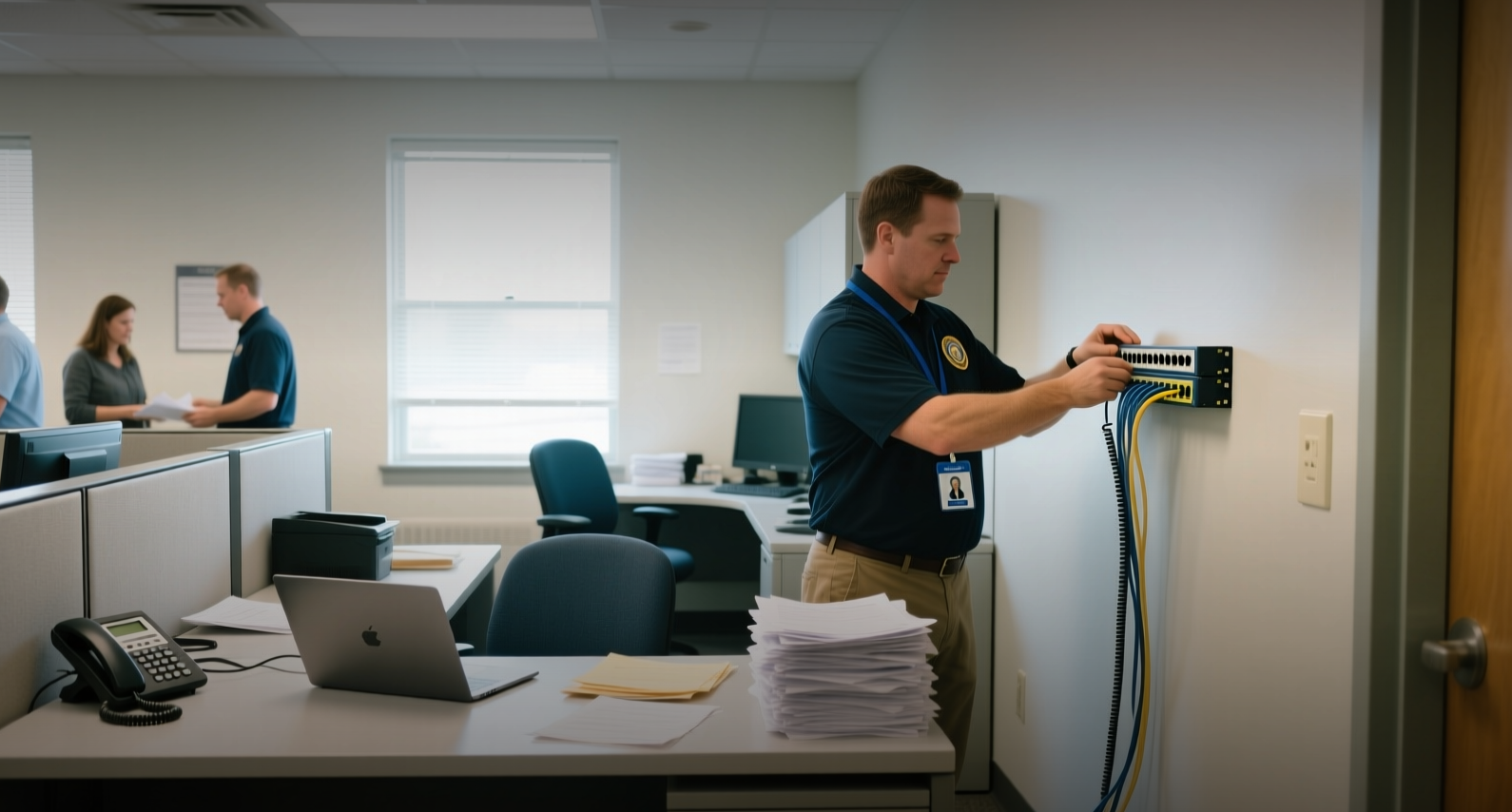
FSH Technologies raised $25 million to expand a software model that only grows when government clients expand usage, replacing hourly-billed consulting firms across the $160 billion state and local government IT market.
"We only grow when a city or school district loves our solution and expands the scope, so the incentive is to build something that works, not to stretch out the invoice," Lilly Chen, founder and CEO of FSH Technologies, said.
The round includes a $20 million Series A led by Lachy Groom, an early backer of Figma, Notion, Ramp and Lattice, with Acrew Capital co-leading. Operator Partners, Contrary, Cooley and several angels also participated, following a $5 million seed led by Contrary with Acrew Capital, General Catalyst, Scribble Ventures and Basis Set Ventures joining.
FSH's annual recurring revenue grew sevenfold after activating its expansion strategy in Q2 2026, and revenue inside more than 30 percent of existing accounts rose 1,340 percent. The company projects $450 million in ARR by 2028 as it expands from four cities to all 50 states within the year.
FSH's model targets two incumbent vendor types that dominate government IT procurement: consulting firms that bill by the hour, where a slow project is more profitable than a fast one, and point-solution vendors that get acquired by private equity and coast on renewal fees. Chen, who previously worked as an AI and machine learning engineer at Meta and later advised Philadelphia's mayoral transition team, said the company was built to invert those incentives.
The company's name comes from a saying Chen carried from a period spent as a Buddhist monk and professional video game player: be the pond, not the fish — look at the whole picture, not one problem in isolation.
Real-world traction is already visible. Pittsburgh Public Schools switched to FSH after a security vulnerability in its previous vendor exposed student data. Buffalo made a similar switch after years on a system that had stopped keeping up. When a Philadelphia tax law change left thousands of small businesses owing a new city tax, FSH stood up a support program in one month that reached more than 1,000 businesses in 13 languages, most filing for the first time.
The GovTech sector has historically been difficult for startups because of the perception of bureaucracy as a slow and difficult process. FSH's team focuses on solving complex, often overlooked problems and approaches long-standing challenges with optimism and persistence, according to the company.
FSH is currently operating in Buffalo, Denver, Philadelphia and Pittsburgh. With the new funding, it plans to expand nationwide within the year, adding categories including EMS and police scheduling, transit management and case management. The company will grow its team from 11 to more than 45 employees, primarily in engineering, design and client strategy.
The leadership team includes COO Jason Chen, who spent six years as a partner at Contrary after starting his career at PwC, and CTO Rodda John, who led Ramp's 20-person engineering team behind billpay.com before co-founding Moab, an ERP startup for equipment rental companies.
Investor Lachy Groom said the team's willingness to tackle unglamorous government workflows sets it apart. The funding shows growing investor appetite for govtech startups that challenge the traditional consulting procurement model, though the private nature of the company limits direct public equity exposure. For taxpayers, the bet is that software that only grows when it works will deliver faster, cheaper government IT than the hourly-billing status quo. The $160 billion annual spend on state and local government IT represents a substantial addressable market, and FSH's expansion into EMS, transit and case management broadens its reach beyond its current city and school district base.
This article is for informational purposes only and does not constitute investment advice.
