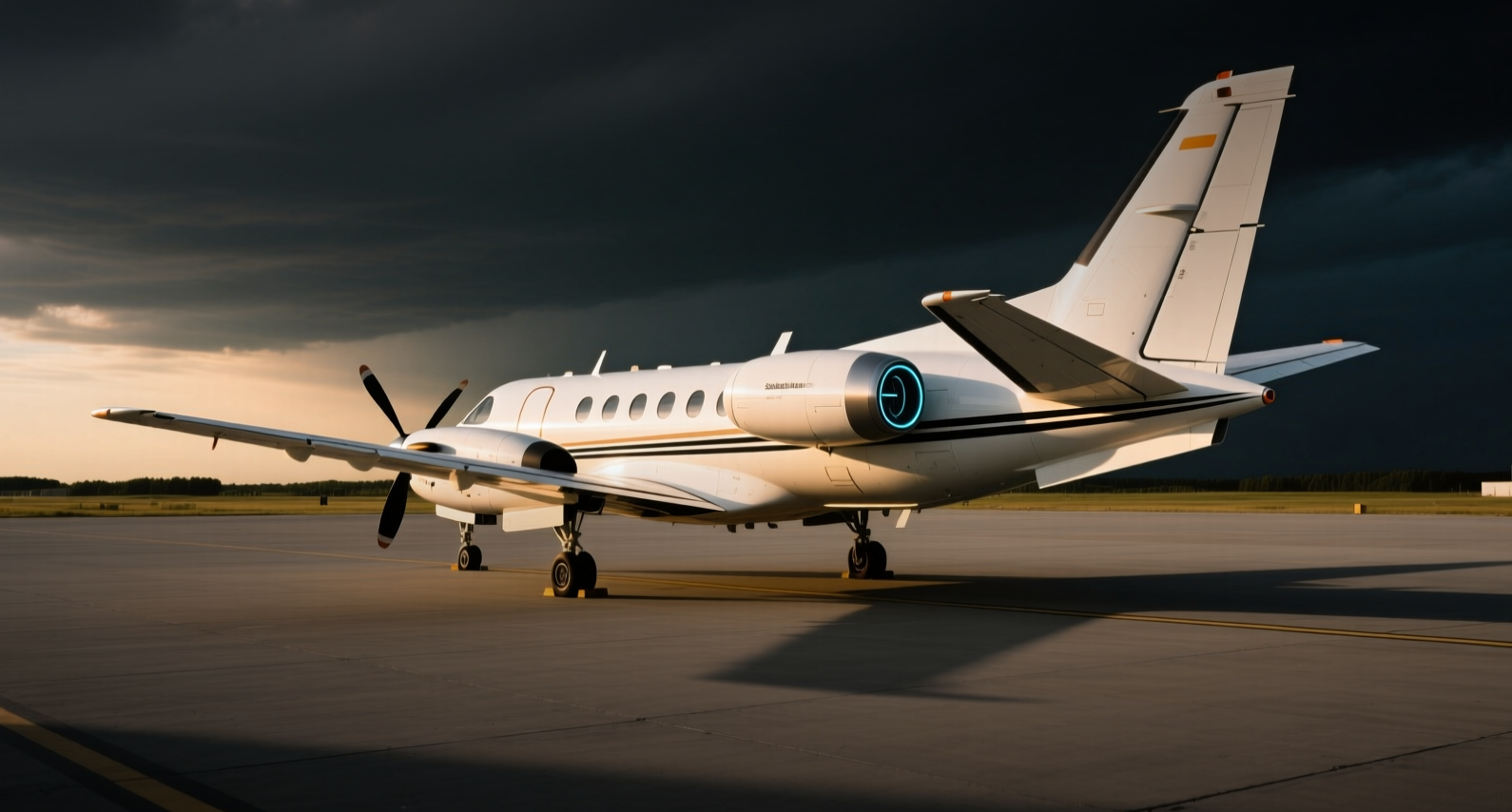
GE Aerospace, in partnership with NASA, BETA Technologies and Boeing, flew a hybrid electric aircraft above 30,000 feet for the first time, reaching altitudes used by commercial passenger jets.
FARNBOROUGH, England — GE Aerospace (NYSE: GE) announced Monday the first hybrid electric flight above 30,000 feet, a milestone that brings electrified propulsion closer to the commercial aviation market. The modified Saab 340B aircraft, equipped with GE's megawatt-class hybrid electric system, completed flights exceeding two hours at altitudes matching those of passenger jets.
"This is one for the history books," H. Lawrence Culp Jr., chairman and chief executive officer of GE Aerospace, said in a statement. The company is "grateful to NASA, BETA Technologies and Boeing for their collaborative partnership to accelerate hybrid electric technology to meet customer needs for greater efficiency, durability and range."
The hybrid system, developed through NASA's Electrified Powertrain Flight Demonstration project, was mounted on the aircraft's right side inside an inverted nacelle supplied by Boeing subsidiary Aurora Flight Sciences. Components included GE Aerospace-developed motor/generators, power converters, Avio Aero gearboxes, Dowty propellers and a CT7 engine, with batteries provided by BAE Systems. BETA Technologies served as systems integrator, and BETA pilots flew the aircraft across the North Atlantic to the Farnborough International Airshow, operating in hybrid electric mode during each leg of the journey.
The achievement marks a step toward reducing fuel consumption in single-aisle aircraft, the largest segment of the commercial fleet. A hybrid electric system combines an electric powertrain with a traditional gas turbine, optimizing power management across different flight phases. The technology is compatible with alternative fuels and advanced engine architectures such as Open Fan, which CFM International's RISE program is developing. The RISE program, a joint venture between GE Aerospace and Safran Aircraft Engines, targets more than 20 percent better fuel burn compared with current commercial engines and has completed approximately 500 test campaigns and more than 3,000 endurance cycles to date.
A Decade of Development
GE Aerospace first received the NASA EPFD contract in 2021 to demonstrate hybrid electric technologies for single-aisle aircraft. The company's work on electrified propulsion dates to 2016, when it conducted an electric motor-driven propeller ground test. In 2022, it tested a megawatt-class hybrid electric system at NASA's Electric Aircraft Testbed facility simulating conditions up to 45,000 feet. Last year, GE Aerospace announced a strategic partnership and equity investment in BETA Technologies to co-develop a hybrid electric turbogenerator for advanced air mobility and other applications, and demonstrated a narrowbody hybrid electric configuration through NASA's HyTEC project.
"This hybrid electric system improved the high-altitude performance and climb capability while creating a flying laboratory to inform all future hybrid designs," Kyle Clark, founder and chief executive officer of BETA, said. "The ground and safe flight test campaigns, capped by a flight across the North Atlantic, is the first of many important milestones for hybrid electric technology."
What It Means for Investors
GE Aerospace shares have gained 33 percent over the past year, trading near their 52-week high with a market capitalization of about $362 billion. The company reported second-quarter adjusted earnings of $2.02 per share, beating the $1.86 consensus, on revenue of $12.63 billion that also topped estimates. The hybrid electric milestone strengthens GE Aerospace's position against competitors including Rolls-Royce and Pratt & Whitney in the race to develop lower-emission propulsion systems for next-generation aircraft. Public demonstration flights are scheduled daily at the Farnborough airshow, with the aircraft also on static display for attendees.
This article is for informational purposes only and does not constitute investment advice.