

Key Takeaways: IREN's $25 billion to $30 billion fiscal 2027 AI capex plan is mostly funded by customer prepayments and debt, not new equity, CEO Dan Roberts said.
Key Takeaways: IREN's $25 billion to $30 billion fiscal 2027 AI capex plan is mostly funded by customer prepayments and debt, not new equity, CEO Dan Roberts said.
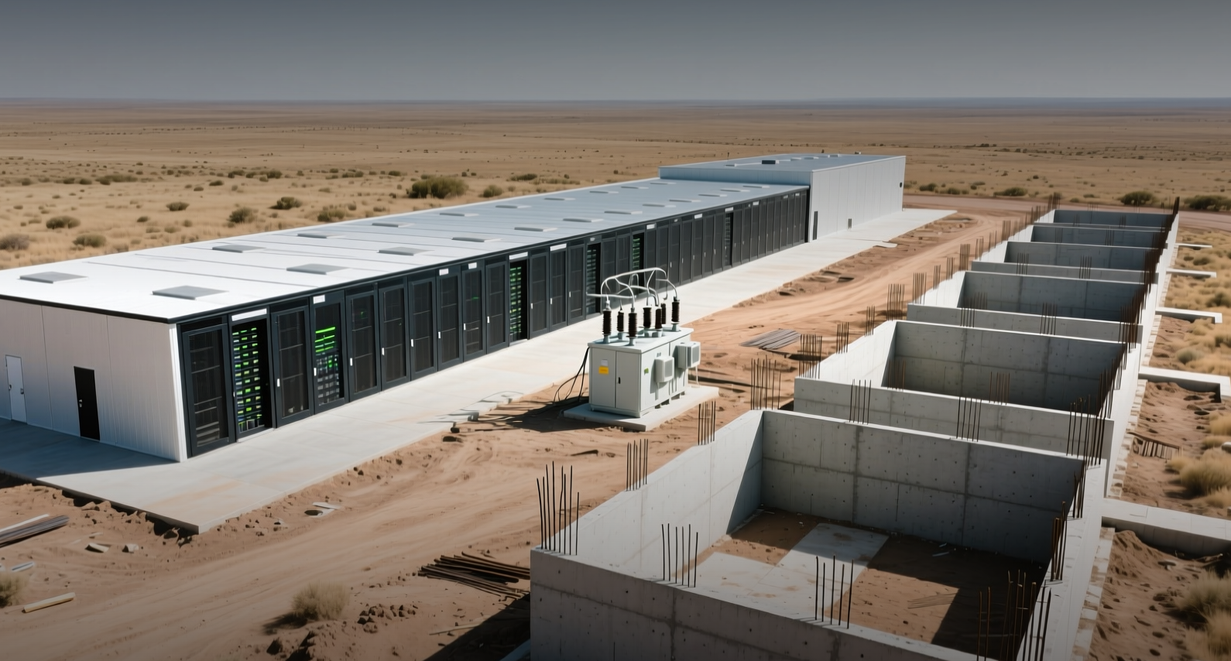
IREN's plan to spend $25 billion to $30 billion on AI infrastructure in fiscal 2027 is mostly funded by customer prepayments and debt rather than new equity, easing the dilution worry that has weighed on the former Bitcoin miner's shares.
"Customer prepayments can cover about half the GPU capex, and lenders can fund most of the rest," Daniel Roberts, co-founder and co-CEO of IREN, said in a post on X.
IREN reported a $684 million net loss for the June quarter, widened 176% sequentially, as it retired Bitcoin-mining hardware to make room for GPUs. Non-cash impairments of $450.4 million and a $102.1 million fair-value write-down on mining equipment held for sale accounted for most of the loss. AI Cloud revenue more than doubled sequentially to $70.5 million, while mining revenue fell 40% to $66.7 million. The company holds about $4 billion in contracted annual recurring revenue tied to capacity expected online by year-end.
IREN shares, trading at $35.45 against a consensus price target of $80.19, fell 12.53% on earnings day as investors weighed the scale of the spending plan. Bernstein's Gautam Chhugani carries a Street-high $100 target, arguing recent three-year contracts priced above $20 million per megawatt confirm pricing power. The stock's next move hinges on whether Horizons 2 through 4 land at Microsoft on schedule in the December quarter.
IREN entered fiscal 2027 with about $14 billion in cash, committed GPU financing and customer prepayments, and targets a further $8 billion through GPU financing and prepayments. Recent customer prepayments have covered 45% to 55% of associated GPU capex, while financing for non-investment-grade deployments funds 90% of equipment cost. GPUs represent about two-thirds of the combined cost of compute and data-center infrastructure.
IREN arranged $3.6 billion of Microsoft-related GPU financing at an average weighted interest rate of about 6%, plus $2.8 billion for other deployments including $2.4 billion at a 9% fixed rate for the Mackenzie expansion. Over the past 12 months, IREN raised about $19 billion, with only $3 billion coming from equity. The company's data-center portfolio remains unencumbered, and it has held preliminary talks about borrowing against those assets as they are commissioned.
IREN's AI Cloud revenue of $70.5 million in the June quarter exceeded mining revenue of $66.7 million for the first time, marking the completion of its pivot from Bitcoin mining. The company has about $4 billion in contracted ARR, with roughly $1 billion operational after Microsoft accepted Horizon 1, its first liquid-cooled GPU building in Childress, Texas. Three additional 50 MW deployments under the Microsoft agreement are scheduled to commission by year-end, with Sweetwater and further capacity contributing in 2027. The $700 million of ARR tied to the NVIDIA contract ramps in 2027.
IREN operates more than 5 gigawatts of secured power across North America, Spain and Australia, serving Microsoft, NVIDIA, Cohere, Perplexity and Figure AI. The spending plan also extends beyond capacity starting this fiscal year, covering air-cooled capacity planned for calendar 2027, liquid-cooled data centers expected later that year and early work for 2028 projects.
IREN shares, up 53.86% over the past year but down 6.14% year to date, trade at a deep discount to the $80.19 consensus target. The dislocation extends across the Bitcoin-to-AI cohort: Core Scientific trades at $16.51 against a $37.12 average target, Applied Digital at $25.34 against $74.23, and TeraWulf at $15.35 against $36.34. The bull case requires Horizons 2 through 4 to land at Microsoft on the December-quarter timeline, converting contracted ARR into operational revenue. If delivery slips, the $25 billion to $30 billion spending plan could force the dilutive equity raises investors fear.
This article is for informational purposes only and does not constitute investment advice.
