

Siemens Energy is carving out its €5.7 billion industrial solutions division to unlock growth in a business that competes for capital against faster-growing power generation units.
Siemens Energy is carving out its €5.7 billion industrial solutions division to unlock growth in a business that competes for capital against faster-growing power generation units.
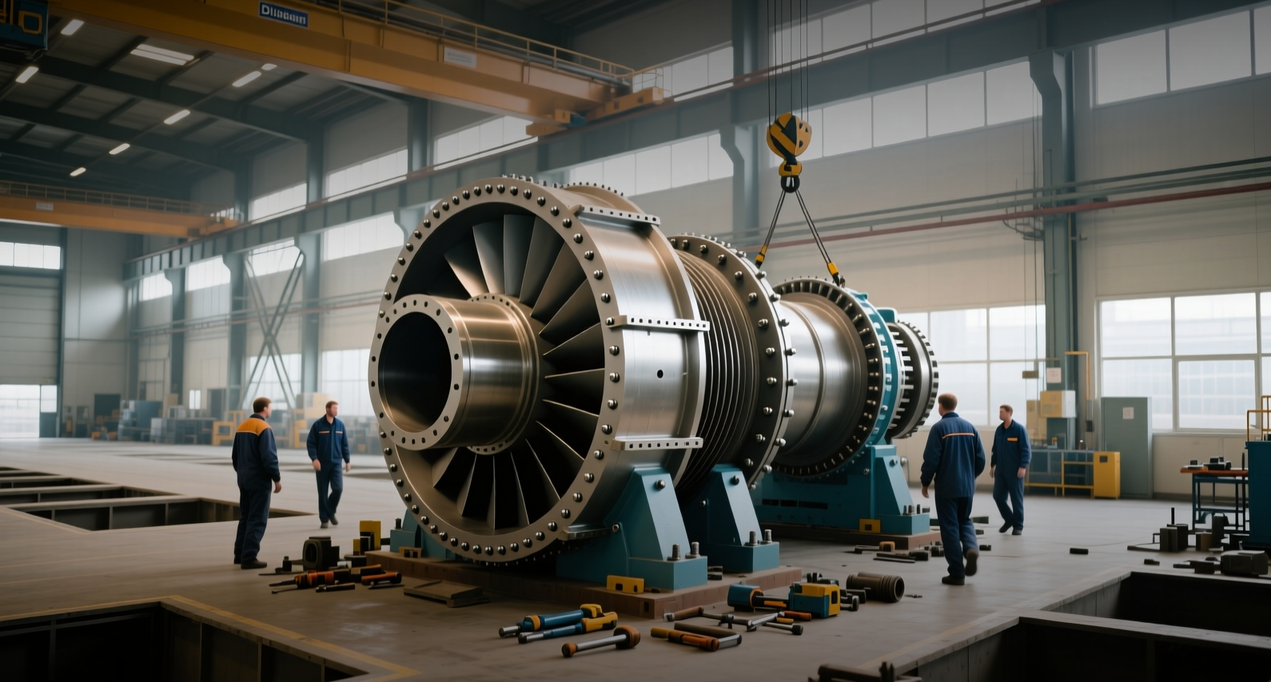
Siemens Energy plans to spin off its Transformation of Industry unit, a €5.7 billion business serving oil and gas, chemicals, and maritime customers, to sharpen focus on power generation and transmission as grid demand surges. The German conglomerate said Tuesday it has begun legal and operational preparations to establish the division as a standalone entity.
"If we don't change our structure, we limit what Transformation of Industry can achieve," Christian Bruch, president and chief executive officer of Siemens Energy, said in a statement. "Our current investment focus is on power generation and power transmission, with higher immediate payback."
The unit generated €5.7 billion in revenue in fiscal 2025, about 15 percent of group sales, with an 11 percent profit margin. It employs roughly 17,000 people, or about 17 percent of the company's workforce. The business has more than 85,000 units installed globally, with services accounting for about half of total revenue, providing stable recurring earnings.
Siemens Energy intends to deconsolidate the business while retaining a meaningful minority stake, opening the door to external investors or a potential capital markets transaction. The carve-out follows a broader industrial trend — Thyssenkrupp is also seeking to spin off its materials trading unit — as conglomerates shed non-core assets to fund higher-return growth areas.
A €5.7B portfolio spanning turbines to electrolyzers
Transformation of Industry supports industrial customers in operating plants more efficiently and with lower emissions. Its portfolio spans industrial steam turbines, compressors, electrolyzers for hydrogen production, generators and motors, as well as maritime and subsea technologies. The business benefits from long-term growth trends including industrial electrification, decarbonization, digitalization and rising demand for security of supply.
The unit maintains a network of key manufacturing sites across Germany — including Duisburg with approximately 1,500 employees, Erlangen with 700, Görlitz with 650, Muelheim an der Ruhr with 550, Nuremberg with 550, Erfurt with 550, Hamburg with 250, Leipzig with 200 and Berlin with 150 — as well as facilities in Europe, the United States, India, China, Brazil, Saudi Arabia and other countries.
Bruch said the future structure is intended to give Transformation of Industry greater entrepreneurial flexibility and additional options for growth, ranging from bringing in external investors to a potential capital markets transaction. The company said the business serves different markets than the rest of Siemens Energy — industries such as oil and gas, chemicals, process industries, paper, cement and maritime — which are often faster-moving, more transactional and shaped by different customer needs.
Omterra rebranding and the path to independence
The business to be carved out will initially operate under Siemens Energy's Omterra brand, which will also unite Siemens Energy and Siemens Gamesa Renewable Energy under a single name and brand umbrella. The rebranding process is scheduled to begin later this calendar year and will be implemented in stages.
Following the spin-off, Siemens Energy plans to focus on power generation and power transmission — divisions that have higher profit margins than Transformation of Industry, benefiting from increased demand for generation capacity and network equipment to power data centers needed for artificial intelligence technology. The spin-off comes as the company's core power generation and grid businesses benefit from a global buildout of data center capacity, electrification of transport and industry, and the replacement of aging utility infrastructure.
This article is for informational purposes only and does not constitute investment advice.
