SKYX Platforms Corp. agreed to buy Silicon Valley-backed smart-switch maker Deako Inc. for 25 million shares, 18.46% of the company, plus $12.5 million in cash and notes to Deako's lender, the Miami-based company said Thursday.
"Joining SKYX pairs what we've built at the wall with what they've built at the ceiling that maximizes performance of smart home products and gives builders one complete, plug-and-play solution instead of a collection of parts," Derek Richardson, founder and chief executive officer of Deako, said.
The stock consideration carries a two-year lockup and leak-out schedule — a full one-year lockup followed by nine to 12 months of staged sales under a Rule 10b5-1 trading plan. SKYX will pay Deako's lender $4 million at closing and issue an $8.5 million note, with $2.25 million due in the first quarter of 2027 and the remaining $6.25 million in the fourth quarter of 2027. On a pro forma basis, current SKYX shareholders own 84.4% of the combined company and Deako's shareholders and lender collectively own 15.6%. SKYX did not disclose a total enterprise value for the transaction, and no premium to an undisturbed price applies because Deako is privately held.
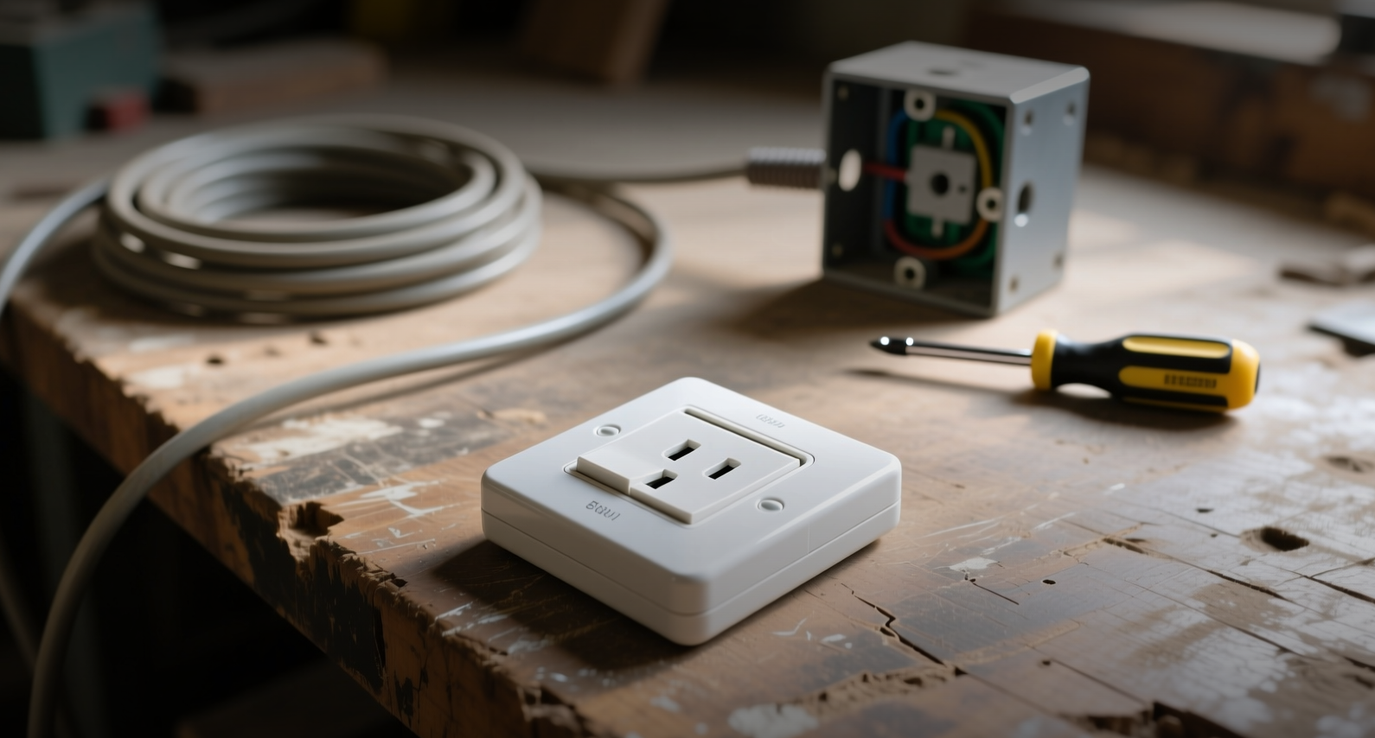
Deako gives SKYX a distribution channel it has spent years trying to build. The Seattle-area company has shipped more than 32 million units over the past five years, including its plug-in smart wall switches, and generated over $26 million of revenue in 2025. Its customer list runs to more than 50 U.S. builders, among them D.R. Horton, Toll Brothers, Risewell Homes, Adams Homes, Maronda Homes, Shea Homes and Schumacher Homes. SKYX expects the combination to lift Deako's SKU count into the builder, hotel and professional markets five-fold, and to open Deako's products to SKYX projects including Marriott hotels, European hotel properties and Miami's $4 billion Smart City development.
The two companies split the electrical real estate of a home. SKYX holds the ceiling position — an all-in-one smart home hub and a plug-and-play ceiling outlet receptacle that has drawn approval votes across 10 segments of the NFPA-NEC code book and an ANSI/NEMA standard vote. Deako holds the wall: intelligent switches and wall receptacles. Combined, the patent portfolio reaches more than 120 issued and pending applications, against SKYX's roughly 100 and Deako's 20. Management frames the pitch around installation cost, arguing that wired smart-home retrofits are the main reason most homes remain unsmart while cars have gone connected.
Deako's board carries the deal's marquee names. Paul Jacobs, the former chairman and chief executive of Qualcomm, is a lead investor and board member; Marwan Fawaz, former CEO of Nest, also sits on the board alongside Executive Chairman Scott Vertrees. Richardson, a former sales leader at BlackBerry and Cypress, will stay on as Deako CEO and take responsibility for SKYX's growth into the builder, hotel and professional channels.
"To date, the smart home has advanced slowly device by device," Jacobs said. "Together they provide the electronic real estate of homes, buildings and hotels, where power, control, sensing and AI intelligence will naturally live."
SKYX and Deako management will hold a conference call at 8:30 a.m. Eastern Time Thursday to walk through the merger, with a telephone replay available through October 10, 2026. The call is the first opportunity for investors to press management on integration costs, the cash drain from the lender note and whether the builder relationships convert into committed volume rather than shelf space.
The deal lands against a thin financial base at SKYX. The company reported revenue of $25.3 million and a GAAP loss of $0.06 per share in its most recent quarter, filed August 12, and said on August 13 that it targets 100,000 units in market by the end of 2026 while expecting to exit the year cash flow positive. SKYX's own 2025 revenue was roughly in line with Deako's, meaning the acquisition roughly doubles the top line while adding $12.5 million of near-term cash obligations and 25 million new shares. Management lists overhead consolidation in software, accounting, general administration and sourcing as the cost savings, and points to recurring revenue from product upgrades, AI services, monitoring, subscriptions and licensing as the longer-term payoff.
The transaction requires no shareholder vote at Deako and no disclosed regulatory approval beyond customary closing conditions; SKYX did not specify a closing date. For SKYX holders, the near-term question is whether the builder channel converts into revenue before the 2027 note payments come due.
This article is for informational purposes only and does not constitute investment advice.