


Unilever bets shedding its $65 billion food business will close a valuation gap that has left it trading at a 22 percent discount to P&G.
Unilever bets shedding its $65 billion food business will close a valuation gap that has left it trading at a 22 percent discount to P&G.
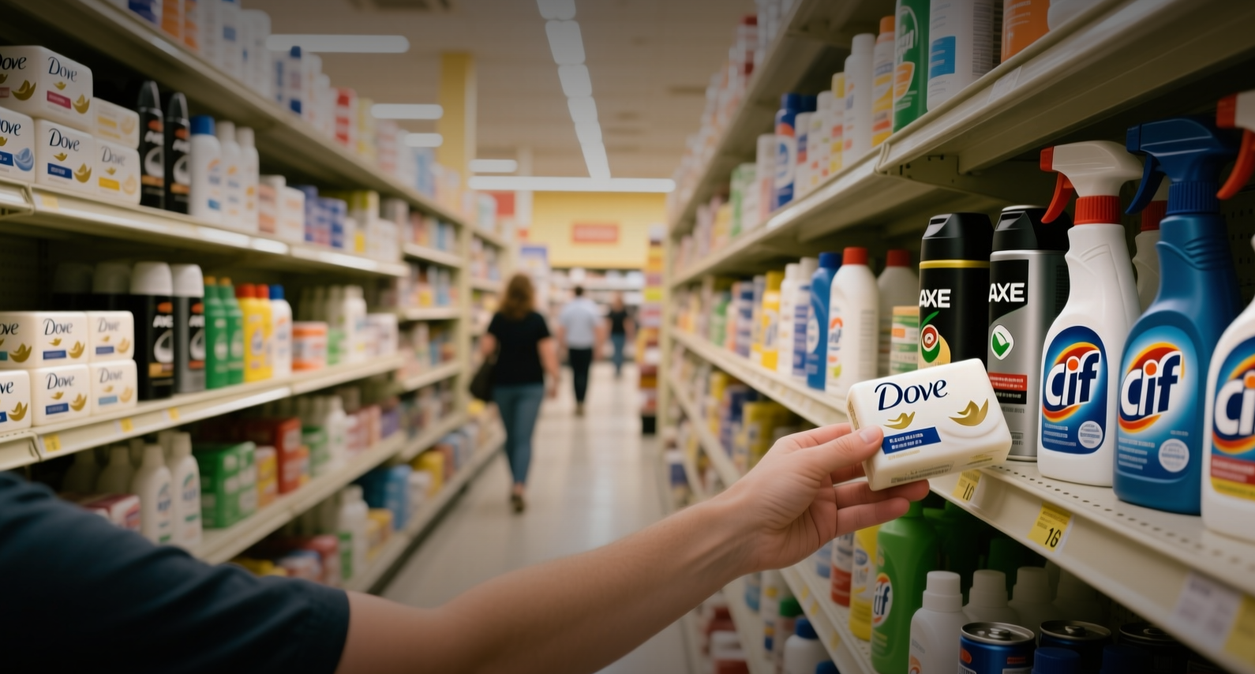
Unilever trades at 11.5 times core earnings, a 22 percent discount to Procter & Gamble, as it bets that shedding food assets to focus on beauty and personal care will close the valuation gap.
"Until you show me the evidence that you're turning this around, you're sitting on a very low multiple," said Dan Hanbury, a portfolio manager at Ninety One, a major investor in Colgate-Palmolive, Unilever and L'Oreal.
The maker of Dove soap, Axe deodorant and Cif cleaning products trades at 11.5 times enterprise value to core earnings, according to LSEG data. That compares with 14.8 for Procter & Gamble, 17.5 for L'Oreal and 22.7 for Coca-Cola. Unilever's March deal to merge its food business with U.S. spice maker McCormick in a roughly $65 billion Reverse Morris Trust transaction will leave the British group with an almost 10 percent stake in the combined company and its shareholders with a roughly 55 percent stake, plus $15.7 billion in cash.
The transaction reduces Unilever's exposure to a relatively high-margin business, increasing pressure on management to show that faster-growing beauty, personal care and home products can make up the difference. The market is wary of "false dawns" from corporate turnarounds, Hanbury said, adding that Unilever probably needed three or four quarters of strong volume growth to win over doubters.
Big industrial companies from General Electric to Siemens have spent years simplifying their structures to eliminate what investors call a conglomerate discount — a penalty applied to companies whose complexity is seen as weighing on efficiency and growth. That thinking has increasingly spread to consumer goods companies. Where diversification was once seen as a strength that could cushion changes in consumer tastes, investors now favor category leaders that can focus investment, innovation and marketing on a narrower set of products.
Under CEO Fernando Fernandez, Unilever has accelerated its retreat from food. The company spun off its ice cream business and in March struck the roughly $65 billion deal to combine its food division with McCormick. The issue is not that food is unprofitable — the business has historically generated attractive margins — but growth has lagged Unilever's beauty and personal care operations.
"Being focused on a single category allows you to be more cost effective and more innovative," said Akeel Sachak, global head of consumer at Rothschild & Co.
Investors often point to Procter & Gamble as a template. The Tide detergent maker exited food and streamlined its brand portfolio, subsequently delivering stronger growth and earning a valuation premium for much of the following decade. "P&G pulled off the restructuring, drove higher growth and commanded a relatively higher premium for probably 10 years," Hanbury said.
Investors and analysts say the focus for Unilever has now switched from portfolio reshuffling to execution. "If Unilever continues to execute, Unilever will continue to see a degree of re-rating... and then hopefully grow from there," said Will James, portfolio manager at Guinness Global Investors, which holds shares in Unilever and L'Oreal.
Unilever has reported improving results in recent quarters, and in July said sales volumes had reached their highest level in more than a decade. Yet despite the operational improvement, some Unilever investors are concerned about their continued exposure to the slow-growing food category via their stake in the company resulting from the McCormick merger, Barclays analyst Warren Ackerman said. Unilever declined to comment.
CEO Fernandez told an industry event in June: "I believe that every quarter that goes by, and we deliver the numbers that we have been delivering, and we get closer to the closing of a transaction of McCormick, the value of Unilever will be shown."
The stakes are significant. If Unilever can sustain volume growth and close the deal, the re-rating could add billions to its market value. If not, the conglomerate discount persists — and the company's bet on focus over scale will have failed to deliver.
This article is for informational purposes only and does not constitute investment advice.
