

VCI Global's modular data center platform aims to deliver power-ready AI compute in six months per module, targeting 500MW over five years.
VCI Global's modular data center platform aims to deliver power-ready AI compute in six months per module, targeting 500MW over five years.
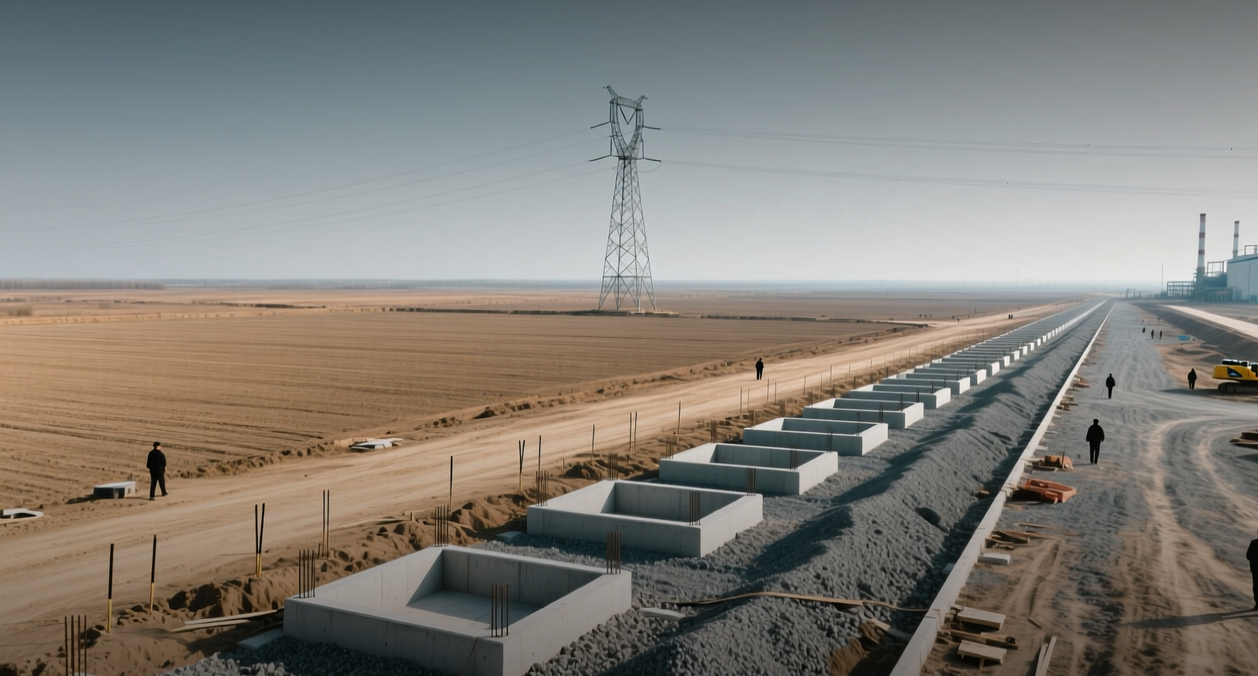
VCI Global unveiled a modular data center platform targeting up to 500MW of AI compute capacity over five years, entering a market where power availability has become the industry's binding constraint.
"The AI infrastructure opportunity is moving beyond GPUs. The next constraint is increasingly where those GPUs can be powered, cooled and deployed at scale," Victor Hoo, executive chairman and chief executive officer of VCI Global, said.
The initial 5MW deployment is designed around NVIDIA B300-class infrastructure, with commercial power-on targeted for Q3 2027. Each Galatron AI Factory module incorporates advanced liquid cooling, power management and digital twin-based design and validation, with manufacturing and deployment targeted at approximately six months per unit. Based on the current configuration, each 5MW module is estimated to support more than 5 trillion AI tokens annually, scaling to roughly 670 trillion tokens at the planned 500MW capacity.
The launch comes as the International Energy Agency estimates global data center electricity consumption could more than double from approximately 415 TWh in 2024 to 945 TWh by 2030, with AI a major driver. McKinsey projects global data center demand could reach 171 to 219 GW by 2030, up from roughly 60 GW in 2023, while JLL estimates new construction can take two to four years before power procurement and grid constraints extend timelines further.
Modular Design Targets the Power Bottleneck
Galatron AI Factory's standardized architecture is intended to let VCI Global deploy capacity progressively across multiple sites, aligning capital expenditure with power availability and customer demand. The platform is being developed with potential integration of solid oxide fuel cell power solutions, renewable energy microgrids and flexible grid interaction, providing options for powering high-density AI environments.
VCI Global is evaluating integration with its planned AI cloud and computing infrastructure in Malaysia, which would extend the platform's reach beyond the initial deployment. The company said NVIDIA B300-class infrastructure represents the current reference configuration, not a fixed specification, allowing future modules to adopt newer AI accelerators as they become commercially available.
The modular form factor also addresses a practical constraint: traditional data center construction requires extensive site preparation, power procurement and regulatory approvals that can stretch development timelines to four years or more. By manufacturing standardized modules off-site and deploying them in approximately six months, VCI Global is betting that speed-to-market will be the differentiator in a market where hyperscalers and AI startups are competing for the same constrained power resources.
Roadmap and Execution Risks
The 500MW roadmap is subject to power availability, site readiness, customer demand, financing and market conditions, the company said. VCI Global trades on the Nasdaq under the ticker VCIG, operating as an AI-native platform company with exposure across advisory, digital infrastructure, digital assets, energy, automotive and consumer sectors.
The modular approach could give VCI Global a speed advantage over traditional data center developers, which typically require two to four years for new construction per JLL estimates. If the company executes on its six-month module deployment timeline, it could capture demand from enterprises and AI developers facing GPU shortages and power constraints at hyperscale facilities operated by Amazon Web Services, Microsoft Azure and Google Cloud.
VCI Global did not disclose CapEx guidance for the 500MW roadmap, and the token generation estimates are illustrative, depending on hardware deployed, workload, utilization and power availability. The company's stock trades on the Nasdaq, where AI infrastructure names have drawn significant investor attention as hyperscalers commit hundreds of billions of dollars to data center expansion. The company's diversified platform model, spanning advisory, digital assets, energy and automotive, means the AI infrastructure business will need to demonstrate standalone traction to justify investor enthusiasm.
This article is for informational purposes only and does not constitute investment advice.
