

Key Takeaways: Vicor's power modules have become a critical bottleneck in AI data centers, with orders outpacing shipments by more than 2-to-1.
Key Takeaways: Vicor's power modules have become a critical bottleneck in AI data centers, with orders outpacing shipments by more than 2-to-1.
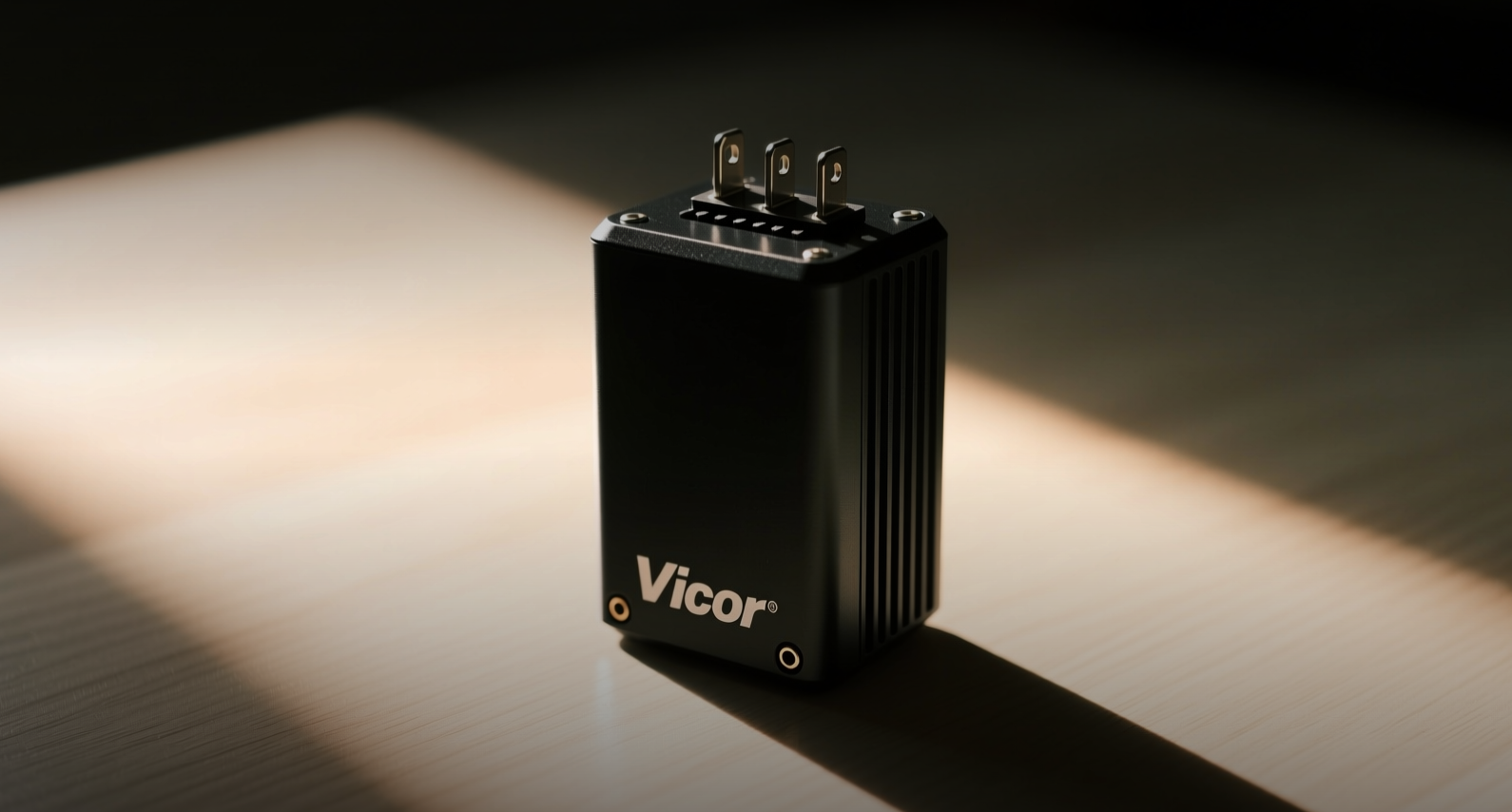
Vicor's modular power components, essential for feeding electricity to AI accelerators, face capacity constraints so severe that the company's backlog surged 70% to $300.6 million in the first quarter. The book-to-bill ratio exceeded 2, meaning orders were more than double the value of products shipped.
"Near-term capacity is essentially sold out," management said during the Q1 earnings call, describing a second 3Di production line that won't arrive until late 2026.
The company raised its Q2 revenue guidance by $16 million to $142 million, driven by product shipments and royalties from a newly signed licensee. First-quarter revenue reached $112.97 million, up 20.2% from a year earlier, while gross margins expanded 800 basis points to 55.2% as higher volumes and royalty income improved factory utilization. Royalty revenues rose 39.1% to $14.97 million.
Vicor shares have surged 137.8% year to date, far outpacing peers Monolithic Power Systems at 49.2% and Texas Instruments at 73.6%. At 14.64 times forward sales, the stock trades at more than double the broader semiconductor sector's 6.85 times, leaving limited room for error as the company races to debottleneck its Fab 1 facility.
Capacity Constraints Define the Near-Term Outlook
Vicor's Advanced Products, which include its Factorized Power Architecture and Vertical Power Delivery technologies, accounted for 61% of net revenues in 2025 and 57.5% in the first quarter of 2026. These systems convert and distribute power at higher densities than conventional solutions, making them critical as AI processors push power demands higher.
The company now believes Fab 1 can support an annual revenue run rate of at least $1.5 billion, up from a prior target of roughly $1 billion, through cycle-time reductions, debottlenecking and moving selected process steps to a nearby Vicor-controlled site. A second 3Di line is expected to be installed in the third-to-fourth quarter of 2026, but management expects the company to remain capacity constrained for a substantial period.
Licensing Adds a Second Earnings Lever
Royalty revenues reached about $15 million in the first quarter, and the company's 2026 revenue outlook of nearly $570 million assumes only modest growth from existing agreements. An OEM recently secured an all-inclusive license covering Vicor's power-conversion topologies, control systems and distribution architectures, including Factorized Power Architecture and Vertical Power Delivery.
Licensing carries substantially higher margins than product sales, which helped drive gross margin to 55.2% in Q1. However, legal spending tied to intellectual-property enforcement has risen, with operating expenses increasing 4% sequentially to $45.5 million. Management's 2026 outlook assumes no new licensing agreements before a second International Trade Commission case reaches final determination in 2027, leaving possible upside if enforcement actions lead to earlier settlements.
Vicor ended the first quarter with $404.25 million in cash, giving it flexibility to fund manufacturing expansion and research. The stock carries a Zacks Rank #2 (Buy), but the $273 price target implies only modest upside from current levels near $260. The operating story remains strong — the question is whether the market has already priced in the capacity expansion before it arrives.
This article is for informational purposes only and does not constitute investment advice.
