

Alibaba's Qwen 3.8-Max matches Anthropic's Claude on coding benchmarks while cutting inference costs, escalating the Chinese AI arms race.
Alibaba's Qwen 3.8-Max matches Anthropic's Claude on coding benchmarks while cutting inference costs, escalating the Chinese AI arms race.
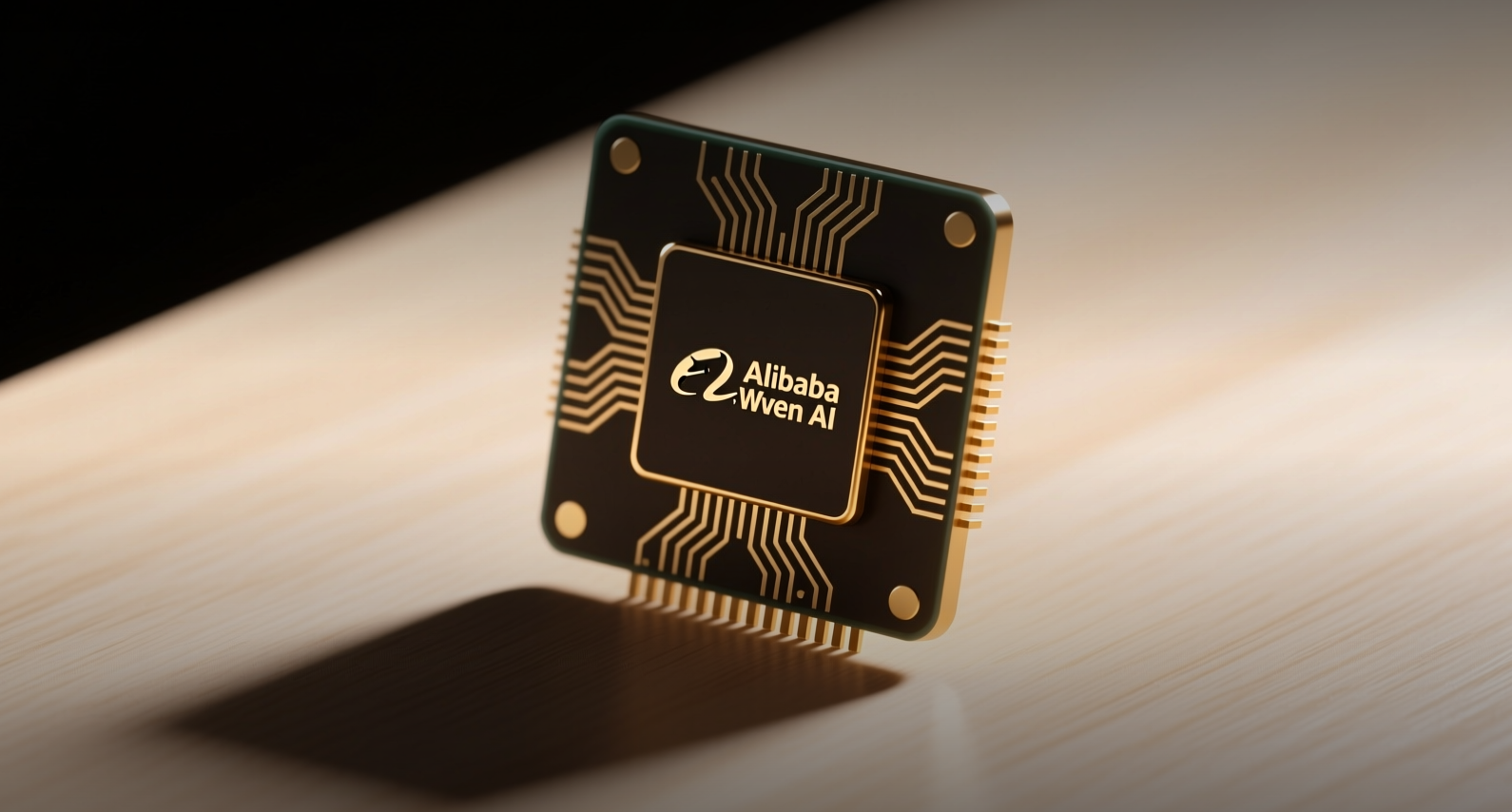
Alibaba's Qwen 3.8-Max matches Anthropic's Claude on coding benchmarks while cutting inference costs, escalating the Chinese AI arms race.
Alibaba Group's Qwen 3.8-Max, a 2.4-trillion-parameter model, matches Anthropic's Claude on coding and multimodal benchmarks while lowering inference costs, escalating the Chinese AI race against DeepSeek and Tencent.
"Qwen 3.8 represents a significant step for Alibaba in demonstrating its capabilities as various vendors iterate on their models," Haitong International said, prompting the brokerage to narrow its loss forecast for the food-delivery business and raise its profitability outlook for cloud.
Built on the Qwen 3.5 architecture, the model packs 2.4 trillion parameters with 95 billion active, and will become the first Max-class Qwen whose weights are released as open source next week. Alibaba said benchmark tests showed Qwen 3.8-Max broadly competitive with OpenAI and Anthropic's leading models, outperforming them on several coding, multimodal and engineering tests while trailing on some general-purpose reasoning.
Hong Kong-listed Alibaba shares rose 6 percent to HK$124.00 by 02:58 GMT, while Baidu gained 3.68 percent. The launch follows Alibaba's pledge to exceed 380 billion yuan ($55.96 billion) in AI investment over three years, and comes as DeepSeek's low-cost reasoning models reset pricing expectations across the industry.
The open-source decision is the model's sharpest competitive edge. Alibaba becomes the first vendor to release weights for a Max-class model, a move that could accelerate adoption of its cloud infrastructure as developers build on Qwen rather than proprietary rivals. The company's cloud business, which Haitong International now sees as more profitable, is the primary monetization channel for the model family.
The stakes extend beyond model quality. DeepSeek's low-cost reasoning models earlier this year forced Chinese vendors including Baidu and Tencent to accelerate their own upgrades, compressing prices across the market. Alibaba's open-weights approach contrasts with the closed strategy of OpenAI and Anthropic, potentially giving it a distribution advantage among developers and enterprises in China and emerging markets.
The capital intensity is rising in parallel. Alibaba said in May it would exceed its planned AI investment of up to 380 billion yuan ($55.96 billion) over the next three years, funding the cloud and data-center buildout required to support models like Qwen 3.8-Max. The company also holds a roughly 4.48 percent stake in memory-chip maker Changxin Technology, whose market capitalization briefly surpassed 4 trillion yuan, generating unrealized gains exceeding 170 billion yuan on an initial investment of about 7.6 billion yuan.
For investors, the question is whether Alibaba can convert model leadership into cloud revenue. The company trades at a discount to global peers as it funds the AI buildout, and Haitong International's raised cloud forecast suggests the market may be underpricing the monetization path. The open-source release next week will be the first test of developer adoption, and any surge in Qwen-based deployments would flow directly into Alibaba's cloud and inference revenue lines.
This article is for informational purposes only and does not constitute investment advice.
