
You can't sweep $40 trillion in US national debt under a rug — and the bond market is telling Treasury Secretary Scott Bessent exactly that.
You can't sweep $40 trillion in US national debt under a rug — and the bond market is telling Treasury Secretary Scott Bessent exactly that.
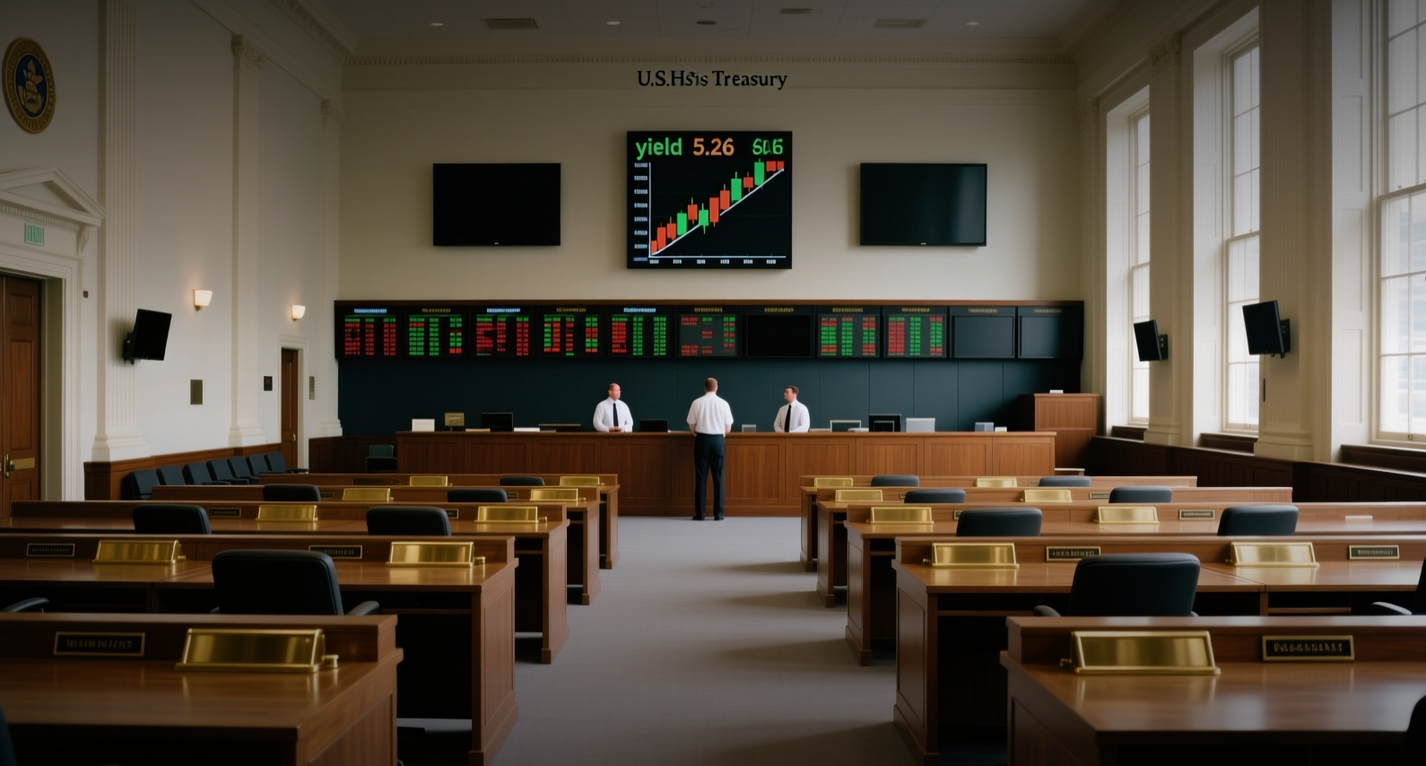
Treasury Secretary Scott Bessent's $4 billion bond buyback intervention failed to hold down yields, with 30-year Treasury rates climbing back to 5.26 percent Thursday as investors priced in the $40 trillion national debt burden.
"This is not the cure to what ails the bond market. There are structural forces here at play that are really beyond the Treasury and the administration's control," Adam Phillips, managing director of investments at EP Wealth Advisors, told CNBC.
Yields on 30-year US Treasuries rose to 5.26 percent Thursday, near the 19-year high above 5.3 percent hit earlier in the week, erasing gains from Bessent's Wednesday announcement that Treasury would at least double planned buybacks. The 10-year yield also climbed. The intervention came as the federal deficit is on pace to top $2.1 trillion for fiscal 2026, with public debt at $32 trillion in marketable securities and $40 trillion including intragovernmental transfers.
The failed intervention raises questions about Bessent's credibility and the Treasury's ability to manage borrowing costs. With interest payments exceeding $1 trillion annually — more than all non-defense discretionary spending — and the CBO projecting debt to reach $56 trillion by 2036, the bond market's signal is clear: the US must address its fiscal trajectory or face persistently higher borrowing costs that ripple into mortgages, auto loans, and corporate credit.
Bessent told CNBC Thursday that Treasury buybacks could exceed the $4 billion announced Wednesday and that he has a "big toolkit" to drive yields lower. "We believe that the yields don't reflect the underlying fundamentals," he said. He also promised a new fiscal consolidation plan within days, saying he, President Trump, and budget director Russell Vought would examine both government expenses and revenues. Part of that revenue picture would include renewed tariff income as the administration refunds payments struck down by the Supreme Court and introduces new duties under different legal authorities.
Analysts remain skeptical. John Fath, managing partner at BTG Pactual Asset Management, told Bloomberg that the market might view larger buybacks as desperation. "The bottom line is that deficits are not going away," Fath said. ING analysts called the efforts "rearranging deckchairs on the Titanic."
The sell-off in long-dated Treasuries reflects multiple forces beyond Bessent's control: elevated inflation, higher oil prices from the war in Iran, a wave of corporate debt issuance from tech companies funding AI infrastructure, and a budget deficit on pace to exceed $2 trillion. The Congressional Budget Office projects public debt will reach $56 trillion, or 120 percent of GDP, within a decade.
Interest on the federal debt now exceeds $1 trillion annually, surpassing all non-defense discretionary spending. More than 37 percent of individual income tax revenue goes to interest payments. The last time 30-year yields traded near current levels was 2007, before the global financial crisis. The Treasury's coveted status as the world's safest investment is fading, according to The Wall Street Journal's Greg Ip, as growing debt and seemingly erratic economic policies push bond traders to reconsider their assumptions.
The analytical solution is straightforward — cut spending, raise taxes, or both — but politically it appears out of reach. Trump has repeatedly vowed to eliminate the deficit, saying this week he'd pay off the debt "very easily, very quickly," yet the deficit is projected to rise from $1.8 trillion to more than $2.1 trillion this year. The DOGE initiative led by Elon Musk fell roughly 95 percent short of its promised $2 trillion in savings.
Bessent said there's a "very good chance" deficits have peaked under the current administration, but JPMorgan's team sees credibility risk in the Treasury's buyback program. Bloomberg has called Bessent "the most interventionist Treasury secretary in financial markets in decades." His approach contrasts with the Federal Reserve under new chair Kevin Warsh, which is trying to step back and let markets rely less on central bank guidance.
The stakes extend beyond Washington. Higher Treasury yields translate directly into more expensive mortgages, auto loans, and corporate borrowing costs. As The Wall Street Journal's Greg Ip has noted, growing US debt and seemingly erratic economic policies have bond traders rethinking Treasuries as the world's safest investment — a shift that would compound the fiscal problem.
This article is for informational purposes only and does not constitute investment advice.
