

Bessent's bond buybacks are testing the 1951 Treasury-Fed boundary — and critics say the plan won't work.
Bessent's bond buybacks are testing the 1951 Treasury-Fed boundary — and critics say the plan won't work.
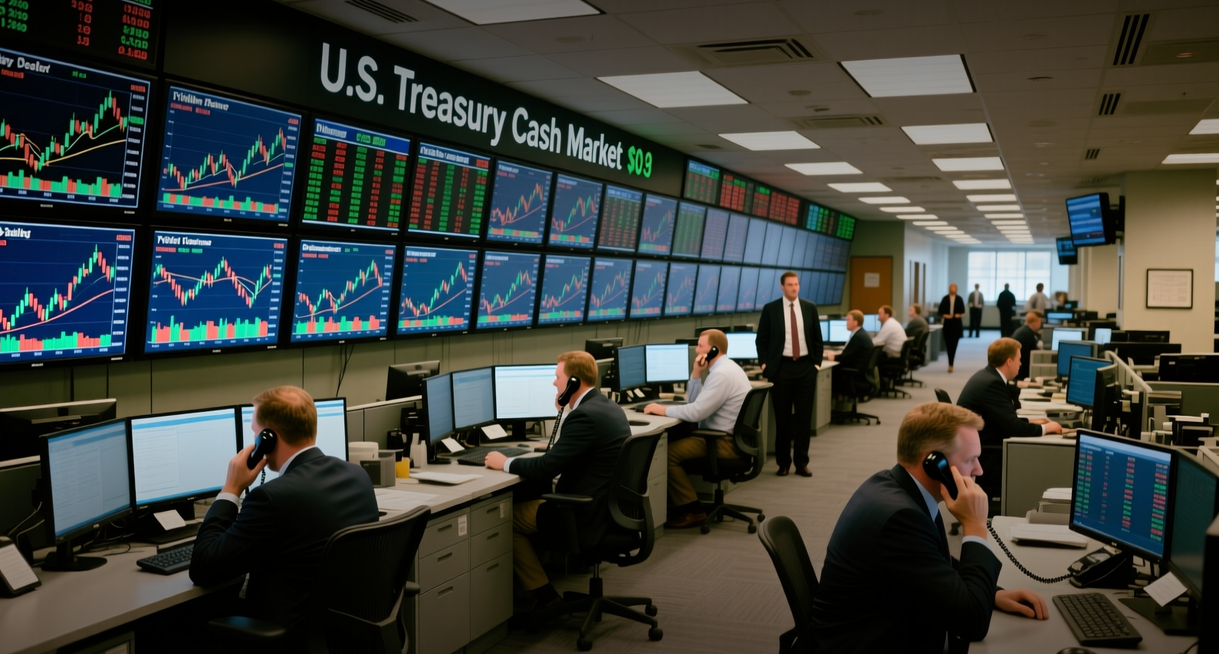
Treasury Secretary Scott Bessent's move to double long-end buybacks to $4 billion per operation has reopened the 1951 boundary between the Treasury and the Fed, with 30-year yields at a 19-year high.
Asked whether billionaire investor Stanley Druckenmiller was right that Bessent is managing prices rather than supporting liquidity, Nathan Sheets, global chief economist at Citigroup and a former Treasury undersecretary, said: "Broadly speaking, I think the answer to that question is yes."
Treasury said Aug. 19 it would at least double long-end buybacks to $4 billion per operation after the 30-year yield hit a 19-year high. Bessent later said purchases could grow further, while officials floated funding them through the $940 billion Treasury General Account. The relief lasted barely a day: yields initially fell, then reversed. The planned purchases are tiny beside a cash market trading $1.2 trillion daily and Treasury's expected $739 billion in quarterly borrowing.
Sheets said deficits of 6 percent of GDP or higher imply $20 trillion to $25 trillion of Treasury issuance over the coming decade. Washington wants to spend around 24 percent of GDP while taxing at 17 to 18 percent, he said, and buybacks do nothing to close that gap. "My baseline would be it doesn't work, but it's benign," Sheets said. In a worse scenario, he warned, the effort starts to undercut the credibility of the Treasury, the administration and ultimately the Federal Reserve.
The timing of Bessent's announcement was itself notable — two weeks after Treasury's quarterly refunding statement, when such policy adjustments are typically disclosed. Treasury has long promised investors that debt management would be "regular and predictable," not opportunistic. Bessent's stated rationale: long-end yields at 19-year highs "do not reflect fundamentals."
The buyback plan is only one lever Bessent has pulled. This month he pressed the Fed to provide more dollar liquidity to foreign central banks, aiming to support Japan's ability to intervene in currency markets without selling Treasuries — which would push yields higher. He has also shown interest in the Atlanta Fed presidency, vacant since March, and the administration directed Fannie Mae and Freddie Mac to increase purchases of mortgage-backed securities to lower mortgage rates.
The question is whether these tools constitute legitimate debt management or an attempt to bypass the Fed's monetary policy. Jon Faust, who advised three Fed chairs, called Bessent's actions "a real problem" for Fed Chair Kevin Warsh. "At a time of high inflation, there's already concern that monetary policy could be subordinated to government financing needs," Faust said. "And he chose to do this right before Jackson Hole. I think that's quite unthoughtful, frankly a slap in the face."
The FOMC is already divided — three officials voted for rate hikes last month. If Bessent's intervention successfully lowers long-end yields and borrowing costs, Faust said, "it would certainly push a majority of the FOMC further toward raising rates."
Warsh faces a particular dilemma. He has argued the Fed should say less about future policy to extract "unfiltered signals" from market prices. Last month he cited rising Treasury yields as evidence that bond markets were tightening financial conditions on their own. But now those yields may reflect Treasury intervention rather than pure investor judgment — contaminating the very thermometer Warsh relies on.
The boundary Bessent is testing was born in war. During World War II, the Fed agreed to cap Treasury yields to help finance the conflict. That arrangement ended with the 1951 Treasury-Fed Accord, signed as the two institutions argued over how to fund the Korean War — now regarded as the starting point of Fed independence.
War also produced the other famous confrontation: in 1965, President Lyndon Johnson summoned Fed Chair William McChesney Martin to his Texas ranch and berated him for raising rates during the Vietnam War. Warsh has spoken of writing an "updated version of the 1951 Accord." Today he faces a different kind of war — one that has generated fresh inflation pressures, with Bessent leading the economic diplomacy aimed at ending it.
Treasury pushed back on the criticism. "Before the global financial crisis, debt management decisions were entirely at Treasury's discretion," a Treasury spokesperson said. "Under Secretary Bessent, Treasury is reclaiming those powers to fulfill its mission — financing U.S. taxpayers at the lowest long-term cost." Bessent himself said the buybacks "will not interfere with monetary policy" and that Treasury and the Fed "will coordinate if there are any changes to the balance sheet."
The iShares 20+ Year Treasury Bond ETF (TLT) traded near $83 Tuesday, just over 2 percent above its 52-week low of $81.17, after touching its lowest closing level since 2004 last week. Kalshi traders see a 56 percent chance the 10-year yield ends 2026 at 4.75 percent or above, with a year-end yield of at least 5 percent priced at 27 percent.
Bessent can buy back bonds. His critics' message is that he cannot buy back fiscal credibility.
This article is for informational purposes only and does not constitute investment advice.
