

IBM's first dual-architecture mainframe processor lets each core run both IBM Z and Arm instructions, opening the platform to 22 million Arm developers.
IBM's first dual-architecture mainframe processor lets each core run both IBM Z and Arm instructions, opening the platform to 22 million Arm developers.
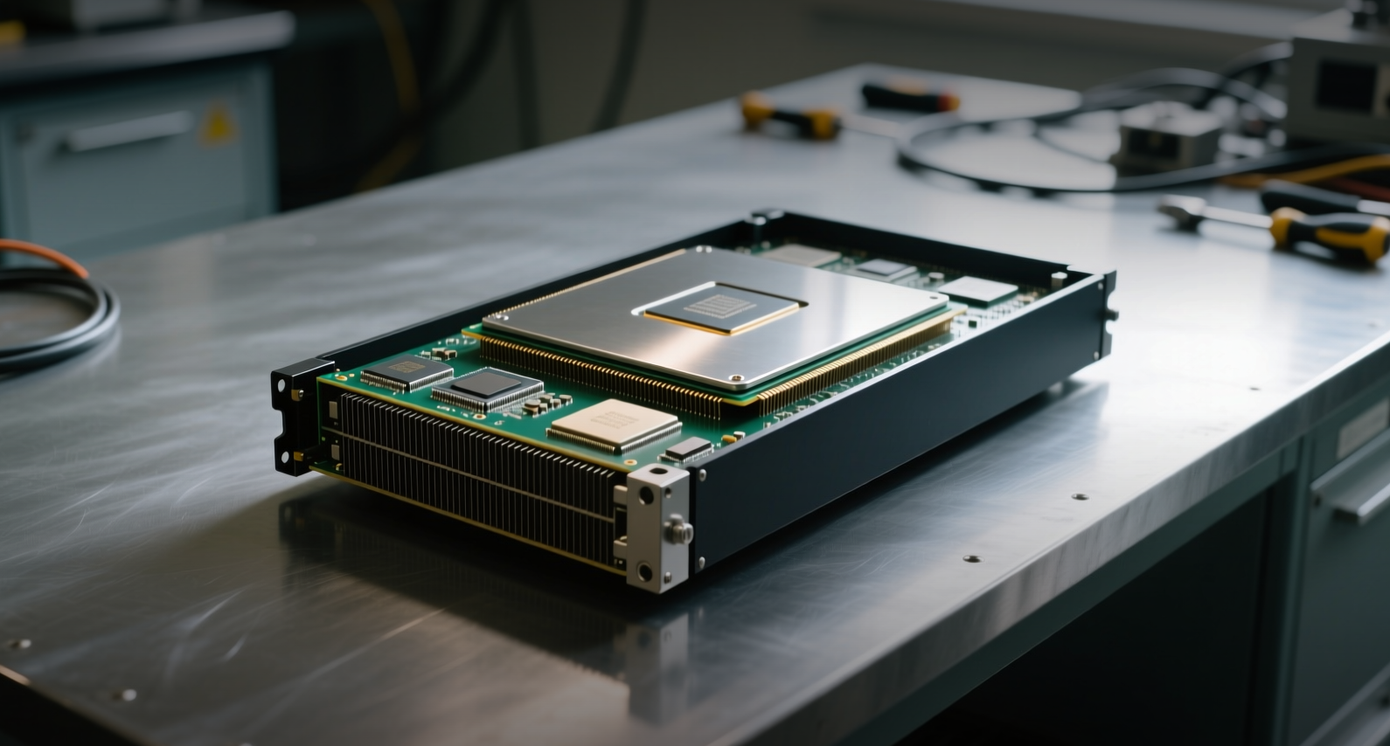
IBM is bringing Arm-native Linux to mainframes with a 2nm processor whose 11 cores switch between IBM Z and Arm instruction sets in nanoseconds, opening the platform to 22 million Arm developers.
"That switch takes about the nanosecond scale. Because you're running for many milliseconds in the virtual image, this switching overhead sort of amortizes to zero — pretty much no impact at all," Christian Jacobi, chief technology officer and IBM Fellow at IBM Systems Development, said.
The chip, built on a 2nm node, runs 11 high-performance cores above 5.7 GHz with on-chip AI inference accelerators for in-transaction fraud detection, a dedicated data processing unit for I/O acceleration, and a large cache architecture. Full systems scale to hundreds of cores and tens of terabytes of memory. The design uses the open-source KVM hypervisor so enterprises can run Arm64 Linux virtual machines alongside Linux on Z VMs, with each core flipping between instruction sets as the hypervisor dispatches workloads.
The announcement is the first hardware milestone from the IBM-Arm collaboration announced in April, and it addresses a structural problem: the s390x architecture runs most of the world's regulated financial transactions, but the AI stack — PyTorch, ONNX Runtime, container workloads — was built for x86 and increasingly Arm. Arm estimates close to half of compute shipped to major hyperscalers in 2025 was Arm-based, driven by AWS Graviton, Google Axion, and Microsoft's in-house silicon.
The most consequential engineering decision is what IBM chose not to do. Rather than bolting standalone Arm cores onto the processor — the approach used in heterogeneous designs from Nvidia and Apple — IBM built every core to be bilingual. Each of the 11 cores can dynamically switch between Arm software mode and traditional Z software mode, with the KVM hypervisor dispatching each virtual machine onto a physical core and flipping the instruction set accordingly.
The compatibility promise is ambitious: Arm Linux binaries should run unmodified. "The new Arm capabilities are designed to be 100 percent binary compatible," Jacobi said. "Once you have, for example, Red Hat Linux for Arm, and you have applications that run on Red Hat Linux for Arm, they will run on the system without modifications." Arm defines the instruction set architecture and supplies validation tooling to guarantee IBM's implementation behaves identically to every other Arm chip, while IBM designs and builds the silicon entirely in-house.
Traditional z/OS workloads run in a separate partition on the same chip, outside KVM — meaning a bank's core ledger, its fraud models, and a modern Arm-native monitoring stack can all share the same silicon, the same memory fabric, and the same reliability guarantees. IBM's mainframe platforms deliver eight nines of availability, or 0.3 seconds of downtime per year.
The strategic logic is about software, not hardware. IBM's s390x architecture runs an enormous share of the world's mission-critical transactions, but the broader universe of enterprise software — monitoring tools, security agents, cloud-native middleware, and above all the AI stack — was built for x86 and, increasingly, for Arm. Porting each application to s390x has been a grinding, one-ISV-at-a-time effort.
"Customers weren't asking for a dual-architecture chip per se — they were asking for outcomes," Tina Tarquinio, chief product officer for IBM Z and LinuxONE, told VentureBeat. "Help me get these surround workloads, or different types of workloads, to run in a quicker-to-market fashion."
IBM is also previewing a new Spyre AI accelerator at Hot Chips, pairing the dual-architecture processor with a higher-performance chip capable of running large language models for agentic workflows. The current architecture already offers two tiers of AI: an on-processor accelerator introduced with the Telum chip in 2022 for ultra-low-latency inference such as fraud scoring, and the Spyre accelerator card for heavier models.
The chip will debut in the successor to the z17, which shipped in the second quarter of 2025, with IBM holding to a roughly three-year product cadence pointing to a launch around 2028. Mohamed Awad, executive vice president of Cloud AI at Arm, said bringing Arm compute to IBM Z and LinuxONE would extend momentum "into mission-critical enterprise infrastructure to give organizations greater choice in how they deploy AI."
For investors, the question is whether this expands IBM's infrastructure segment growth or merely defends the installed base. IBM shares traded at $235.68 with a 2.6 percent dividend yield, and the mainframe business generates high-margin recurring revenue from a customer base that rarely churns. The dual-architecture bet could attract new workloads to the platform — particularly AI inference running next to transaction data — without cannibalizing the existing z/OS base. The risk is execution: running a foreign instruction set at production performance, with mainframe-grade fault detection and recovery, remains unproven until the chip ships in volume.
This article is for informational purposes only and does not constitute investment advice.
