


A memory-chip shortage driven by AI data-center demand is forcing PC and phone makers to sell fewer units at higher prices, a margin-protecting pass-through that could eventually curb consumer demand.
A memory-chip shortage driven by AI data-center demand is forcing PC and phone makers to sell fewer units at higher prices, a margin-protecting pass-through that could eventually curb consumer demand.
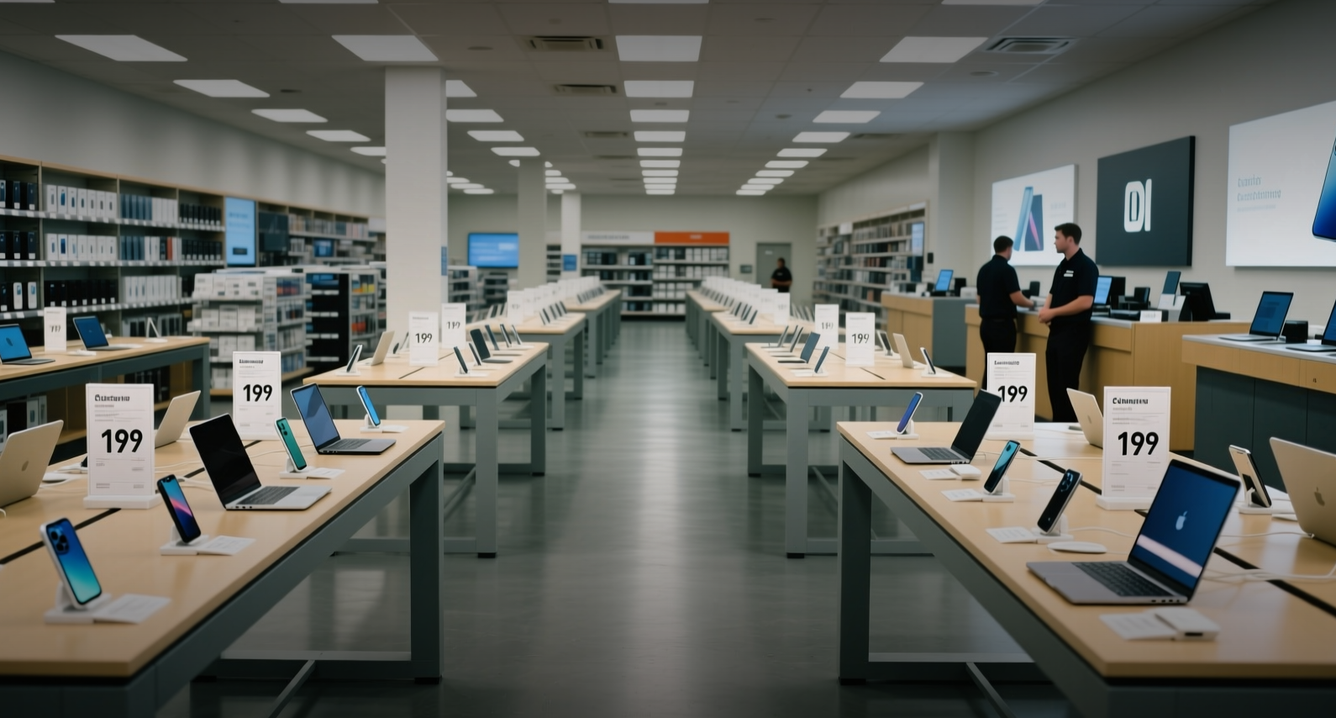
Computer makers are selling fewer PCs at higher prices, passing on memory-chip costs that the AI buildout has pushed up across the device market, with smartphone prices set to climb 27.6% this year.
The higher-price, lower-volume trade-off is a direct consequence of the memory shortage. IDC forecasts the global smartphone market will decline 16.7% this year even as the crunch lifts average selling prices by 27.6%, a squeeze the Wall Street Journal reports has now reached personal computers, where manufacturers have cut unit output rather than absorb the cost.
Apple, the largest phone maker by shipments, has leaned into the dynamic. Its global smartphone share rose to 20.2% in the April-June quarter from 16.3% a year earlier, IDC data show, even as the company ramps its foldable iPhone at only a few hundred units a day against a target of 8 million to 10 million this year, Nikkei Asia reported.
For memory suppliers, the crunch is a windfall. SK Hynix, Samsung and Micron control most of the DRAM and NAND output that AI data centers and consumer devices both draw on, and Chinese maker CXMT has seen revenue surge on AI-driven demand. For PC and phone makers, pricing power is protecting margins for now, but sustained increases risk suppressing consumer demand.
The shortage traces to the massive buildout of AI infrastructure, which has absorbed a growing share of memory output. Data-center operators assembling Nvidia-powered clusters compete with PC and phone makers for the same DRAM and high-bandwidth memory supply, pushing component costs higher and forcing device makers to choose between volume and price. Broadcom, a key supplier of custom AI chips, posted a surge in third-quarter profit on that demand, underscoring how much of the industry's capacity now flows toward data centers rather than consumer gadgets.
So far the strategy is working. PC makers have passed through elevated memory costs to consumers, protecting gross margins even as unit volumes fall. But the trade-off carries risk: if prices keep climbing, budget-conscious buyers may delay upgrades, deepening the volume decline and eventually eroding the pricing power that is cushioning margins today.
The question is how long the pass-through holds. Memory suppliers are running near capacity to feed AI demand, and device makers have limited room to absorb further cost increases without pricing themselves out of the consumer market. For investors, the near-term winners are the chip suppliers capturing the price surge, while PC and phone makers face a narrowing window before higher prices start to bite on the demand side.
This article is for informational purposes only and does not constitute investment advice.
