

Key Takeaways:
- Amnon Shashua steps down as Mobileye CEO after 27 years at the helm
- Q2 revenue reached $508 million, topping the $490 million consensus estimate
- The company forecast a 5 percent to 6 percent revenue decline for the current quarter
Key Takeaways:
Mobileye founder Amnon Shashua is stepping down as chief executive officer after 27 years, the autonomous driving chipmaker announced alongside a second-quarter revenue beat that topped analyst estimates.
"This is the right moment to reorganize leadership for Mobileye's next phase," Shashua, who will remain on the board to guide long-term technology development, said in a statement.
Q2 revenue reached $508 million, exceeding the $490 million consensus estimate compiled by Bloomberg. The leadership transition comes as Mobileye projected a 5 percent to 6 percent revenue decline for the current quarter, sending shares down 15 percent in after-hours trading. The stock has fallen about 60 percent since the company returned to public markets following its $15.3 billion acquisition by Intel Corp. in 2017.
Shashua's departure is the most significant leadership change since the Intel deal, and his shift to focusing on humanoid robotics signals where the company sees its next growth opportunity beyond automotive chips. Mobileye is also pursuing a US robotaxi service that management has said could generate substantial earnings, though it faces well-funded rivals.
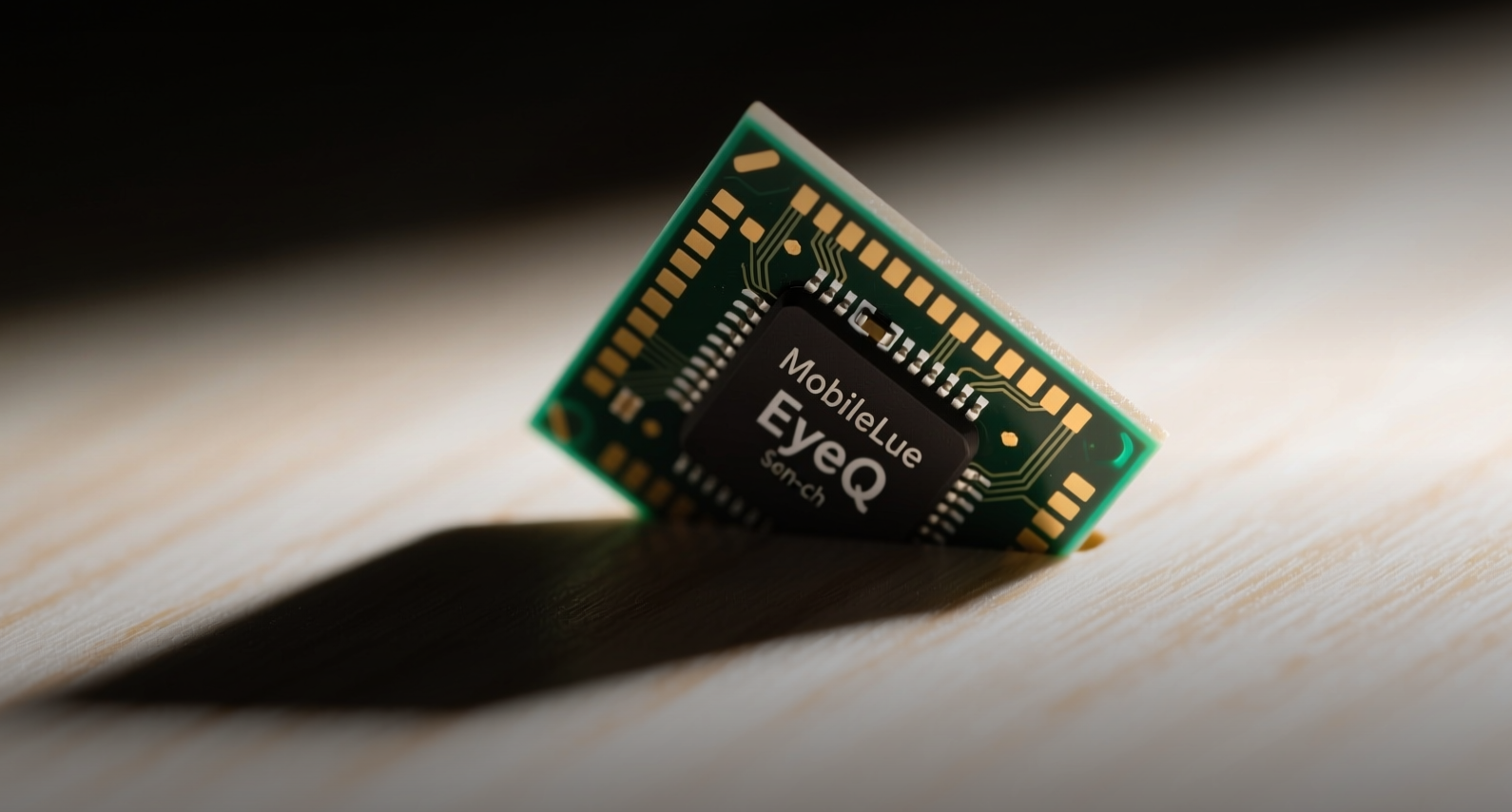
Mobileye, which supplies EyeQ system-on-chip processors for advanced driver-assistance systems to automakers including BMW AG and Volkswagen AG, has faced uneven demand as the global EV transition slows. The Q2 beat provided a partial offset to the succession uncertainty, though the downbeat current-quarter guidance suggests the demand headwinds persist.
Shashua, a computer science professor who founded Mobileye in 1999, navigated the company through its Intel acquisition and a subsequent IPO that valued the firm at roughly $30 billion at its peak. His post-CEO role will focus on strategic technology development, particularly in humanoid robotics — a sector drawing growing interest for its potential in industrial automation.
The company's robotaxi ambitions put it in competition with Alphabet Inc.'s Waymo, which operates commercial services in San Francisco, Phoenix and Los Angeles, and General Motors Co.'s Cruise, which is restarting operations after a safety pause. Mobileye has not disclosed a timeline for its US robotaxi launch, but autonomous mobility services could generate $400 billion in revenue by 2035, according to McKinsey & Co. estimates.
For investors, the succession risk is tempered by Shashua's continued board presence and the Q2 earnings beat. Mobileye trades at roughly 18 times forward earnings, a discount to Nvidia Corp.'s 35 times multiple, reflecting the slower growth profile of the ADAS market compared to data center AI chips. The key question is whether the next CEO can stabilize revenue growth and execute on the robotaxi strategy against better-capitalized competitors.
This article is for informational purposes only and does not constitute investment advice.
