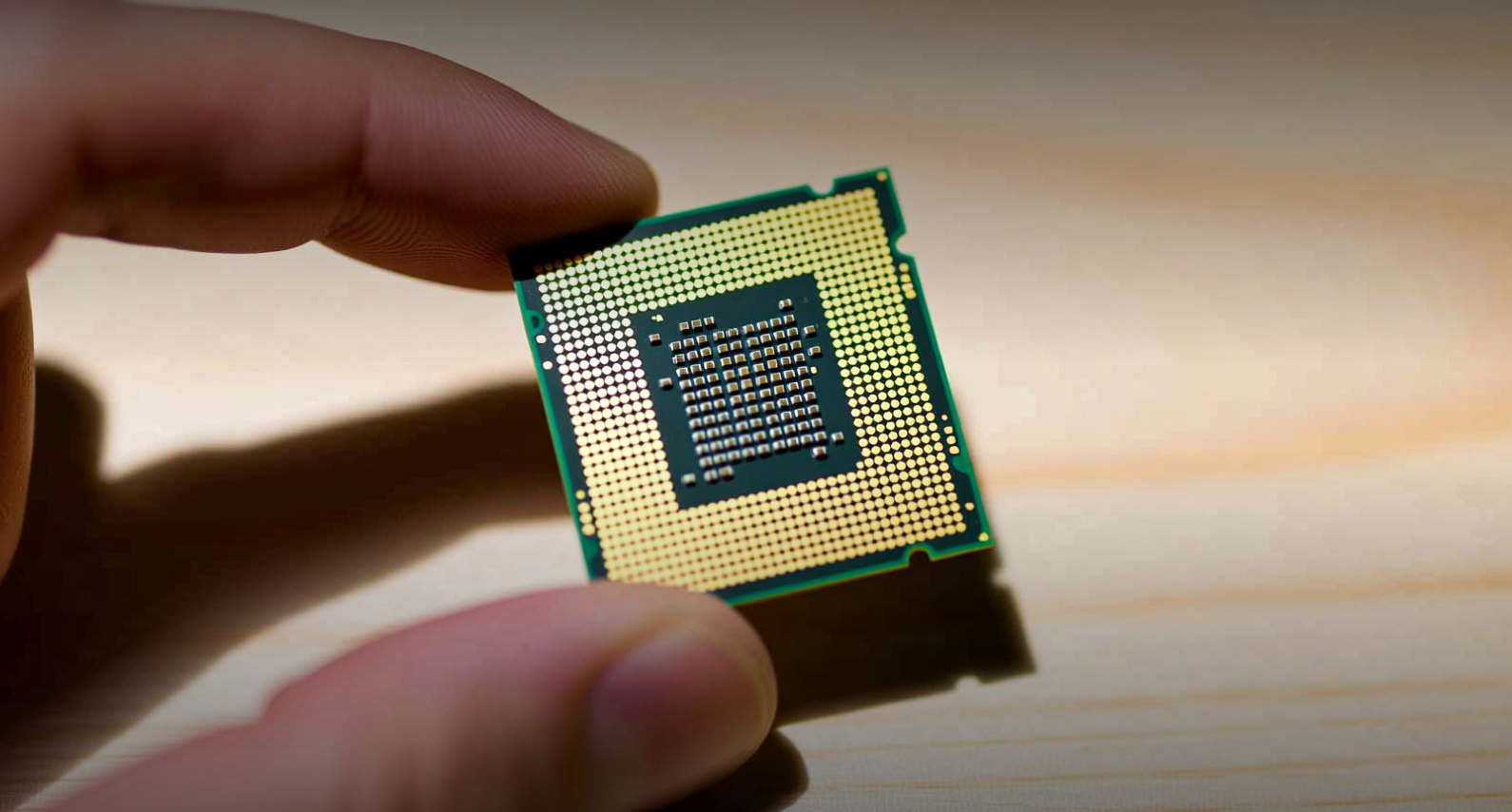
Perplexity AI chose Nvidia's Vera CPUs over AMD x86 chips after reporting 1.5x faster performance, extending Nvidia's dominance into the $20 billion server CPU market.
Nvidia Corp. is parlaying its GPU dominance into the server CPU socket after Perplexity AI reported its Vera processors ran multi-agent AI workloads 1.5 times faster than standard x86 chips, threatening Advanced Micro Devices Inc.'s EPYC franchise.
"The Vera CPUs delivered a 1.5x performance improvement over standard server processors in our multi-agent AI coding stack," a Perplexity AI spokesperson said, confirming the company selected Nvidia's chips over x86 alternatives for its inference infrastructure.
The win comes as both companies reported blockbuster quarters. Nvidia's Q1 FY27 revenue hit $81.61 billion, up 85.2% year over year, with its Data Center segment contributing $75.25 billion — 92% growth. AMD's Q1 FY26 revenue reached $10.25 billion, up 37.9%, with Data Center at $5.78 billion, up 57%. Nvidia's non-GAAP gross margin of 75% compares with AMD's 55%, showing the pricing power of its unified Blackwell-NVLink-CUDA stack.
The Perplexity deployment reframes the competitive narrative. Nvidia is no longer just selling GPUs with a networking attach — it is displacing x86 CPUs in the host socket, a market AMD has defended with its EPYC line. If Vera adoption spreads beyond Perplexity into hyperscaler data centers, Nvidia could capture a slice of the roughly $20 billion annual server CPU market, directly pressuring AMD's most profitable franchise.
Nvidia's Vera CPUs are built on the same architecture as its Grace Hopper superchip platform, integrating high-bandwidth memory and NVLink interconnects that reduce data movement bottlenecks in AI inference. The 1.5x performance advantage over standard server processors — which include AMD's EPYC and Intel Corp.'s Xeon lines — stems from the tight coupling between Vera's compute cores and Nvidia's CUDA software layer, according to Nvidia's published specifications. Nvidia did not disclose the specific test conditions or which x86 processor was used as the baseline for the comparison.
AMD is not standing still. Chief Executive Officer Lisa Su said on the Q1 call that "customer engagement around MI450 Series and Helios is strengthening, with leading customer forecasts exceeding our initial expectations." The MI450 volume ramp is scheduled for the second half of 2026. AMD also secured a 6-gigawatt commitment from OpenAI, compared with Nvidia's 10-plus gigawatts from the same customer, showing the gap is narrowing at the hyperscaler level.
Yet AMD's valuation leaves no room for execution missteps. Shares have surged 141% year to date and trade at 184 times trailing earnings — a multiple that prices in flawless MI450 delivery. Last week alone, AMD stock gave back 11.15%. Nvidia, by contrast, guided Q2 revenue to $91 billion, and analysts carry a consensus target of $301.62.
The Software Moat That Hardware Alone Cannot Match
Nvidia's advantage extends beyond silicon. Its CUDA-X and Dynamo software layers create switching costs that AMD's ROCm 7 platform has yet to match. Inference buyers like Perplexity default to Blackwell plus NVLink plus CUDA when latency matters, because the integrated stack eliminates the engineering overhead of stitching together discrete components from different vendors. AMD's Pensando networking business remains subscale compared with Nvidia's Spectrum-X and NVLink Fusion portfolio, which generated $14.8 billion in revenue last quarter — up 199% year over year.
For investors, the choice hinges on whether Vera CPU adoption scales. Nvidia offers the cleaner platform story: a unified hardware-software stack that is winning real-world deployments at 1.5x the performance of incumbent x86. AMD offers a higher-variance catch-up trade: Data Center revenue compounding at 57% and free cash flow of $2.57 billion, up 253%, but with a valuation that punishes any delay in MI450 shipments. If Helios ships on time and ROCm closes the software gap, AMD could narrow Nvidia's lead. If Vera CPUs gain traction at hyperscalers, Nvidia's moat widens into entirely new margin territory.
This article is for informational purposes only and does not constitute investment advice.