

Nvidia's fiscal second-quarter revenue doubled to $96.2 billion on AI infrastructure demand, and the Vera Rubin platform now in production could lift per-gigawatt AI data center value to $40 billion.
Nvidia's fiscal second-quarter revenue doubled to $96.2 billion on AI infrastructure demand, and the Vera Rubin platform now in production could lift per-gigawatt AI data center value to $40 billion.
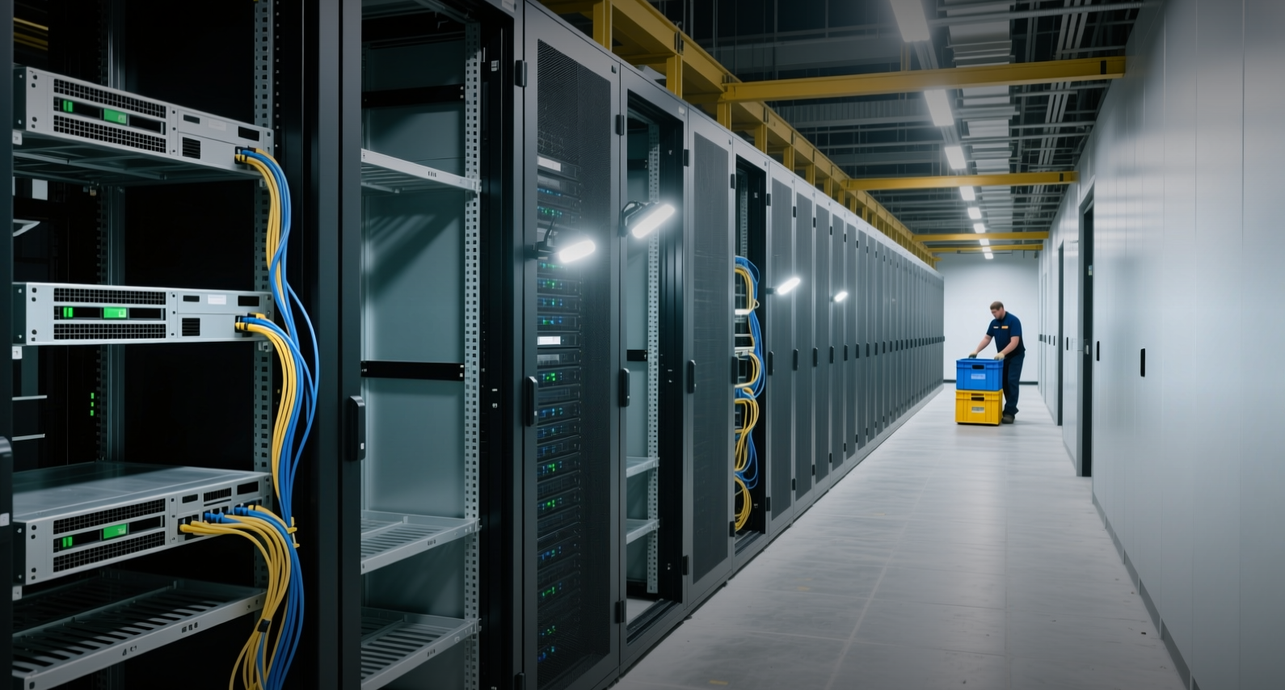
Nvidia's fiscal second-quarter revenue more than doubled to $96.2 billion, and the Vera Rubin platform now shipping to hyperscalers could lift the value of each AI data center gigawatt it equips to $40 billion, up from $25 billion on Blackwell and $18 billion on Hopper.
"We expect Vera to be deployed by every major hyperscaler, neocloud, AI lab, and system OEM, with shipments already underway to our lead partners, including OCI, SpaceXAI, and starting this quarter, AWS," Chief Financial Officer Colette Kress said on the earnings call.
Data center revenue rose 117 percent year over year to $89.02 billion in the quarter ended July 26, with non-GAAP earnings per share of $2.22 beating the $2.09 consensus by 6.3 percent. Management guided third-quarter revenue to $108 billion, plus or minus 2 percent, excluding any data center compute revenue from China, and said Vera Rubin should account for roughly 20 percent of data center revenue in the period. Supplier commitments surged to $279 billion, largely tied to memory procurement for the new platform, which Nvidia expects to mark its fastest product ramp on record.
The numbers matter beyond one quarter because they quantify how much of the AI buildout Nvidia captures. JPMorgan projects annual AI infrastructure spending will reach $1.4 trillion by 2030, and the top five hyperscalers are guided toward nearly $800 billion in combined capital expenditure in 2026 and $1.3 trillion in 2027. Nvidia's content per gigawatt has climbed from $18 billion on Hopper to $25 billion on Blackwell and now $40 billion on Vera Rubin, meaning each new data center generation delivers more revenue even before capacity expands. Management expects fiscal 2028 revenue to grow roughly 70 percent, a figure it described as supply-constrained rather than demand-limited.
The per-gigawatt escalation puts pressure on the alternatives. Advanced Micro Devices' data center segment, which combines GPU and server CPU sales, grew 107 percent year over year to $6.7 billion in its June quarter, while Intel's data center and AI group rose 59 percent to $6.3 billion. Both trail Nvidia's 117 percent data center growth from a far smaller base, and Nvidia is now pushing into their home turf with the Vera server CPU, which it sells as a standalone product. Kress cited roughly $20 billion in total server CPU demand for 2026, with shipments already underway to Oracle, SpaceXAI and, starting this quarter, AWS. Arm-based server CPUs, which use the same architecture as Vera, now account for 45 percent of data center market revenue, according to Tom's Hardware, and Counterpoint Research projects they will capture 90 percent of the market by 2029.
The supply chain that feeds Vera Rubin is equally concentrated. Taiwan Semiconductor Manufacturing, which fabricates Nvidia's designs, reported second-quarter revenue of $40.20 billion with a 67.7 percent gross margin and raised its 2026 capital budget to as much as $64 billion. Broadcom, which designs custom accelerators for hyperscalers seeking an alternative to merchant GPUs, posted AI semiconductor revenue of $10.80 billion, up 143 percent, with CEO Hock Tan calling demand for XPUs and networking "simply insatiable." All three sit at different points of the same value chain, and all three depend on hyperscaler capital expenditure holding through 2027 and 2028.
Nvidia shares closed at $217.55 on Aug. 28, up 16.79 percent year to date, a laggard relative to peers such as Marvell Technology and AMD, which have surged 237 percent and 189 percent respectively this year. The stock trades at a forward price-to-earnings multiple of 17.75, below the sector average of 20.76, a discount that reflects execution risk on Vera Rubin's memory supply and the near-total absence of China data center revenue in the outlook. The next confirmation points are Vera Rubin yield through the fiscal third quarter, TSMC's 2nm ramp and its effect on gross margins, and Broadcom's quarterly report due in coming weeks. If hyperscaler commitments hold, the per-gigawatt economics Nvidia disclosed this quarter suggest the revenue trajectory has room to run well past fiscal 2028.
This article is for informational purposes only and does not constitute investment advice.
