

Key Takeaways:
- Consensus EPS of $3.15 on revenue of $11.16B for Q2 FY2027
- cRPO growth and Q3 guidance are the key metrics to watch
- Stock trades at $206, 21% below consensus target of $249.49
Key Takeaways:
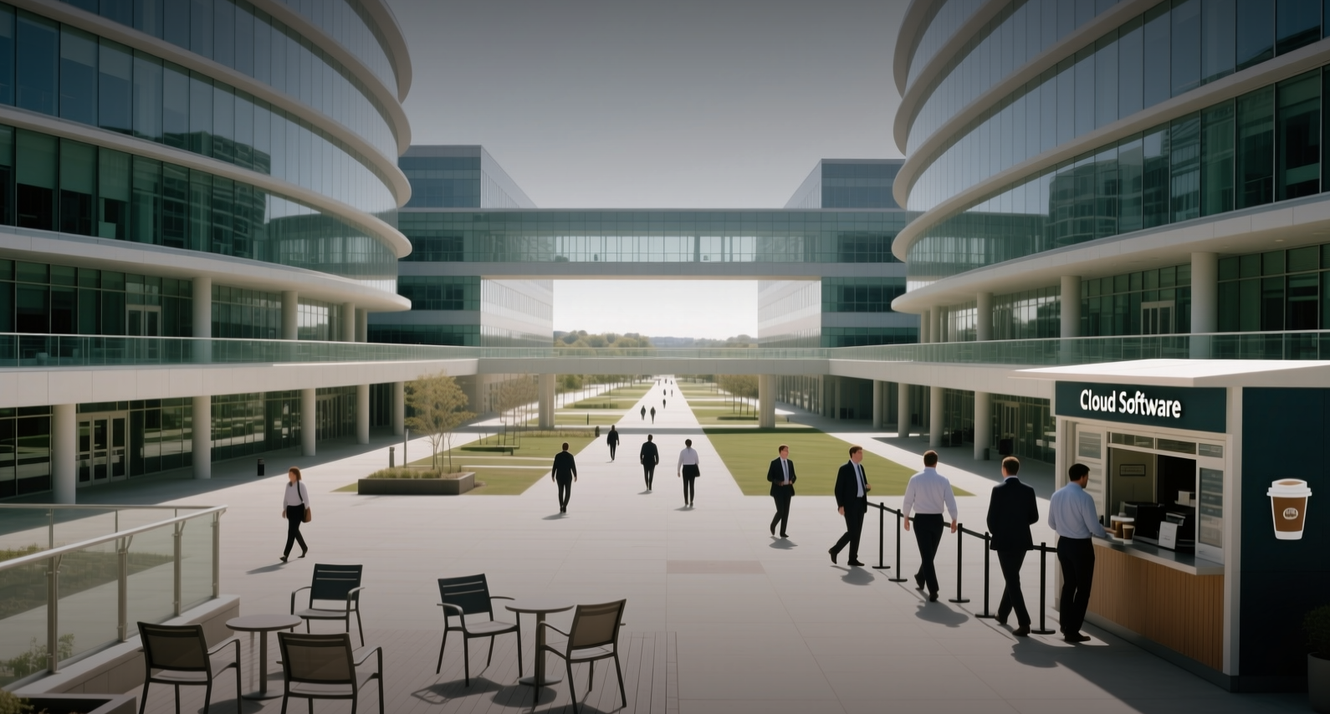
Salesforce reports Q2 FY2027 earnings August 26, with consensus EPS of $3.15 on revenue of $11.16 billion.
"The bar for second-half acceleration is high after the recent rally," UBS analysts said, maintaining a Neutral rating. "Any tempering of the narrative would not be tolerated by the market."
The company enters the print after delivering Q1 adjusted EPS of $3.88 against a $3.13 consensus, with revenue of $11.13 billion up 13.3 percent year over year. Management guided Q2 EPS to $3.25-$3.27 and full-year EPS to $14.06-$14.12, while trimming cash flow growth guidance from approximately 9.5 percent to 4-5 percent and GAAP operating margin from 20.9 percent to 20.6 percent.
The stock closed at $206.09 on August 19, up 5.07 percent, after a series of analyst calls from JPMorgan ($250 Overweight), Guggenheim ($228 Buy), and Citi ($204 Neutral) failed to hold rallies. The consensus price target of $249.49 implies roughly 21 percent upside, but the market has reversed every upgrade since June.
The key metric investors will scrutinize is cRPO growth. Current remaining performance obligations grew 14 percent year over year to $33.6 billion in Q1, and acceleration is needed to confirm Agentforce's $1.2 billion ARR — up 205 percent — is translating into contracted revenue. Morgan Stanley's Adam Wood downgraded CRM to Equal Weight on July 21, cutting his target from $287 to $185, citing the disconnect between strong Agentforce metrics and insufficient progress in contracted revenue.
Agentforce's consumption-based billing model creates a structural timing gap between ARR growth and cRPO recognition. As the Atlas Reasoning Engine improves, it completes workflows in fewer billable Agentic Work Units, potentially reducing revenue per task even as customer value increases. Salesforce currently runs three concurrent pricing architectures — per-AWU, flex-credit pools, and per-user seat editions — suggesting the company has not settled on the optimal model.
Federal contracts provide the bull case's strongest evidence. The VA awarded a $1.6 billion three-year contract in July, and the Army signed a $5.6 billion 10-year IDIQ through Computable Insights. But the USDA's reported move to C3 AI to reduce its Salesforce footprint complicates the government-validation narrative.
Salesforce returned $27.5 billion to shareholders in Q1, including $27.1 billion in buybacks and $365 million in dividends, funded partly through a $25 billion debt issuance. The $50 billion buyback authorization and 10 percent reduction in diluted share count signal management's conviction that the stock is undervalued.
The August 26 report will determine whether the market's skepticism is rational or excessive. If cRPO growth accelerates from 14 percent and Q3 guidance implies reacceleration, the $85 gap between Morgan Stanley's $185 bear target and JPMorgan's $250 bull target narrows. If cRPO decelerates, the discount applied to the stock over the past year appears earned.
This article is for informational purposes only and does not constitute investment advice.
