

Nvidia investors have watched the stock slide in 2026 while AI spending surges. TSMC's earnings on July 16 will show whether that divergence is about to close.
Nvidia investors have watched the stock slide in 2026 while AI spending surges. TSMC's earnings on July 16 will show whether that divergence is about to close.
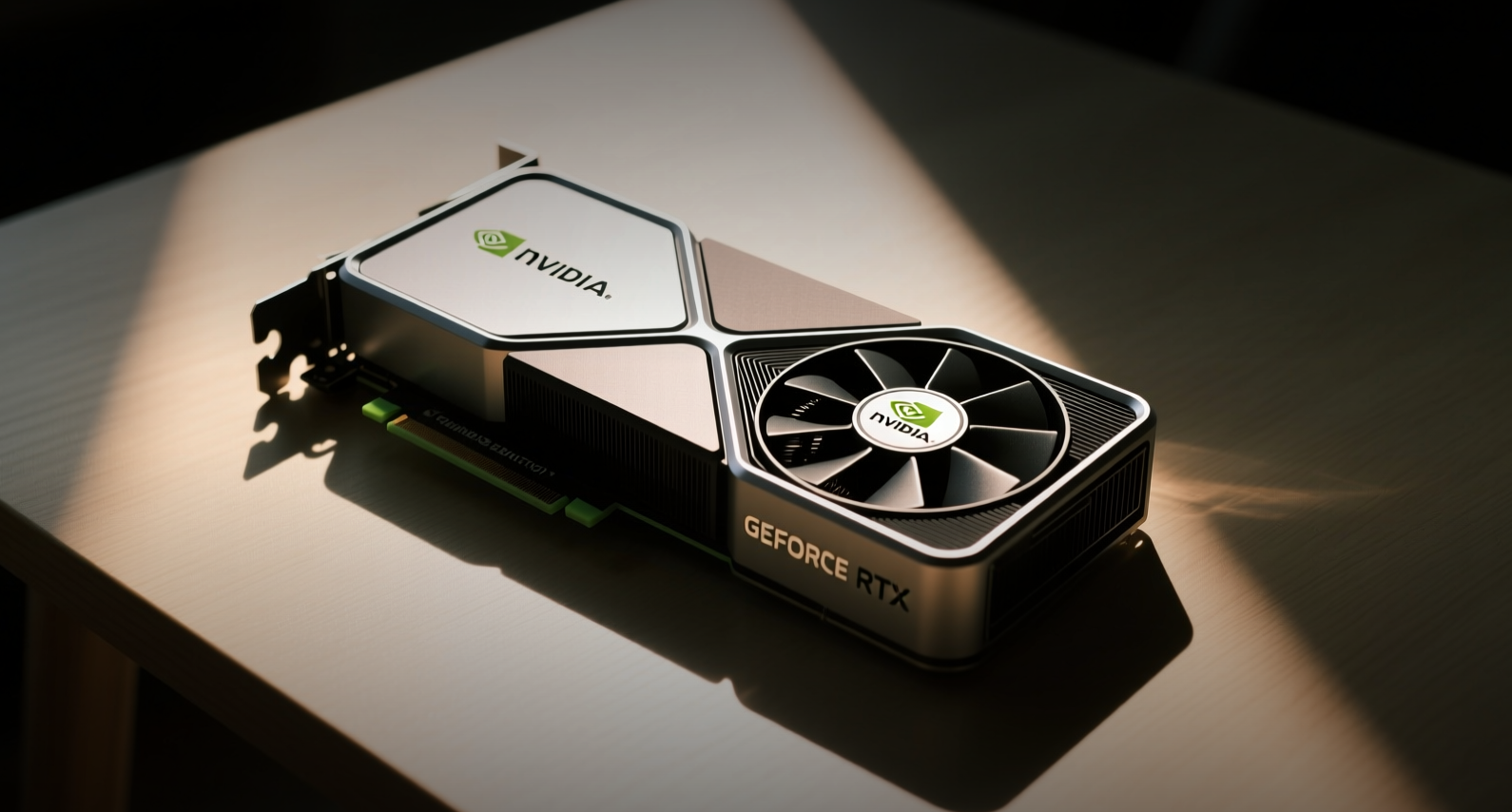
Nvidia investors have watched the stock slide in 2026 while AI spending surges. TSMC's earnings on July 16 will show whether that divergence is about to close.
TSMC's July 16 earnings will determine whether Nvidia's 2026 slide is a buying opportunity or the start of a deeper correction in AI chip stocks, as the foundry's capex guidance and capacity commentary offer the clearest read yet on demand durability.
"TSMC is the other half of the AI trade's report card alongside ASML," Scotiabank's portfolio strategy team wrote in their Q2 earnings preview, noting that the capex guide and commentary on advanced-node capacity are what move markets, not the monthly revenue figures themselves.
TSMC plans to spend $52 billion to $56 billion on capital expenditure in 2026 — a record for the company and the highest in the foundry industry's history — directed primarily at ramping its 2-nanometer N2 and N2P nodes, both of which depend on ASML's extreme ultraviolet lithography systems. The foundry's monthly revenue disclosures mean the quarterly headline numbers rarely surprise; the focus will be on whether management raises or maintains its full-year capex guidance and how it characterizes demand from its largest customer, Nvidia.
Nvidia shares have underperformed in 2026 even as AI infrastructure spending has accelerated, creating a valuation disconnect that TSMC's report could either validate or resolve. ASML reports one day earlier on July 15, and its EUV order book — the earliest forward indicator of chip capacity commitments — will set the interpretive frame for how investors read TSMC's commentary on N2 ramp timing and AI demand.
Why TSMC's capex guide matters more than its revenue
TSMC's monthly revenue reports have already disclosed the quarter's trajectory: April revenue of NT$275.1 billion, May at NT$292.3 billion, and June expected to come in strong. The numbers themselves are largely priced in. What is not priced in is whether TSMC sees the current AI buildout as sustainable into 2027 and beyond.
The $52 billion to $56 billion capex plan represents a bet that AI-driven demand for advanced logic will absorb the new capacity. TSMC's N2 node, set to enter volume production in the second half of 2026, requires EUV lithography at a density roughly 25% higher than the current N3 node — meaning each incremental wafer of N2 capacity consumes more ASML tool time than any prior generation. If TSMC signals it is accelerating N2 capacity additions, that would imply confidence that Nvidia's next-generation GPU architectures, including the Vera Rubin platform, are on track for volume production.
The Nvidia connection
Nvidia accounts for roughly 10% to 15% of TSMC's total revenue, according to analyst estimates, making it the foundry's single largest customer by revenue contribution. The relationship is symbiotic: Nvidia's GPU designs push TSMC's process technology to its limits, and TSMC's manufacturing scale gives Nvidia the volume needed to dominate the AI accelerator market.
But Nvidia's stock has been a laggard in 2026. The shares have fallen roughly 15% from their 52-week high, even as the company reported record data center revenue in its most recent quarter. The disconnect reflects growing investor debate about whether the AI infrastructure buildout — which has consumed more than $200 billion in combined capex from hyperscalers over the past 18 months — is approaching a peak or still in its early innings.
TSMC's commentary on July 16 will be the most direct signal yet on which side of that debate is correct. If management raises its capex guidance or signals that N2 capacity is oversubscribed, it would support the view that the AI cycle has years left to run. A cautious tone on near-term demand, by contrast, would feed the peak-AI narrative that has weighed on Nvidia's stock.
ASML sets the stage
The sequencing of the two reports matters. ASML reports on July 15, and its net bookings — new orders signed during the quarter — are the earliest auditable commitment that chipmakers are placing capacity bets. In Q4 2025, ASML posted net bookings of 13.2 billion euros, more than double analyst consensus, sending the stock to fresh highs. If ASML's Q2 bookings sustain that momentum, it signals that TSMC, Samsung, and SK Hynix are still expanding. A shortfall would raise questions about whether the AI buildout is decelerating before TSMC even speaks.
This article is for informational purposes only and does not constitute investment advice.
