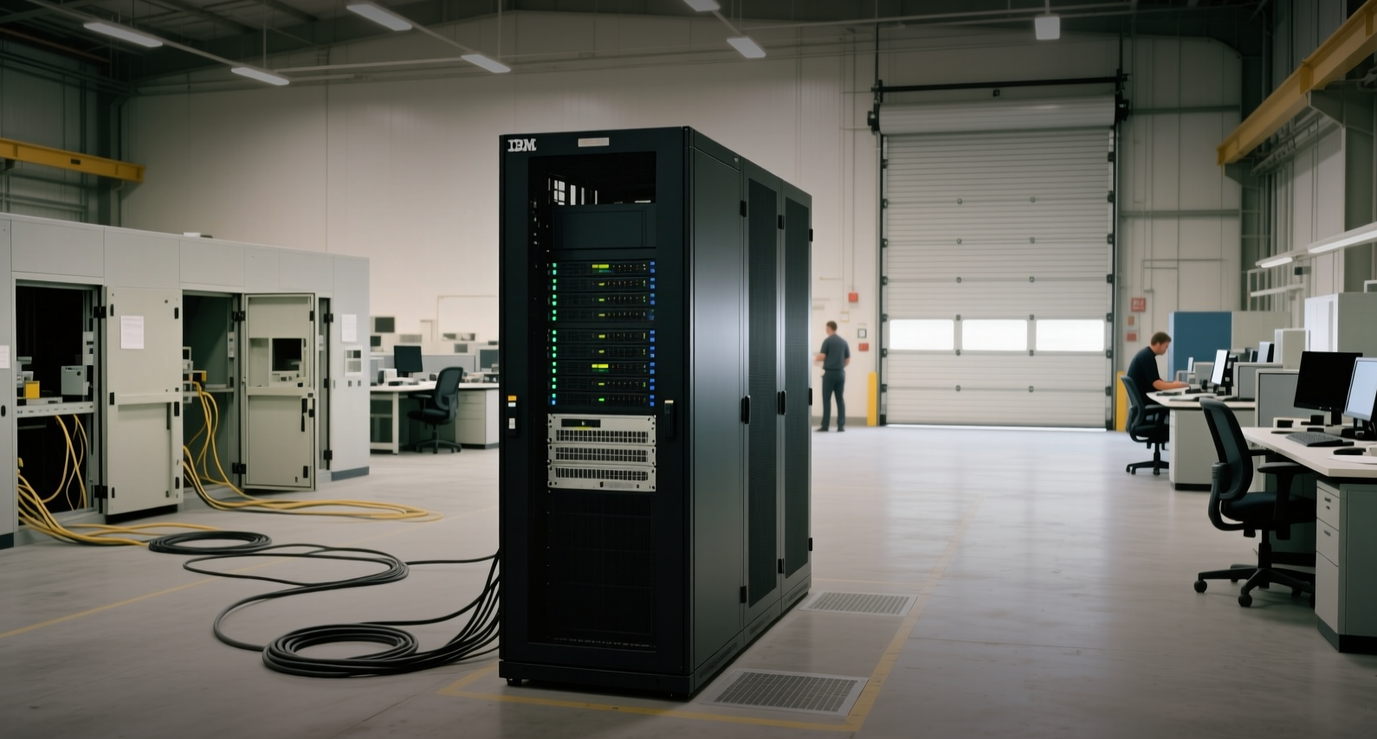
BFA Law opened a securities fraud investigation into IBM over its Z mainframe shortfall that erased $68 billion in market value on July 14.
"Here's the good news: about 40% of them have already closed in three to four weeks. That's a good signal that it is a deferral, not a destruction," CEO Arvind Krishna said, addressing the delayed deals that drove the miss.
The stock fell over $75 per share in intraday trading to close at $217.07 on July 14, a 25 percent plunge. IBM Z revenues had risen 51 percent in Q1 FY26, with executives calling it a "record start" for the z17 product. The probe, announced Aug. 24, focuses on whether IBM misled investors about the pace of securing new business deals and the strength of its IBM Z product outlook.
The investigation runs parallel to probes by Pomerantz LLP, Glancy Prongay Wolke & Rotter LLP, and Levi & Korsinsky LLP. IBM posted Q2 revenue of $17.16 billion, beating the $16.86 billion consensus, and adjusted EPS of $2.93 versus $2.86 expected. Shares closed at $223.65 on Friday, up 0.86 percent.
IBM attributed the shortfall to "a shortfall in our Z performance and the associated software stack, primarily in Transaction Processing," and acknowledged it "did not adapt and move quickly enough" so that "numerous large deals failed to close on the timelines we expected." The investigation examines whether material non-public information about these deal slippages was withheld from investors before public disclosure.
The gap between IBM's April guidance and July actuals highlights the volatility in its enterprise software cycles. Total revenue growth came in at 1 percent versus the 5 percent-plus projected in April, while infrastructure revenue swung from plus 15 percent in Q1 to minus 7 percent. Generative AI accounted for approximately 50 percent of signings in Q2 FY26 but failed to offset the decline in traditional transaction processing revenues.
The sharp reversal from 51 percent growth in Q1 to a reported shortfall in Q2 illustrates the fragility of forward-looking statements when dependent on large, discrete deals. Management expects two-thirds to three-quarters of slipped deals to close within six months, but the immediate market reaction reflects skepticism about the reliability of such projections.
The divergence between the severe stock reaction and the subsequent double-beat on earnings suggests market sentiment was overly sensitive to temporary deal slippage. Investors will watch for further disclosures from the investigations and IBM's next earnings call for updates on the deferred deal pipeline.
This article is for informational purposes only and does not constitute investment advice.