

Washington's first intervention in the AI copyright fight backs the ChatGPT maker's fair-use defense, framing limits on training data as a threat to American technological leadership.
Washington's first intervention in the AI copyright fight backs the ChatGPT maker's fair-use defense, framing limits on training data as a threat to American technological leadership.
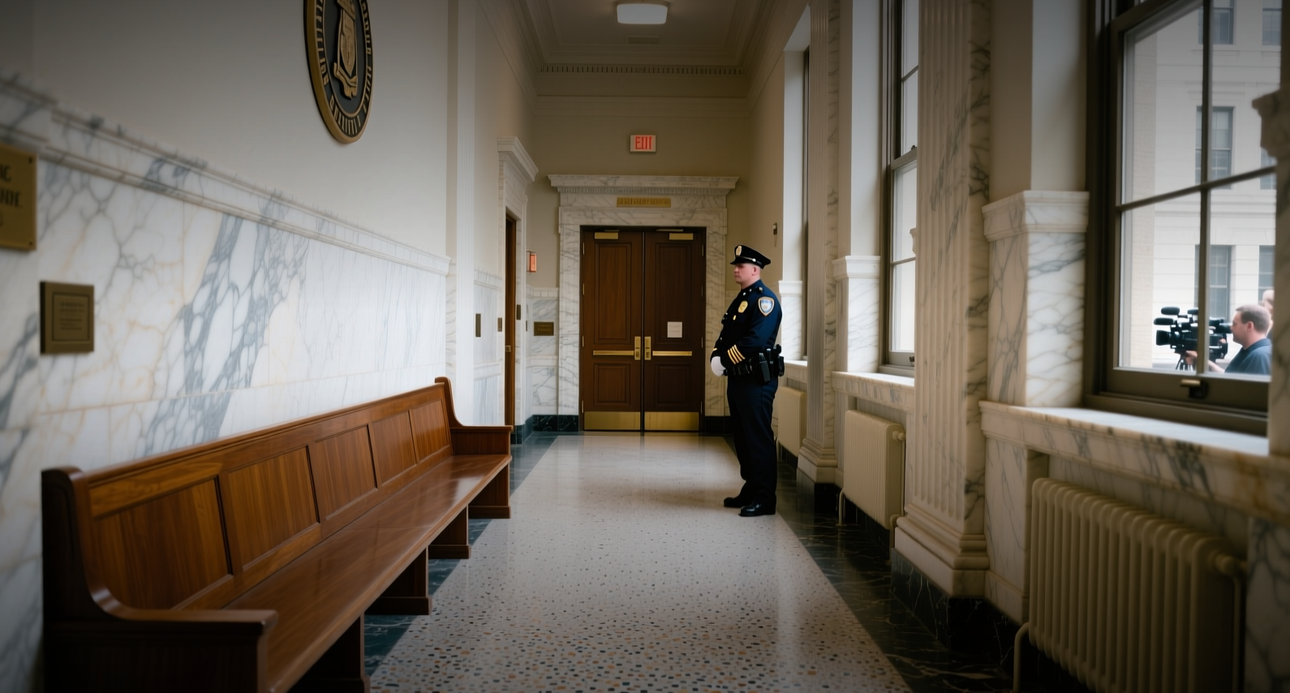
The Justice Department told a New York court Tuesday that OpenAI's training on copyrighted articles is fair use, calling restrictions a national-security threat that would hand an edge to foreign rivals.
"Both AI and creators can thrive — AI companies simply need to pay fairly for the content that makes their products possible, as copyright law requires," Graham James, a spokesperson for The New York Times, said in response to the filing.
The statement of interest, lodged in the US District Court for the Southern District of New York, backs OpenAI in suits brought by the Times, Chicago Tribune, Ziff Davis and authors including George R.R. Martin and John Grisham. The government argues that copying works to train a large language model is "transformative" fair use and should be weighed separately from a chatbot's output, since the process learns statistical patterns rather than duplicating expressive content.
The filing is the first time the government has weighed in on the novel copyright questions raised by AI, and a ruling for OpenAI could set precedent across dozens of pending cases. Anthropic in July agreed to pay $1.5 billion to settle the largest copyright class action in history, covering roughly 370,000 authors and 482,000 books.
The Justice Department's position rests on national security. AI systems are used to analyze intelligence, enhance weapons and recommend battlefield targets, and "rules of law that make it significantly more difficult to develop a robust AI industry in the United States... threaten national security and give a competitive advantage to foreign adversaries who are not so encumbered," the filing states.
The government also argues that forcing licensing fees would entrench the largest media companies and the biggest technology firms, since only they could afford to pay. It envisions independent publishers using AI to generate images that might otherwise require a photographer, and large language models steering readers to "dissenting sources that offer contrary information or perspectives."
The Times filed its suit at the end of 2023, a year after ChatGPT's debut, accusing OpenAI of "free-riding" on its journalism to build competing products. A federal judge last year rebuffed OpenAI's bid to dismiss core claims while narrowing the case's scope. The government's brief takes direct aim at a ruling against Meta in a separate authors' suit, arguing that judge improperly collapsed training and output into a single continuous use and adopted an indirect theory of market substitution.
The stakes extend well beyond OpenAI. Microsoft, which backs the ChatGPT maker, and rivals including Anthropic and Meta face similar claims from publishers, record labels and authors. A finding that training is fair use would lift a licensing overhang that has clouded the economics of model development; the opposite would force AI companies to strike paid content deals or curtail the data they ingest.
The $1.5 billion Anthropic settlement shows how much is at stake. That deal, approved in July, resolved claims from about 370,000 authors over roughly 482,000 books — even as a judge separately ruled the company's use of copyrighted material was fair use. Book revenue fell most in genres where AI is most prevalent, according to a 2026 study by Tuhin Chakrabarty.
For publishers, the government's position threatens a licensing revenue stream at a moment of structural decline in print advertising. The Times said the administration is "siding with a handful of trillion-dollar AI companies at the expense of the countless American creators whose work they stole." A ruling is not expected until next year, and any decision is likely to be appealed, leaving the question of AI training and copyright ultimately for the Supreme Court to settle.
This article is for informational purposes only and does not constitute investment advice.
