
Gold's 27.7% crash from its January peak met a floor at $3,942, but the recovery to $4,072 hinges on whether fear can overpower real yields near 4.9%.
Gold's 27.7% crash from its January peak met a floor at $3,942, but the recovery to $4,072 hinges on whether fear can overpower real yields near 4.9%.
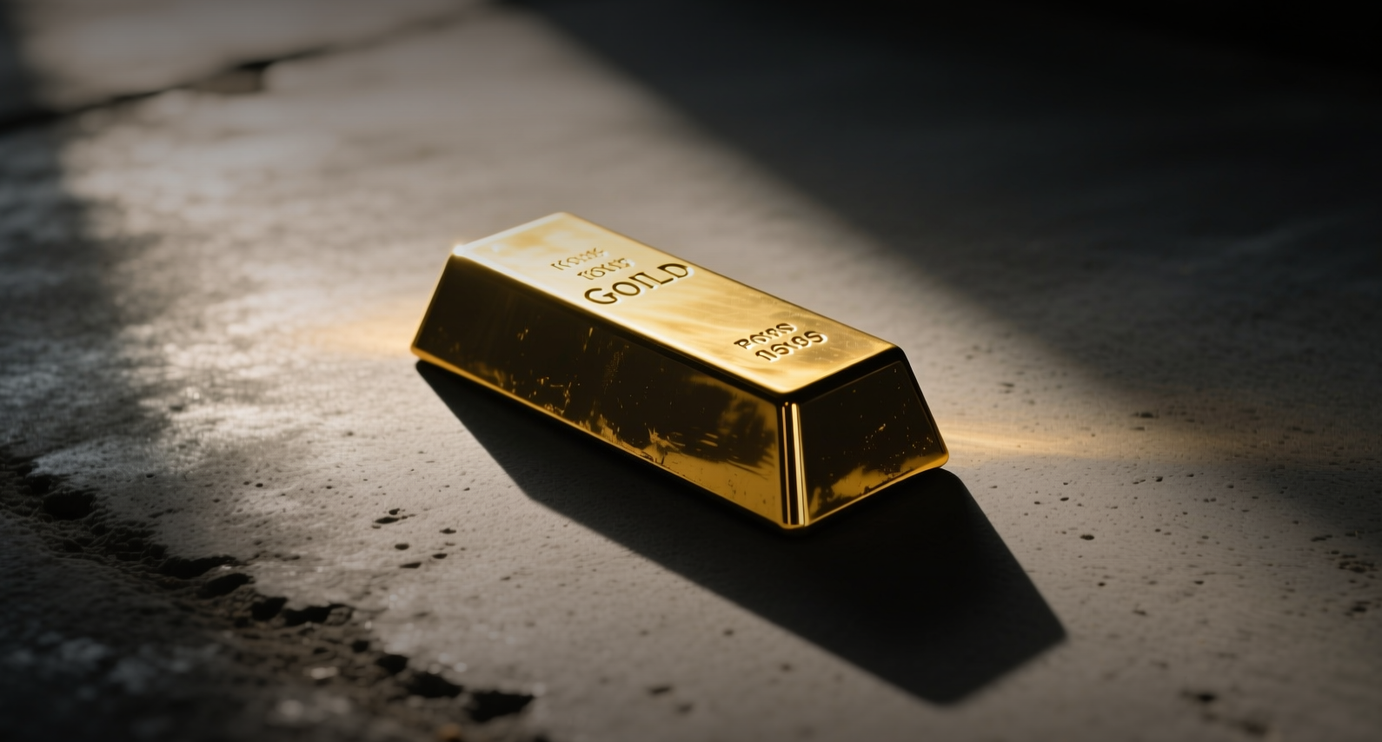
Gold bounced to $4,072 an ounce Tuesday, reclaiming the $4,000 handle as a tenth consecutive day of US strikes on Iran and a Houthi maritime embargo against Saudi Arabia pumped a fresh safe-haven premium into the metal.
"The Iran escalation is rebuilding the exact fear premium that drained out during the early-July ceasefire and helped trigger the crash," according to an Investing.com analysis published Tuesday. "The metal is trapped between a structural floor from central-bank buying near 1,000 tonnes annually and a ceiling from real yields pushing toward 4.9%."
The bounce carried bullion to an intraday high of $4,084.13 after testing $3,999.83 at the lows, a range that captured the tug-of-war between geopolitical fear and rising yields. The 30-year Treasury yield is pushing toward 4.902% and the 10-year sits at 4.59%, while the dollar firmed on safe-haven flows that also supported gold — a dynamic that limited Tuesday's advance. Gold futures tracked the move, printing $4,070.40, up 1.36%.
The $4,000 level now decides the next leg. Hold above it, and the base builds toward a run at the $4,205 pivot. Lose it, and the $3,942 nine-month low comes back into play. The July 29 Federal Reserve meeting, where markets price an 85.6% probability of rates held at 3.50%-3.75%, is the event that will determine whether the safe-haven bid can break the yield wall.
Gold printed an all-time high of $5,602.225 on Jan. 29, the culmination of a historic run. From that peak, the metal cratered 27.7% to an eight-month low of $3,942, delivering the worst quarter for gold in 13 years. A $1,660 drop from the January peak erased more than a year of gains and left the metal down 7.27% year to date, even as it holds a 17.23% gain measured against a year ago.
The drivers of the crash were mutually reinforcing. Real yields ground higher as the Fed held rates elevated and inflation expectations moderated, raising the opportunity cost of holding a non-yielding metal. The dollar firmed. And critically, the early-July US-Iran ceasefire drained the safe-haven premium that had inflated gold during the conflict's peak. When fear left the market, speculative length evaporated and the price fell through support after support.
The 52-week range tells the story in two numbers: $3,268.12 at the bottom and $5,602.23 at the top. Gold has traveled the entire span within twelve months, a volatility profile that looks nothing like the slow-grinding store of value it is supposed to be. The reset flushed excess speculation, which is constructive — a market that has already purged its weak hands has less downside fuel. But the same forces that drove the crash, elevated yields and a firm dollar, remain in place.
The ETF exodus deepened the selloff. Physically-backed funds registered net outflows of $8.9 billion in June alongside a 74-tonne decline in holdings, dragging total holdings down to near 4,047 tonnes. That mechanical selling compounded the crash from $5,602, turning a correction into a rout as ETF liquidations fed on themselves. Central banks were buying through the crash — China has increased its gold reserves for 20 consecutive months — but the paper market was in full retreat.
The single force driving Tuesday's bounce is the return of geopolitical fear. US strikes on Iran entered a tenth consecutive day, and the President warned Iran would be held responsible for the deaths of three US service members. Iran-backed Houthi militants announced a maritime embargo against Saudi Arabia, threatening energy shipments through the Red Sea and opening a new front that endangers global trade. Crude touched $90 a barrel on the escalation, feeding inflation fears that cut both ways for gold — supporting it as a hedge while also supporting the dollar and yields that cap it.
If the Iran war is gold's tailwind, rising real yields are its immovable headwind. The 30-year Treasury yield pushing toward 4.902% means the opportunity cost of parking capital in bullion is punishing. A slightly stronger dollar compounds the problem, making the metal more expensive for foreign buyers. The flow evidence confirms the dynamic: a stronger dollar, still-elevated yields, and lingering geopolitical worries helped steer flows into cash and short-term bonds, limiting gold's upside. The desk is choosing yielding safe havens over the non-yielding metal.
Everything converges on the July 29 Federal Reserve meeting, and the setup is not favorable for gold. The market assigns an 85.6% probability that the Fed keeps interest rates unchanged in the 3.50%-3.75% range, a near-lock that keeps borrowing costs elevated and the opportunity cost of holding gold high. The tail risk is asymmetric: with inflation fears reignited by the oil spike, the small probability of a surprise move leans toward tightening, which would be outright bearish for bullion.
The last time gold faced a comparable setup — a 27%-plus drawdown from a record high with real yields above 4.5% — was in 2013, when the metal fell 28% over the year as the Fed prepared to taper. The difference this time is central-bank buying. Sovereign accumulation running near 1,000 tonnes annually, led by China's 20-month consecutive buying streak, provides a structural floor that did not exist in 2013. That floor is why gold bounced off $3,942 rather than cratering through it.
The best realistic outcome for gold from July 29 is a dovish hold — a pause paired with language acknowledging growth risks and opening the door to future cuts. That would pull real yields lower at the margin and let the safe-haven bid run. The worst outcome is a hawkish hold that emphasizes the inflation threat from oil and keeps the door to hikes ajar, which would send yields higher and gold lower. The metal is waiting on the Fed, and the odds favor the hawks.
This article is for informational purposes only and does not constitute investment advice.
