
A summer drought across half of Europe pushed the Rhine, Danube and Po to record lows, forcing nuclear shutdowns and cutting vessel loads to 20 percent.
A summer drought across half of Europe pushed the Rhine, Danube and Po to record lows, forcing nuclear shutdowns and cutting vessel loads to 20 percent.
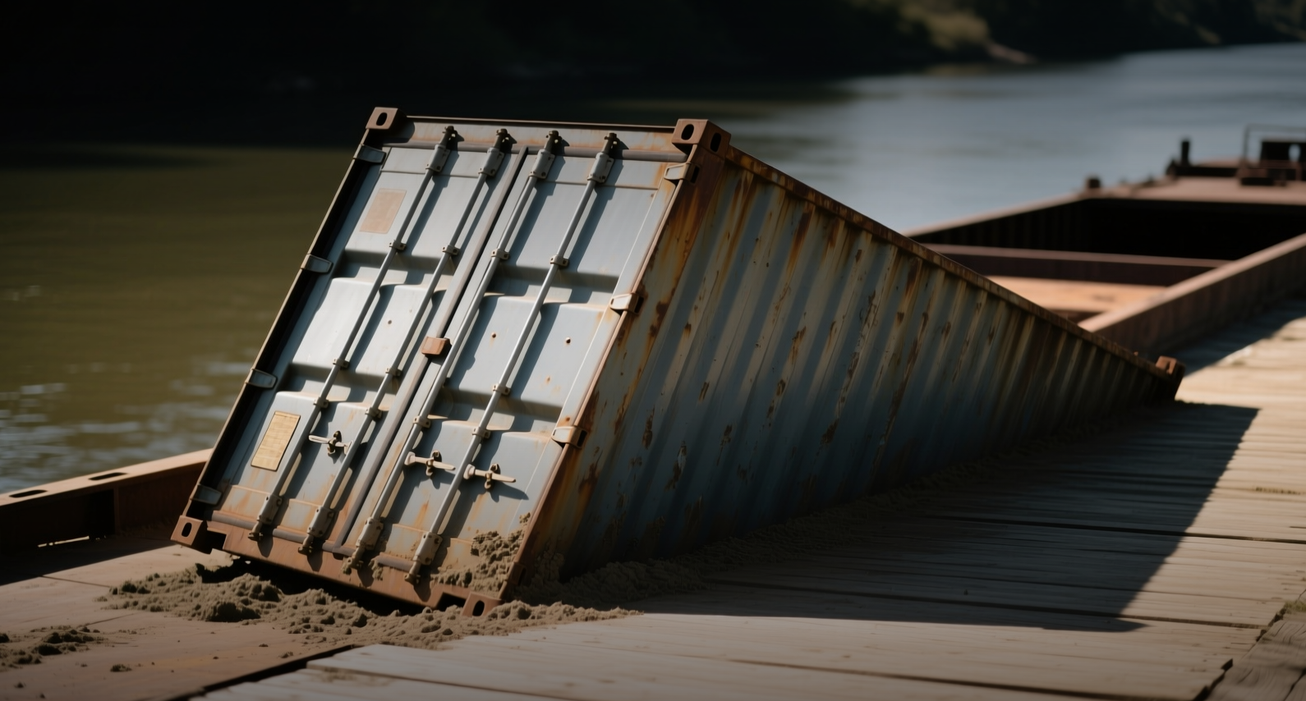
The Rhine at Kaub fell below 3 inches at its lowest point this summer, breaking the 2018 record, as drought across half of Europe forced nuclear plant shutdowns and cut vessel loads to 20 percent of normal capacity.
"It's just inscrutable why it takes so long to plane off six underground sections of rock," Jens Schwanen, chief executive of Germany's association of inland shipping, told the Financial Times, referring to a 34-year-delayed project to deepen the critical Kaub bottleneck.
The Danube's low levels forced Romania's Cernavodă nuclear plant — which supplies about a fifth of the country's power — to shut down in mid-August after military attempts to divert water using explosives failed. Hungary's Paks plant, generating about 40 percent of national electricity, sits on the threshold of shutdown. The Po River's retreat in Italy exposes farmland to seawater intrusion from the Adriatic.
The European Commission's Joint Research Centre said the Loire, Po, Rhine and Danube reached record-low levels, with dry conditions forecast through September. Hapag-Lloyd's low-water surcharge for a 40-foot container at the 41-50 centimeter gauge has reached €930 — 5.6 times the fee at 81-90 centimeters — as cargo shifts from barges to rail and trucks.
The Rhine carries roughly 80 percent of the 223 million tons of cargo transported by ship in Germany each year — oil, petrochemicals and other heavy goods. The Kaub bottleneck, where a natural rock ledge narrows the river's cross-section, has effectively become "Germany's Strait of Hormuz," said Carsten Brzeski, ING's global head of macro. The last time the Rhine dried to comparable levels in 2018, the disruption was severe enough to dent German GDP.
Nuclear fleet exposed as Danube falls to record lows
The drought has exposed the vulnerability of Europe's nuclear fleet to water scarcity. Romania's Cernavodă plant shut down in mid-August after military engineers' attempts to divert more water toward the facility using explosives failed to raise Danube levels sufficiently. Hungary's Paks plant, which generates about 40 percent of the country's electricity, is on the threshold of shutdown. Together, the two facilities supply critical baseload power to the region at a time when European energy markets remain sensitive to supply disruptions.
Italy's Po River, the country's longest, is essential for irrigating farmland across the northern agricultural heartland. The river's retreat makes it vulnerable to seawater intrusion from the Adriatic, threatening crops. Satellite imagery analyzed by Al Jazeera's Open Source Unit shows the Po near Boretto with substantially more exposed sandy and gravelly areas in August 2026 compared with the same month in 2023. England recorded just 6.5 millimeters of rainfall in July — 10 percent of the long-term average — making it the driest July since records began in 1836. The UK Environment Agency said 71.3 percent of England is officially in drought, including all of Greater London, with reservoir storage at 69 percent.
Kaub bottleneck tests Germany's infrastructure resolve
Germany's failure to deepen the Kaub passage — first promised in 1992 under Chancellor Helmut Kohl — has become emblematic of the country's infrastructure crisis. The current plan targets completion by 2033, though the engineering work itself would take about eight months, according to BDB's Schwanen. Critics argue that dredging alone won't solve the problem: a deeper channel doesn't add water, and some water engineers propose narrowing the channel with groynes to concentrate flow instead.
River cruise operators are already adapting. Riviera Travel cancelled 10 departures and modified six itineraries on the Rhine, Danube, Moselle and Main. Uniworld has substituted vessels on affected Rhine itineraries. For freight, cargo is increasingly transferred to road and rail, adding pressure to European logistics networks.
The European Commission forecasts hot and dry conditions through September, meaning the Rhine's navigable window may not recover before autumn rains arrive. If the Kaub gauge remains below 80 centimeters — the threshold below which Hapag-Lloyd says shipping becomes unreliable — the highest surcharge tiers are likely to persist, and the economic cost of Europe's driest summer in decades will continue to compound.
This article is for informational purposes only and does not constitute investment advice.
