
Microsoft will deploy AMD's Helios rackscale AI system on Azure for frontier model inference, challenging Nvidia's dominance in the data center GPU market.
Microsoft will deploy AMD's Helios rackscale AI system on Azure for frontier model inference, challenging Nvidia's dominance in the data center GPU market.
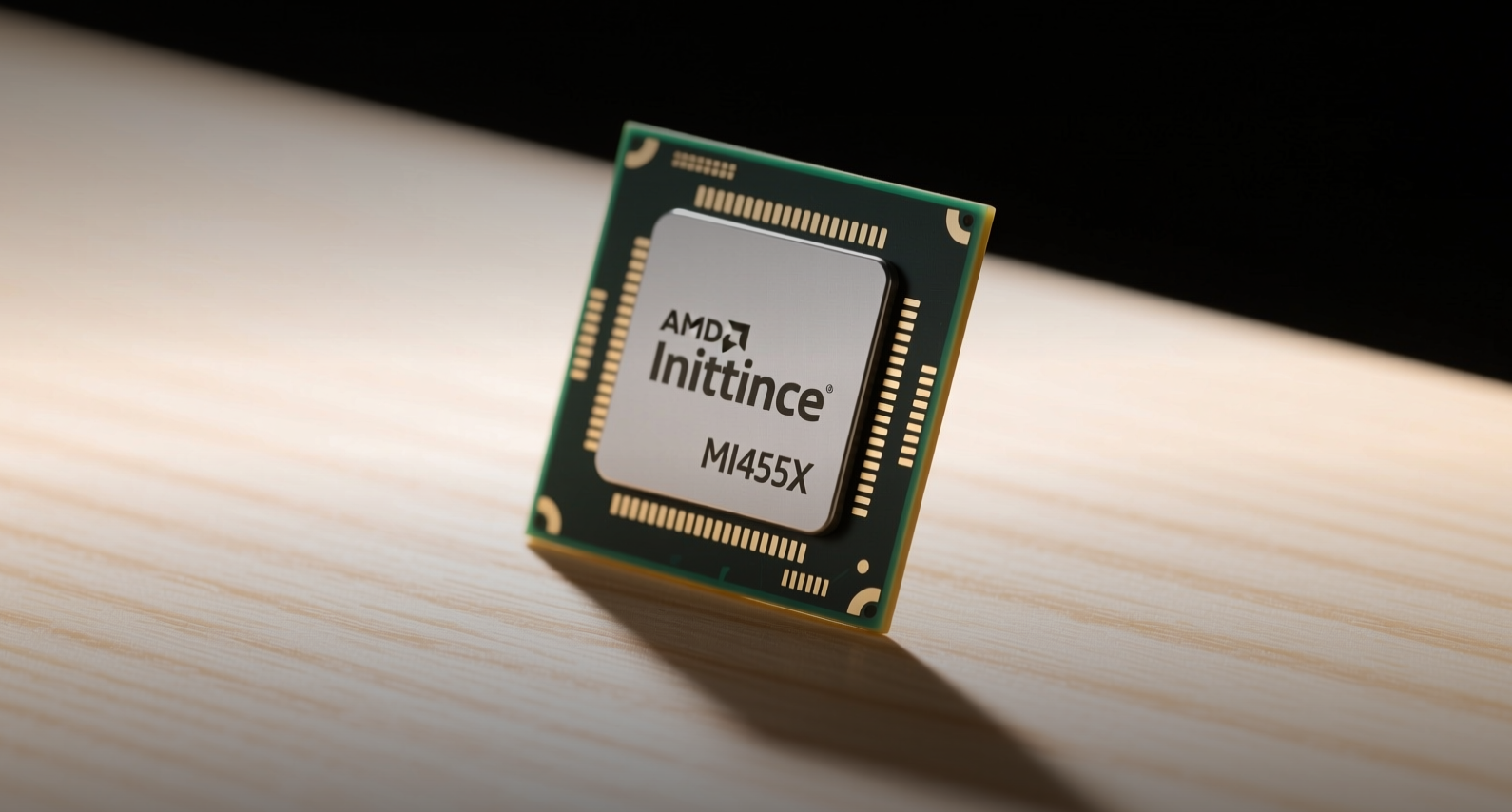
Microsoft will deploy AMD's Helios rackscale AI system on Azure for inference workloads, giving frontier model builders an alternative to Nvidia's Grace Blackwell and Vera Rubin systems that control more than 95% of the data center GPU market.
"Microsoft's new AMD deployments mark an important milestone as we deliver leadership compute solutions to Azure customers and scale the next generation of AI infrastructure together," AMD Chief Executive Officer Lisa Su said.
Helios combines AMD Instinct MI455X GPUs, sixth-generation EPYC "Venice" CPUs, Pensando networking and ROCm software in an integrated rackscale platform. Each of its 18 compute trays houses four Instinct GPUs paired with a single EPYC processor. The system, priced at an estimated $5 million to $5.5 million, is wider and heavier than Nvidia's Vera Rubin at up to 7,000 pounds, according to the Futurum Group. AMD will begin shipping Helios to customers including Microsoft in the second half of 2026.
The expanded partnership gives AMD a marquee customer for its most ambitious AI product as it seeks to capture a larger share of the data center GPU market, where it currently holds about 4.5% versus Nvidia's dominant position. AMD told CNBC it plans to book tens of billions in data center AI revenue starting in 2027, with the majority coming from Helios. Data center revenue rose 57% year over year in the first quarter of 2026.
Azure will add three new offerings powered by AMD technology. The ND MI455X v7 virtual machines, built on Helios, are designed for large-scale AI inference, reasoning and agentic workloads. Two new CPU-based VM series — HDv2 for agentic AI and data pipelines, and HXv2 for semiconductor design — will run on sixth-generation EPYC "Venice" processors. The HXv2 features 176 CPU cores with clock speeds exceeding 5 gigahertz and 50% more addressable cache per core than its predecessor, plus 800 gigabit per second InfiniBand for distributed computing.
The collaboration extends into networking. Microsoft is integrating Azure Boost with AMD Pensando DPUs — technology AMD acquired in its 2022 purchase of the networking company — to improve connection processing at cloud scale.
AMD's path to Helios has been years in the making. The company acquired programmable chip maker Xilinx for nearly $50 billion in 2022 and server manufacturer ZT Systems for about $5 billion in 2025, along with a series of software acquisitions to build out its ROCm software platform — an open-source alternative to Nvidia's widely adopted CUDA platform. The EPYC server CPU, first unveiled in 2017, helped AMD regain ground in data centers after a decade of market share losses to Intel.
Challenging Nvidia's hold
The Helios deployment positions AMD to challenge Nvidia's hold on AI infrastructure at a moment when demand for inference compute is accelerating. Eight of the top 10 AI companies already run workloads on AMD Instinct GPUs, including OpenAI, Cohere and SpaceXAI. Meta committed to deploying up to 6 gigawatts of AMD GPUs over time, starting with 1 gigawatt on Helios racks later this year. Oracle and Tata Consultancy Services have also committed to the platform.
"With CUDA, Nvidia has a bigger software platform, and it's quite ahead versus AMD," Counterpoint Research analyst Neil Shah said. But AMD's "secret sauce is in the software and optimization," he added.
Futurum Group analyst Daniel Newman said AMD could capture 20% to 25% of the data center GPU market. "This is hundreds of billions of dollars of revenue," he said.
AMD shares rose on the news as investors priced in the revenue visibility from Microsoft's commitment. The partnership gives AMD a credible path to scale its AI business beyond the low single-digit market share it has held against Nvidia. The question, as Newman noted, is whether AMD wins on technological superiority or simply because demand for AI compute far outstrips supply. Either scenario benefits AMD, but the answer determines whether its market share gains prove durable.
This article is for informational purposes only and does not constitute investment advice.
