
Bessent's expanded bond buybacks have failed to hold down long-term yields, exposing the limits of technical fixes against a $40 trillion debt pile.
Bessent's expanded bond buybacks have failed to hold down long-term yields, exposing the limits of technical fixes against a $40 trillion debt pile.
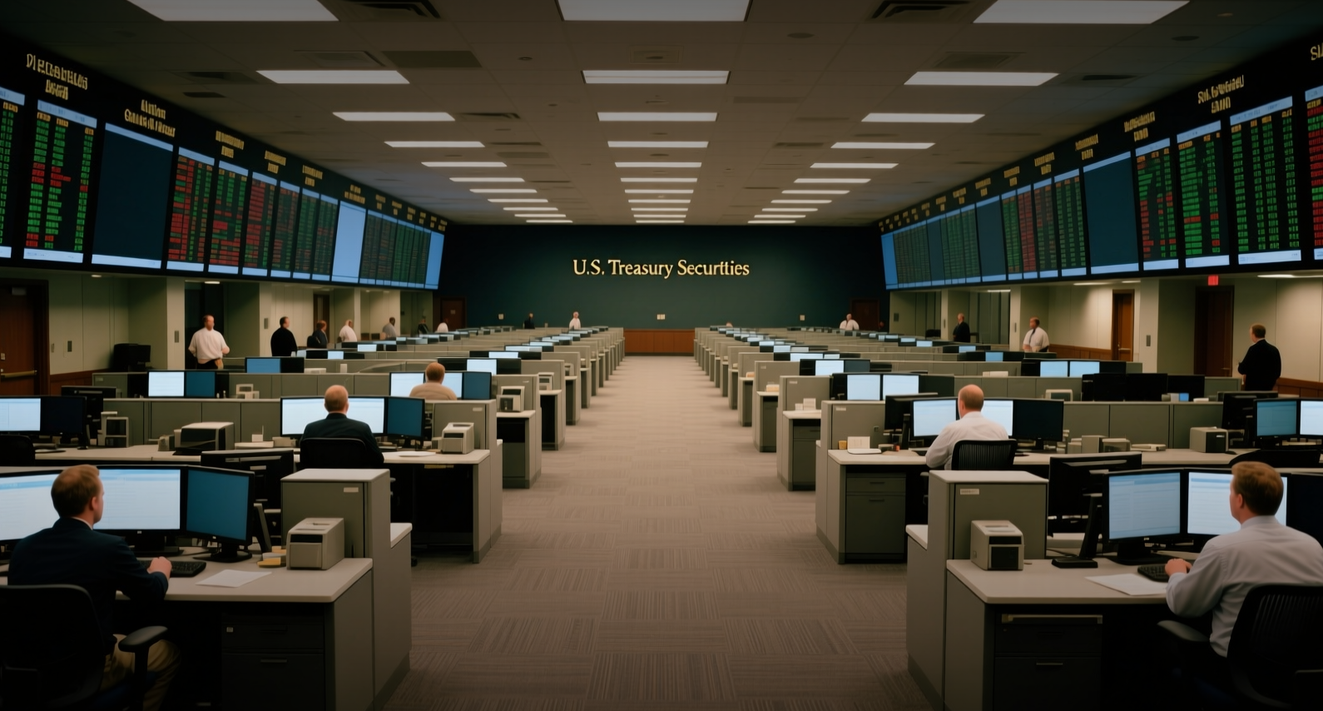
The 10-year Treasury yield rebounded to 4.69% Thursday, erasing relief from Bessent's plan to double bond buybacks to $4 billion each, as investors fixate on the U.S. fiscal trajectory.
"The buyback program is small relative to the overall market, and Bessent has limited tools to bring yields lower, which risks his credibility," Robert Kahn, an analyst at Eurasia Group, said.
The 30-year yield climbed to 5.25%, while the dollar headed for a weekly loss as the euro traded near a three-month high and sterling approached a six-month peak. Bitcoin rose 17% on the week, its largest gain in two and a half years, and gold advanced more than 3%, as investors rotated out of dollar assets. The S&P 500 fell 0.9% Thursday, its worst loss in three weeks, after Brent crude jumped 2.4% on President Donald Trump's latest threat to Iran.
The U.S. national debt has crossed $40 trillion, just five months after passing $39 trillion, with the federal deficit projected to exceed $2 trillion. Congress may need to address the statutory debt limit again by 2027, and Bessent said he and budget director Russell Vought will pursue a new fiscal consolidation drive directed by Trump.
The rebound in yields signals that bond purchases alone cannot address the forces pushing long-term borrowing costs higher. The government is expected to issue hundreds of billions of dollars of debt this quarter, competing with technology companies borrowing heavily to fund artificial-intelligence infrastructure. Margaret Spellings of the Bipartisan Policy Center called the fiscal trajectory unsustainable.
Goldman Sachs said policymakers have tools to influence the long end of the curve temporarily, but that today's problem looks increasingly fiscal rather than technical. Once markets focus on sovereign financing dynamics, yield suppression tools become progressively less effective, the bank said, citing emerging-market precedents.
Inflation and the Fed add to the strain
Higher oil prices linked to geopolitical tensions have complicated the outlook for consumer prices, making investors less confident that inflation will quickly return to the Federal Reserve's 2 percent target. The market is also watching Kevin Warsh as he begins his tenure as Fed chair, seeking clarity on whether the central bank will cut rates while inflation remains above target. Investors are weighing whether Treasury efforts to influence longer-term borrowing costs could clash with the Fed's preference for market-driven rates.
The last time the Treasury leaned on buybacks to manage the long end, in the early 2000s, the program was wound down within a year as supply dynamics shifted. Today's intervention is larger but still small relative to a market where the government issues hundreds of billions of dollars in new debt each quarter.
For Bessent, the challenge extends beyond stabilizing Treasury trading. A sustained decline in long-term borrowing costs likely requires stronger confidence in the U.S. fiscal trajectory and the inflation outlook, rather than reliance on Treasury purchases. If the affordability debate continues to turn against the administration, the dollar could face further selling, raising the cost of servicing a debt load that already consumes a growing share of federal revenue.
This article is for informational purposes only and does not constitute investment advice.
