
China's semiconductor exports more than doubled to $256.75 billion in the first eight months of 2026, customs data show, reflecting the country's accelerating push for chip self-sufficiency.
China's semiconductor exports more than doubled to $256.75 billion in the first eight months of 2026, customs data show, reflecting the country's accelerating push for chip self-sufficiency.
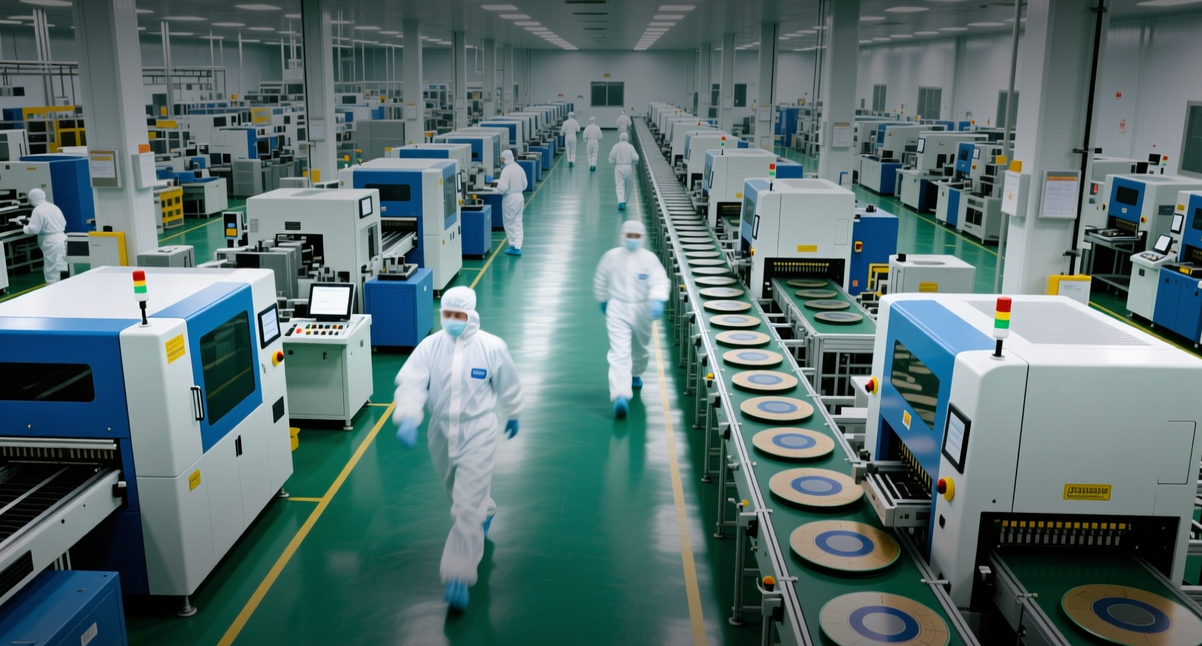
Chinese integrated circuit exports jumped 103.9% year-on-year to $256.75 billion in January-August, customs data show, as state-backed import substitution and US export controls reshape the global chip trade map.
"China's industrial policy is becoming more systemic and pervasive, extending across all layers of production," the U.S. Chamber of Commerce said in a report assessing Beijing's next-generation industrial strategy.
August IC exports alone reached $40.73 billion, according to the General Administration of Customs. The growth extends a trend that saw Chinese semiconductor exports rise 126% between 2014 and 2024, from $91 billion to $208 billion, UN Comtrade data show. US semiconductor exports grew just 37% over the same period, to $57 billion.
The export surge signals that China's $150 billion-plus semiconductor investment program is translating into competitive manufacturing capacity. Chinese manufacturers sell chips 30-50% cheaper than US suppliers, according to the US Commerce Department, and China's share of legacy chip manufacturing is projected to grow from 31% in 2023 to 39% by 2027, according to TrendForce.
Domestic Equipment Share Hits 35%
The export boom is the flip side of China's import-substitution drive. US export controls imposed since October 2022 forced Chinese chipmakers to reduce dependence on foreign suppliers, creating a captive market for domestic equipment makers. China's use of domestic semiconductor manufacturing equipment rose from 25% in 2024 to 35% in 2025, surpassing Beijing's own targets ahead of schedule, according to industry data cited in a recent analysis of the MATCH Act.
The substitution extends to chip design and manufacturing. ChangXin Memory Technologies (CXMT), founded by the Hefei municipal government, has risen to become the world's fourth-largest DRAM maker with 5% global market share, according to Counterpoint Research. SMIC, China's largest foundry, has expanded capacity across mature nodes even as US restrictions limit access to advanced lithography.
China is expected to bring 26 new fabrication facilities online between 2022 and 2026, more than any other region, compared with 16 in the Americas, according to the Semiconductor Industry Association. This capacity expansion is already visible in export data: Chinese semiconductor shipments to Malaysia, Singapore, and Vietnam reached nearly double US exports to those markets in 2024.
Chinese Chips Undercut US Rivals by 30-50%
The export surge has direct implications for non-Chinese chipmakers. US semiconductor companies reinvest 17.7% of revenue into R&D, meaning every dollar of export revenue lost to Chinese competitors removes nearly 18 cents from the innovation pipeline, according to industry data. Micron Technology, the sole major US memory chipmaker, faces direct competition from CXMT in DRAM, while Intel and TSMC compete with SMIC in mature-node foundry services.
The US Commerce Department has warned that China's chip expansion could reduce utilization rates at new US fabs below levels needed to sustain profitability. TSMC's $165 billion investment in six Arizona fabs and Micron's planned Idaho facilities could face headwinds if Chinese overcapacity depresses global chip prices.
For investors, the data point reinforces a structural shift in semiconductor supply chains. Chinese chip stocks including SMIC and Hua Hong Semiconductor have benefited from the domestic substitution narrative, while US and allied chipmakers face margin pressure from Chinese competitors selling at 30-50% discounts. The question is whether export controls can slow China's trajectory or whether the 103.9% growth rate marks a new phase of Chinese dominance in mature-node chips.
This article is for informational purposes only and does not constitute investment advice.
