

Microsoft guided fiscal first-quarter Azure growth of 44-45 percent at constant currency, pointing to sustained AI cloud demand as it restructures reporting around its Agents and Infra segment.
Microsoft guided fiscal first-quarter Azure growth of 44-45 percent at constant currency, pointing to sustained AI cloud demand as it restructures reporting around its Agents and Infra segment.
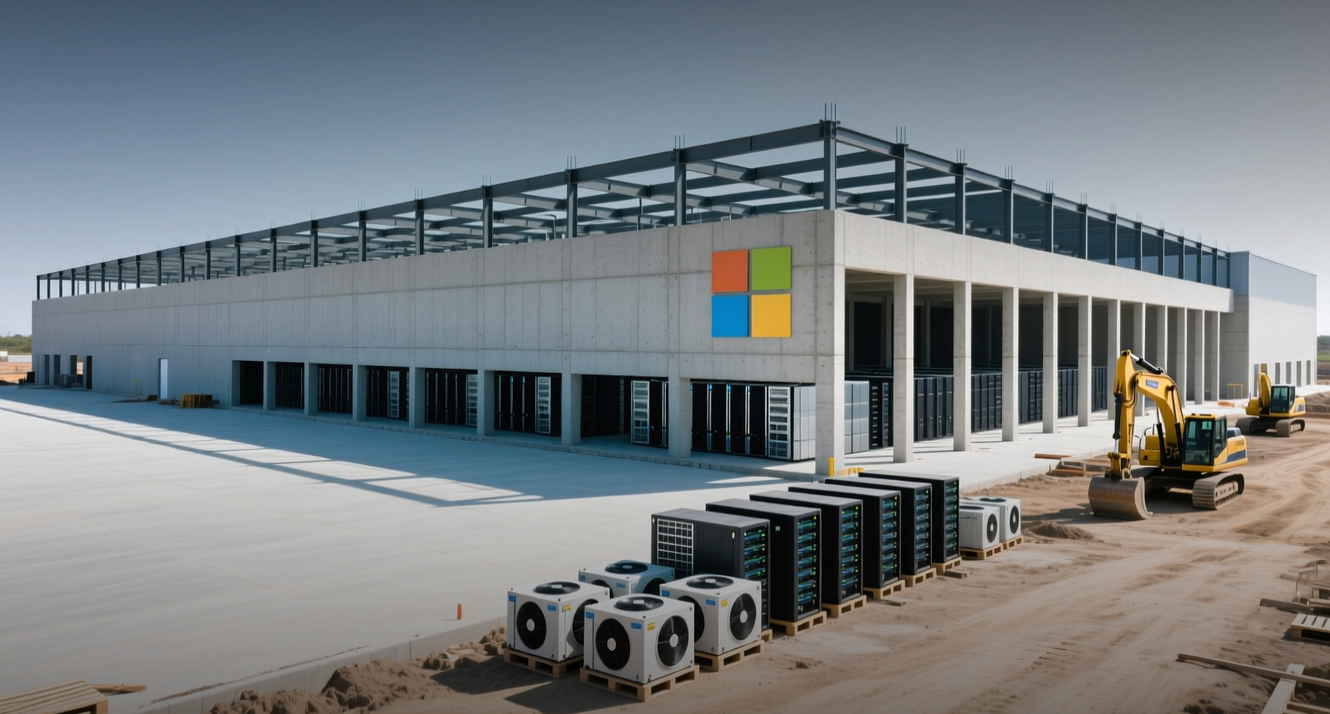
Microsoft guided fiscal first-quarter Azure revenue growth of 44 to 45 percent at constant currency, keeping its cloud expansion ahead of Amazon Web Services and Google Cloud as AI workloads drive demand. The forecast, issued Wednesday alongside a shift to two reporting segments, positions Azure as the growth engine of a roughly $175 billion fiscal 2027 infrastructure buildout.
"There's no question AI represents a profound shift in both technology and business," Chief Executive Officer Satya Nadella wrote in the investor presentation. "It is changing what we build and how we operate, and it is blurring the boundaries between our products and reshaping our business models."
The new "Agents and Infra" segment, which combines Azure with Microsoft 365 cloud products, server licensing and industry solutions, is expected to generate $75.15 billion to $75.75 billion in fiscal first-quarter revenue. The "Devices and Consumer" segment, covering search, advertising, Xbox and Windows device licensing, is guided at $14.7 billion to $15.2 billion.
The guidance arrives as Microsoft begins disclosing Azure revenue as a standalone line for the first time, matching the transparency Amazon has offered for AWS since 2015 and Alphabet for Google Cloud since 2020. Under the new structure, Azure grew 42 percent to $29.42 billion in the June quarter, representing nearly a third of Microsoft's total revenue. The prior "Azure and other cloud services" metric, which bundled GitHub, security and healthcare cloud products, showed 43 percent growth.
The restated numbers give investors a cleaner read on the AI infrastructure cycle that has defined the sector's capital spending. Microsoft spent $115.9 billion on capital expenditures in fiscal 2026, up 79.6 percent year over year, while free cash flow fell 6.5 percent despite operating cash flow surging 34.4 percent. Commercial remaining performance obligations surged 84 percent to $678 billion, a backlog metric suggesting contracted demand is keeping pace with the buildout.
Stifel analysts estimated in July that about half of Azure's fiscal 2026 growth came from OpenAI workloads, and Anthropic has also deepened its reliance on Microsoft's infrastructure. The concentration risk is real: if frontier model training demand cools, Azure's growth premium over AWS and Google Cloud could compress quickly. That dynamic is why the standalone Azure disclosure matters — investors can now track the core consumption business without the noise of bundled GitHub and security products.
The reporting change also gives Microsoft a cleaner vehicle to showcase its AI assistant momentum. Microsoft 365 Copilot has surpassed 30 million paid seats, up from more than 20 million as of April, and GitHub Copilot continues to scale within the Agents and Infra segment.
Microsoft shares closed at $513.53 on Friday, up 6.9 percent year to date but roughly flat over the past 12 months despite five consecutive quarterly earnings beats. The stock trades at about 26 times forward earnings, a premium to the broader market but below the multiples seen during the 2023 AI rally. Wall Street's consensus target sits at $569.45, implying about 11 percent upside.
The Q1 guidance of 44 to 45 percent growth — even after stripping out GitHub and security cloud revenue — suggests the AI demand cycle has not yet peaked. For investors tracking the hyperscaler capex trade, Microsoft's number is the first major data point of the fiscal year. Amazon reports third-quarter results in late October, and Alphabet follows shortly after. If Azure sustains 40 percent-plus growth while capex approaches $175 billion, the market's question shifts from whether AI demand is real to whether margins can survive the buildout.
This article is for informational purposes only and does not constitute investment advice.
