

Jensen Huang's 10x semiconductor forecast ties the chip industry's future to 100 billion autonomous AI agents rather than human users.
Jensen Huang's 10x semiconductor forecast ties the chip industry's future to 100 billion autonomous AI agents rather than human users.
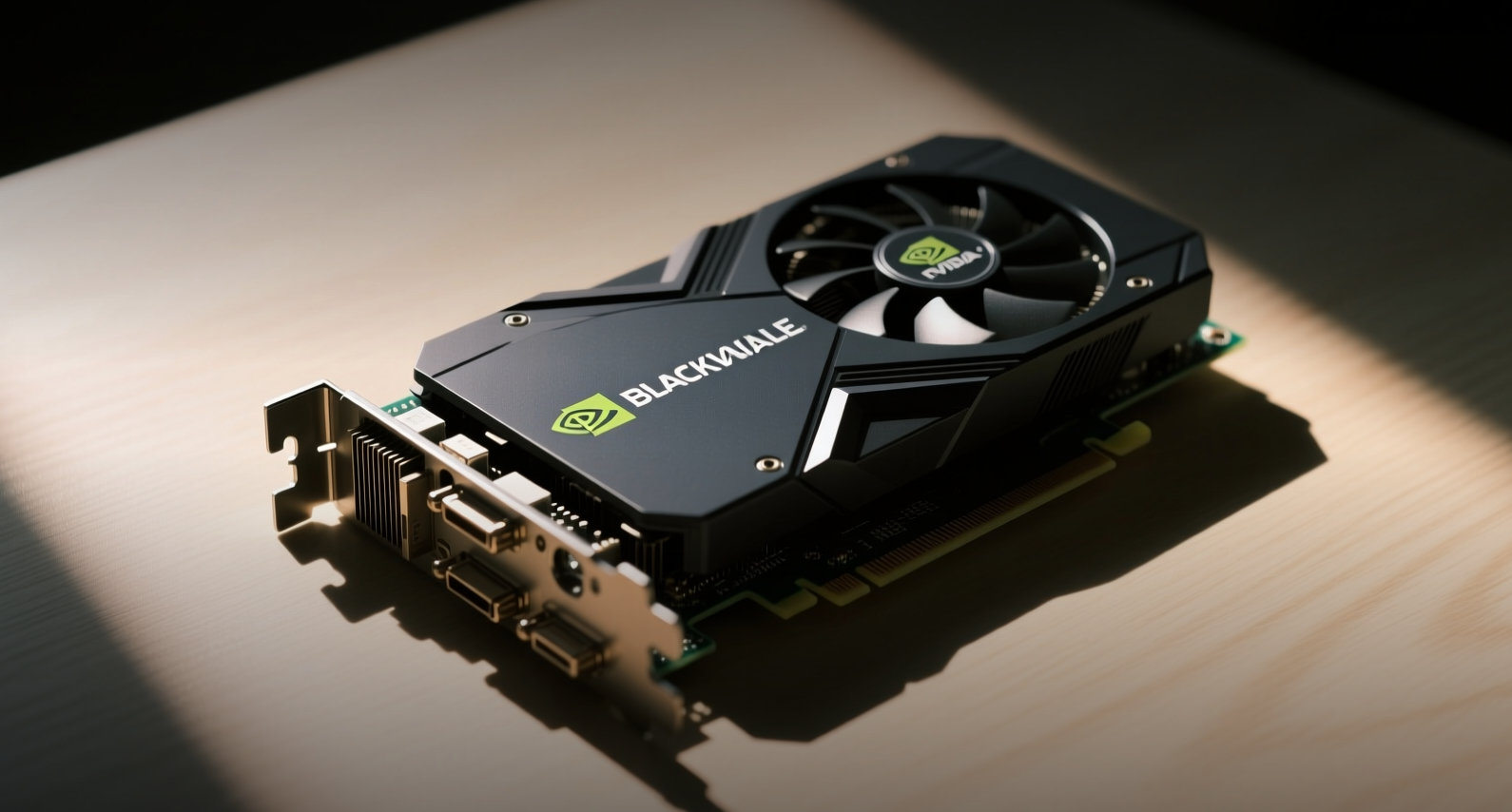
The semiconductor industry must expand roughly tenfold over the next decade to support a computing world where 100 billion autonomous AI agents, not human users, drive demand, Nvidia Corp. Chief Executive Officer Jensen Huang said.
"We are transitioning from a computing model centered on human-generated queries to one where machines talk to machines," Huang said in a Bloomberg interview on July 27. "That shift requires an entirely new scale of infrastructure."
The forecast implies sustained compound annual growth for chip sales far beyond the historical semiconductor cycle, which has averaged roughly 5% to 7% annual growth over the past two decades. Nvidia, whose data center revenue has surged as hyperscalers race to build AI infrastructure, stands as the primary beneficiary of this expansion.
For investors, the question is whether the industry can sustain the capital expenditure required to deliver 10x capacity without eroding margins. Nvidia's data center segment generated more than $100 billion in revenue in its most recent fiscal year, and the company's market capitalization has fluctuated between $3 trillion and $4 trillion as the AI trade has rotated between chipmakers and their customers.
The 10x growth target, if realized, would push annual semiconductor revenue past $5 trillion by the mid-2030s, up from roughly $600 billion in 2025, according to the Semiconductor Industry Association. Huang's vision positions Nvidia's GPU architecture — from the current Blackwell generation to the upcoming Vera Rubin platform — as the computational backbone for an agentic AI economy.
The Agentic AI Infrastructure Buildout
Huang's 100 billion AI agent forecast represents a step-change from today's AI workloads, which primarily handle inference for chatbots and image generators. Autonomous agents — software programs that execute multi-step tasks, interact with other agents, and make decisions without human intervention — require significantly more compute per task. Each agent may need continuous access to large language models, real-time data feeds, and coordination protocols, multiplying the chip demand per user.
This shift benefits not only Nvidia but the broader chip supply chain. Advanced Micro Devices Inc. competes with its MI300 and MI400 series accelerators. Custom chip efforts from Amazon.com Inc.'s Trainium and Google LLC's Tensor Processing Units are also vying for inference workloads. Taiwan Semiconductor Manufacturing Co., the sole manufacturer of Nvidia's most advanced chips, would need to expand its CoWoS packaging capacity dramatically to meet demand.
Valuation and the CapEx Debate
The 10x forecast arrives as hyperscalers — Microsoft Corp., Amazon, Alphabet Inc., and Meta Platforms Inc. — face mounting scrutiny over their combined AI capital expenditure, projected to exceed $300 billion in 2026. Nvidia's revenue concentration among these few customers creates a single-point-of-demand risk if any hyperscaler slows its buildout.
Nvidia shares trade at roughly 35 times forward earnings, a discount to their historical average as the market weighs the sustainability of AI spending against the potential for a capex cycle peak. Huang's 10x thesis, if accepted by the market, would extend the investment horizon and support higher multiples across the semiconductor supply chain.
For investors, Huang's forecast reframes the AI trade from a cyclical hardware cycle to a multi-decade infrastructure buildout. Nvidia is the most direct beneficiary, but the 10x thesis also supports suppliers like TSMC, memory makers SK Hynix Inc. and Micron Technology Inc., and networking companies including Broadcom Inc. The risk is execution: scaling the semiconductor industry 10x requires unprecedented capital, talent, and raw material inputs, any of which could become bottlenecks.
This article is for informational purposes only and does not constitute investment advice.
