
South Korea's Cabinet approved a record 820.9 trillion won 2027 budget Tuesday, channeling a chip-boom tax windfall into 21.3 trillion won of AI megaprojects.
South Korea's Cabinet approved a record 820.9 trillion won 2027 budget Tuesday, channeling a chip-boom tax windfall into 21.3 trillion won of AI megaprojects.
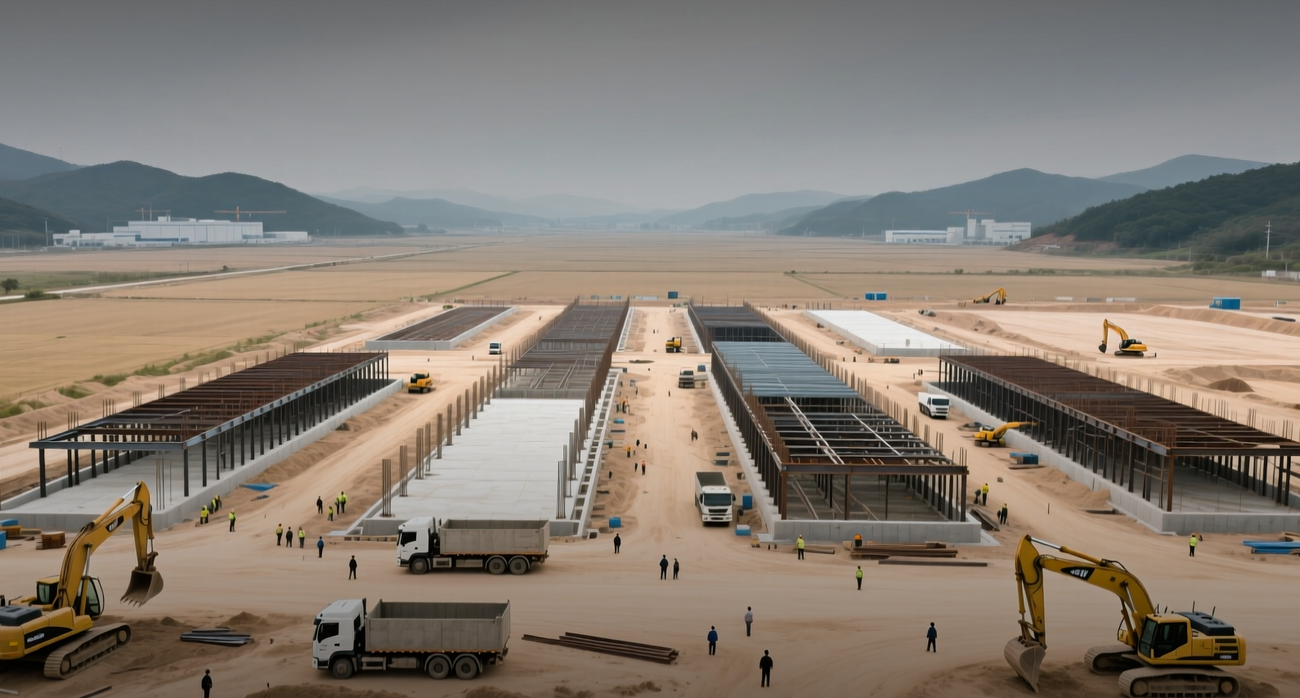
South Korea's government signed off on a record 820.9 trillion won ($597 billion) spending plan for 2027, the steepest year-on-year increase in its history, as President Lee Jae-myung turns a semiconductor-cycle tax windfall into state-directed bets on AI infrastructure.
"Through bold fiscal investment, we will open the way for growth, and that growth will in turn strengthen the fiscal base," Budget Minister Park Hong-keun told reporters after the Cabinet meeting Tuesday, pledging to taper spending growth to about 5 percent by 2030 once the investments yield returns.
The 12.8 percent spending increase — topping the 10.6 percent recorded during the 2009 financial crisis — is funded by national tax revenue surging 194.2 trillion won to 584.4 trillion won, with corporate tax receipts projected to more than double to 216.7 trillion won on record earnings at Samsung Electronics and SK Hynix. The windfall narrows the managed fiscal deficit to 3.1 trillion won from 107.8 trillion won, cutting the debt-to-GDP ratio to 48.3 percent from 51.6 percent — the strongest managed-balance reading in two decades, since a 6.8 trillion won surplus in 2007.
The budget marks a decisive break from three years of austerity under Lee's predecessor, and the stakes extend beyond Seoul's fiscal accounts. The government earmarked 21.3 trillion won — up 97.2 percent from this year's 10.8 trillion won — for three AI megaprojects spanning semiconductors, physical AI and AI data centers, plus 2.6 trillion won in a dedicated semiconductor account. That public capital is designed to reinforce a 4,755 trillion won ten-year investment plan announced by Samsung and SK Group, including 800 trillion won for four chip fabs in the country's southwest, and to supply 10,000 graphics processing units for a national AI foundation model.
Future Fund draws 'slush fund' criticism
Beyond the headline budget, the government created a 162.3 trillion won Future Response Fund to absorb the tax windfall, allocating 45.4 trillion won to youth welfare and growth engines and 12.5 trillion won to trim new bond issuance. The remaining 104.4 trillion won sits as idle reserves — a buffer critics say risks becoming a discretionary pool that bypasses National Assembly oversight.
The expansion carries longer-term risks. Under the 2026-2030 fiscal plan, total spending is projected to exceed 1,000 trillion won by 2030, with Lee's budget increments of 331.9 trillion won nearly matching the combined increases of his three predecessors over 13 years. Rigid outlays are compounding the strain: civil servant wages rise 3.9 percent next year, the steepest since 2011, alongside 3,851 new public-sector posts and expanding welfare programs that are difficult to reverse once enacted.
Chip cycle holds the key
The fiscal bet hinges on the semiconductor cycle holding. If chip-driven tax revenue fades as the high-bandwidth memory boom matures, the government's ability to fund both its AI ambitions and swelling entitlement spending will narrow sharply. For investors, the budget's AI tilt offers a direct read-through to Samsung Electronics, SK Hynix and the broader KOSPI tech complex, which stand to capture state spending on power grids, water systems and logistics — even as the National Assembly reviews the proposal before the fiscal year begins in January.
This article is for informational purposes only and does not constitute investment advice.
